
Cyprus
Clusters of plasters - An Experimental Analysis of Plaster Production in Prehistoric Cyprus
Publication Date
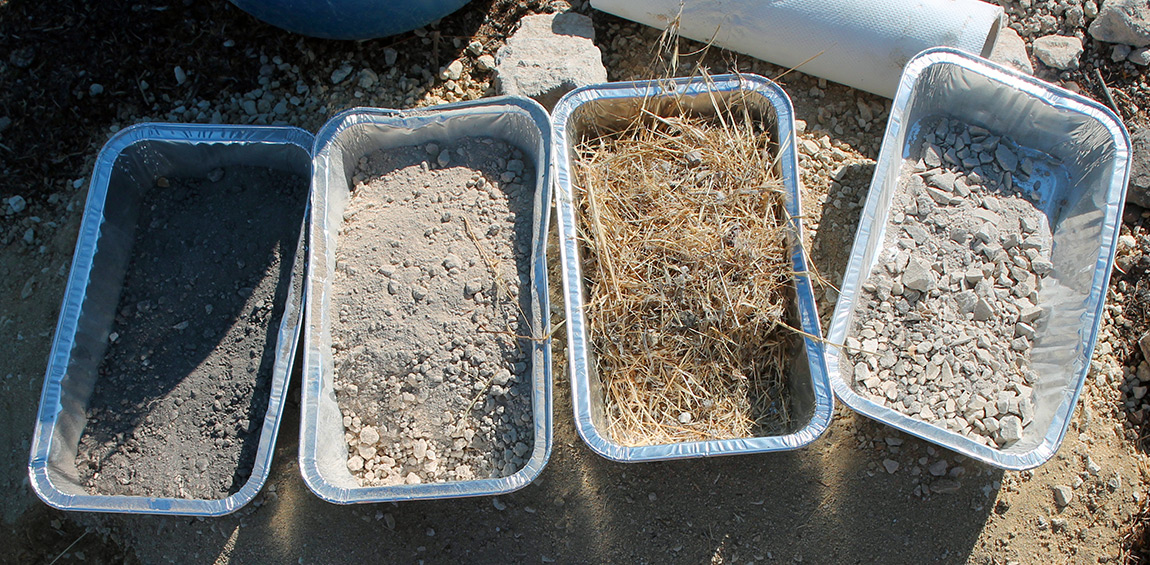
Two distinct types of plaster were produced in prehistoric Cyprus: the lime plaster and the havara plaster. The latter was obtained by mixing the local secondary limestone (havara) with water, with no pyrotechnological process involved. Because lime plaster and havara plaster have very similar characteristics, archaeologists often struggle to distinguish them in the field. An experimental study was undertaken to produce new data that could aid in examining the manufacturing techniques of prehistoric plaster materials in Cyprus...
Olives as a Dye for Wool Textiles

Publication Date
Olives have been cultivated in the Near East for approximately 6,000 years. In Cyprus, they have been present since the Neolithic and were primarily used for food, oil, and byproducts of the oil (Besnard, et al., 2013; Chaniotis and Hadjisavvas, 2012). Olive trees overproduce fruit, and a large portion of the crop is dropped before harvesting time...
Event Review: Vounous 2024

Publication Date
The annual Vounous Symposium was once again held at the site of the Bronze Age cemetery in Çatalköy, Northern Cyprus, from 1-16 September. Over 60 artists and researchers from Europe and America participated in the event, recreating Bronze Age Vounous ceramics. As in past years, artists, craftworkers, and researchers gathered from around the world to participate and experiment with...
Fresco Mixtures with Dried Lime Plaster: Cameron’s Experiments Revisited
Publication Date
Introduction
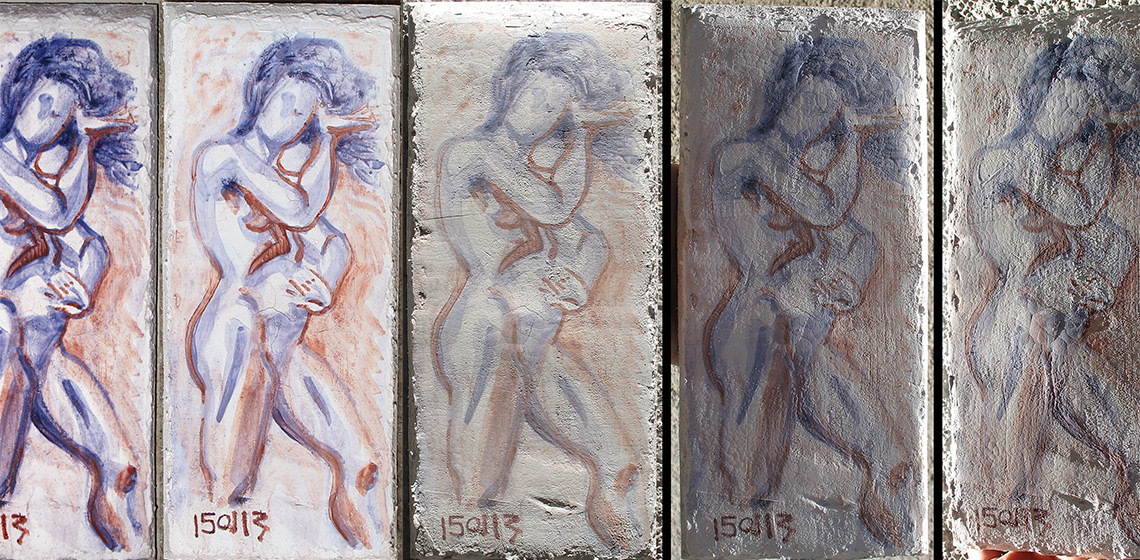
During the Bronze Age, the craftspeople of the eastern Mediterranean practiced a form of reuse or recycling: fragments of mortar were used as aggregates in lime mixtures intended for walls or floors (Shaw, 1973, p.222; Brysbaert, 2003, pp.168-173, pp.175-176; Jones, 2005, p.220; Brysbaert, 2008, p.118). Such a mixture was found in a house in the Akrotiri settlement of Santorini, in a part of the wall that was intended to be painted (Jones, 2005, p.220).
Pyrgos Mavroraki Smelting and Melting Experiments in a Metallurgical Workshop of the Second Millennium BC
Publication Date
Interpreting the cultural influences of Cyprus in antiquity has posed an issue, depending on one’s point of view or the different conclusions reached. Until the 1970s, in large part due to the extensive excavations along the northern coast of Cyprus, it seemed reasonable to recognise a plethora of Aegean traits in the island culture. Every element of the Cypriot Bronze Age was analysed and interpreted in...
Conference Review: The Third Annual Vounous Symposium
Publication Date
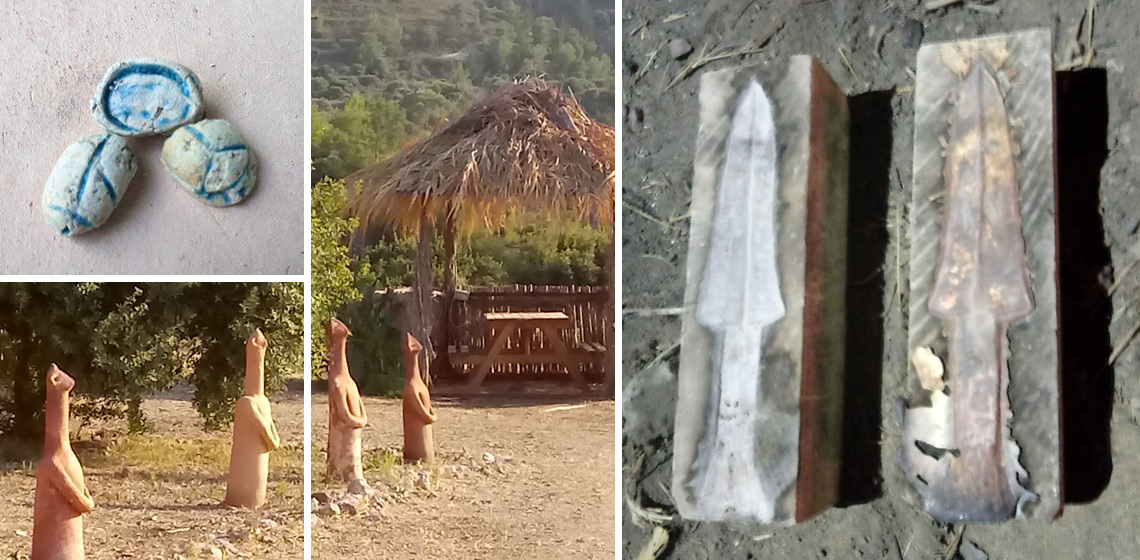
The Third Annual Vounous Symposium was held 1-16 September 2019 and located near Çatalköy in Northern Cyprus. In addition to ceramics and bronze casting, experiments were also conducted on smelting local copper ore, carving moulds from local limestone, and making faience.
Event Review: The Second Annual Vounous Terracotta Symposium
Publication Date
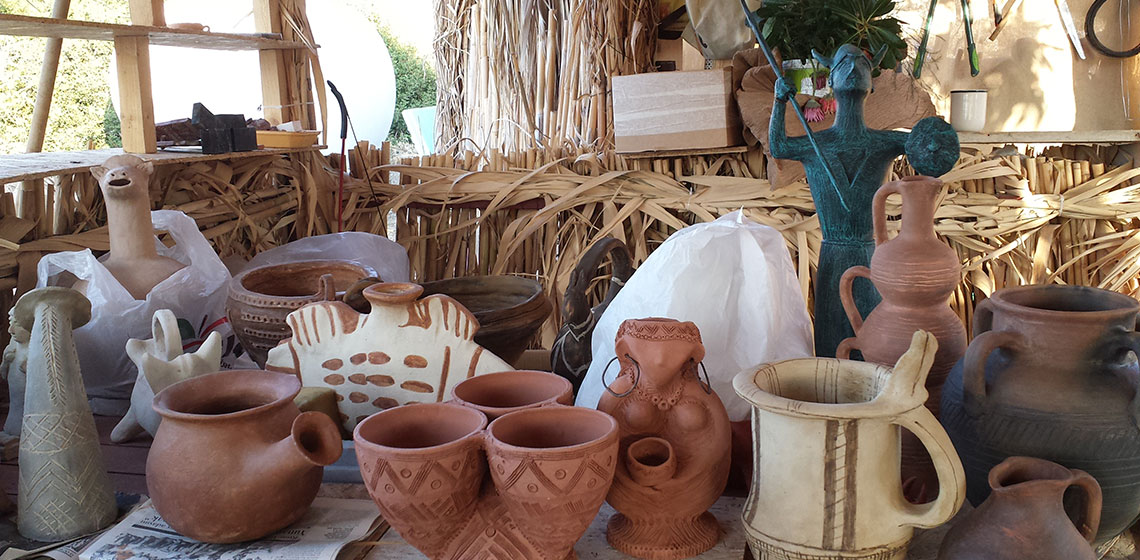
Rauf Ersenal has hiked through the mountains of North Cyprus for years, searching for the rare clays that have been used to make pottery there for millennia. The most prized colours of these clays produce a soft green that is the colour of fresh olives, the bright red of terra sigiliata, and another clay that creates a true black...
Experimental Archaeometallurgy of Early-Middle Bronze Age Cyprus: Pilot Experiments of Copper Smelting at Pyrgos-Mavroraki
Publication Date
10th EAC Leiden 2017
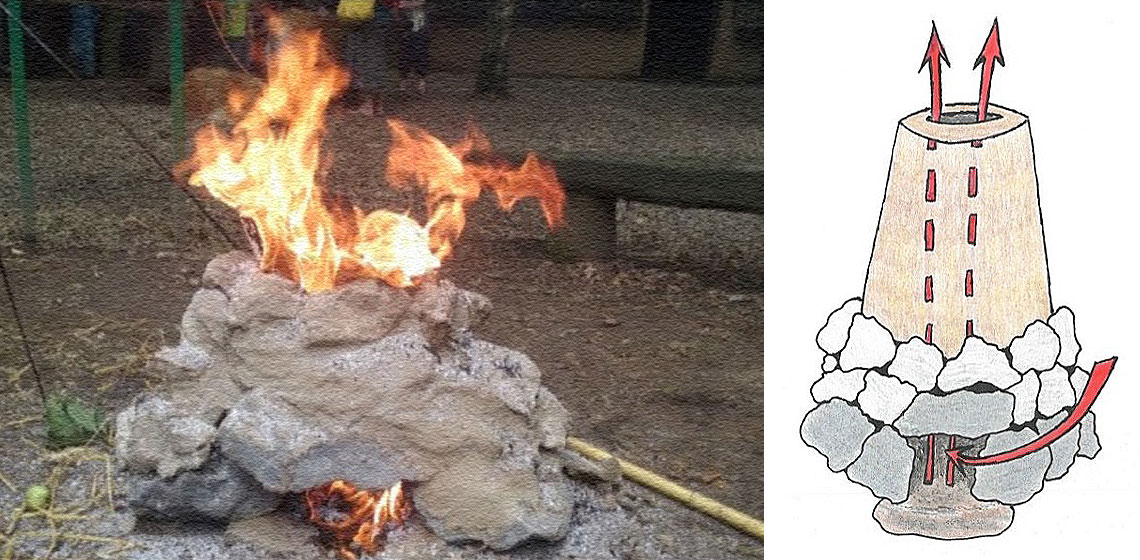
***Pyrgos-Mavroraki, an early 2nd millennium BC proto-industrial settlement, is an excellent case-study on which to apply experimental archaeometallurgy because it presents many different elements connected to the chaine-operatoire of copper metallurgy, typical of Early/Middle Bronze Age Cyprus. The site excavated by the Italian Archaeological Mission of the ITABC-CNR of Rome...
***Pyrgos-Mavroraki, an early 2nd millennium BC proto-industrial settlement, is an excellent case-study on which to apply experimental archaeometallurgy because it presents many different elements connected to the chaine-operatoire of copper metallurgy, typical of Early/Middle Bronze Age Cyprus. The site excavated by the Italian Archaeological Mission of the ITABC-CNR of Rome...
An Experimental Diachronic Exploration of Patination Methodology of Dark Patinated (Arsenical) Copper Alloys on Case Studies from the Eastern Mediterranean Bronze Age and Early Iron Age
Publication Date
10th EAC Leiden 2017
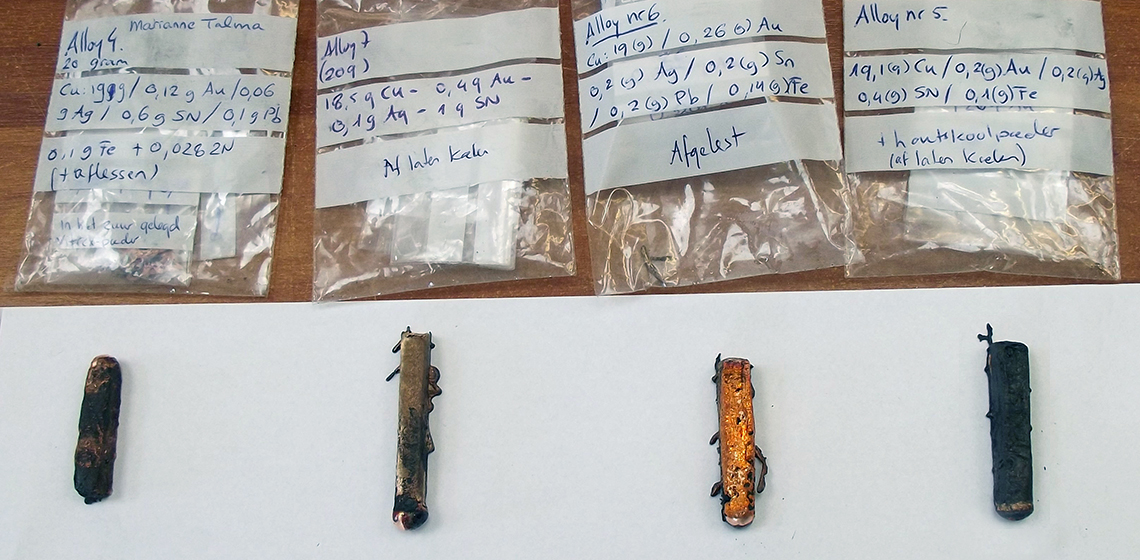
***Artificially patinated copper alloys are found archaeologically in polychrome artefacts from the 19th century BC Egypt to historical and contemporary Japan. The unusual colour variations observed in these patinas, ranging from black to blue to purple, is due to a minor amount of gold (Au) and silver (Ag) in their copper matrix, whereas accompanying elements such as tin (Sn), iron (Fe), and arsenic (As) might influence workability, hue or shine.
***Artificially patinated copper alloys are found archaeologically in polychrome artefacts from the 19th century BC Egypt to historical and contemporary Japan. The unusual colour variations observed in these patinas, ranging from black to blue to purple, is due to a minor amount of gold (Au) and silver (Ag) in their copper matrix, whereas accompanying elements such as tin (Sn), iron (Fe), and arsenic (As) might influence workability, hue or shine.