
Egypt
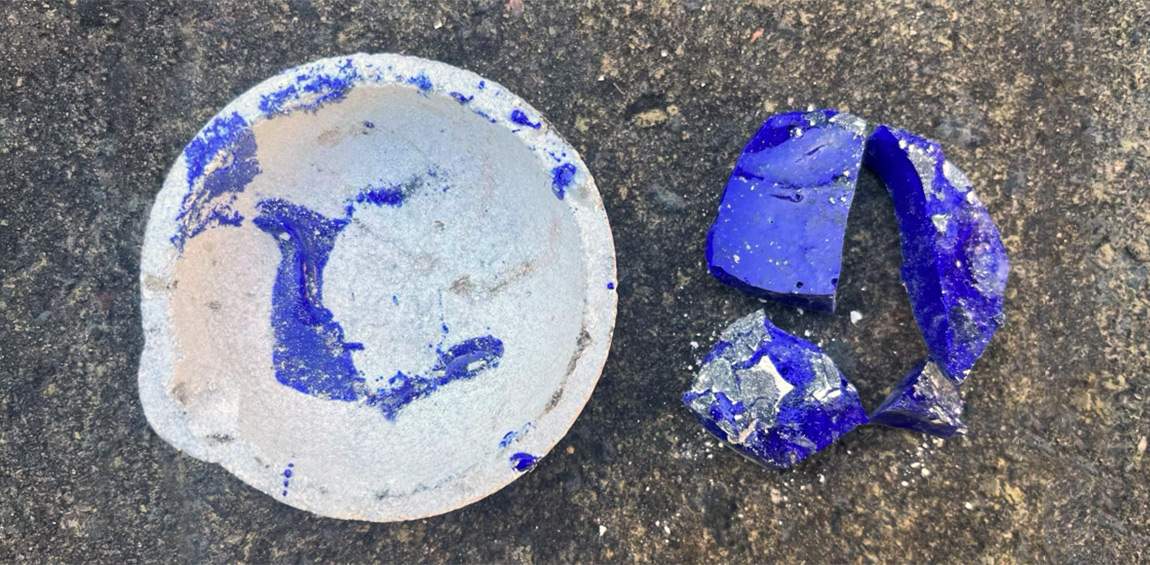
Jewels Created from Dirt: An Investigation into the Social Context behind Glass Manufacturing in Late Bronze Age Egypt
Publication Date
This study aims to understand the manufacturing process of glass ingots, particularly blue glass, through the use of different furnace types, including electrical and wood-fired furnaces in varying locations. The study also investigates the use of a separator in the manufacturing process, which would allow for the glass ingots to be easily separated from the crucibles. Various materials such as oil, pure lime, and crushed oyster shells are used as a parting layer in the glass crucibles; both the lime and oyster shell layers are successful in separating the ingots from the crucibles after firing...
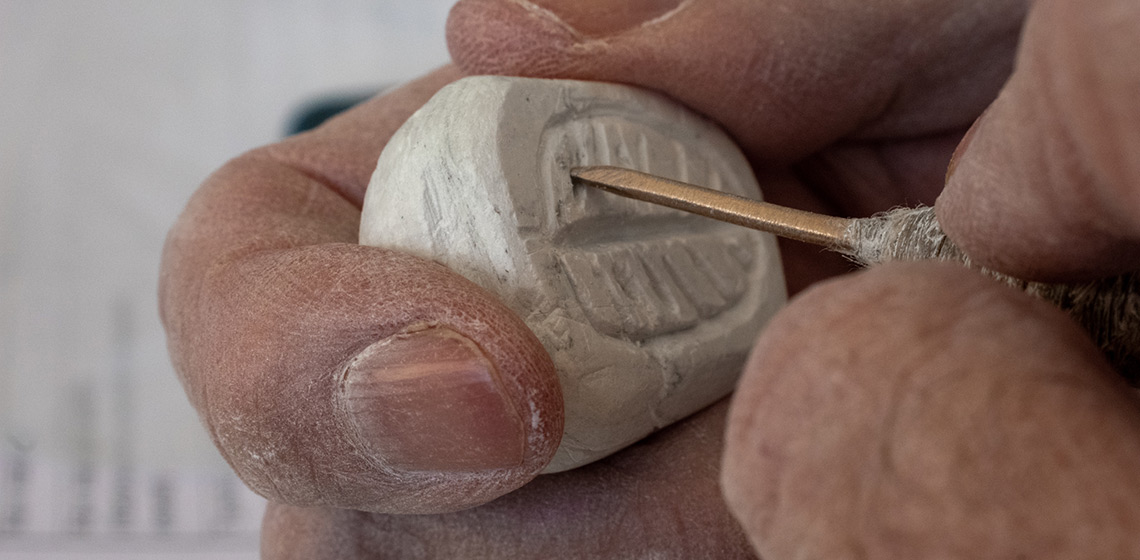
Leave your Stamp: Reconstruction of the Scarab Production Chain
Publication Date
Scarabs are beetle-shaped seals originating in Egypt during the third millennium BC. They were first imported into the southern Levant during the early second millennium BC (Middle Bronze Age I), leading to a flourishing of local production in the following centuries...
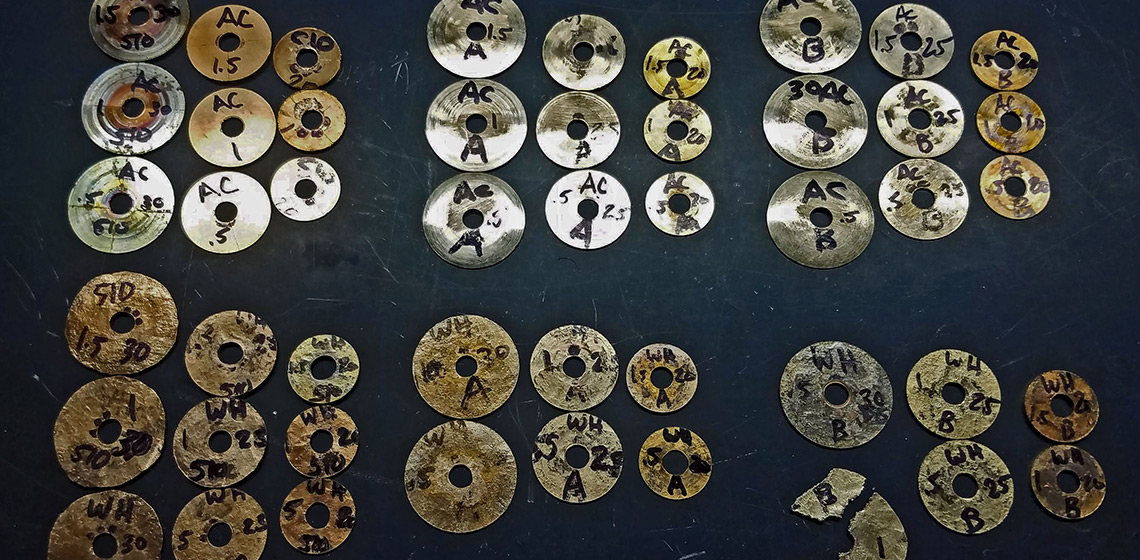
An Experimental Approach to Ancient Egyptian Metalworking: The Mysteries of the Sesheshet
Publication Date
Our research represents a case study in ancient metalworking to illuminate the challenges, processes, and both human and material agency behind these objects. We focus on copper alloy Hathoric loop sistra since these musical instruments are steeped in ritual and mythological connections to metalworking...
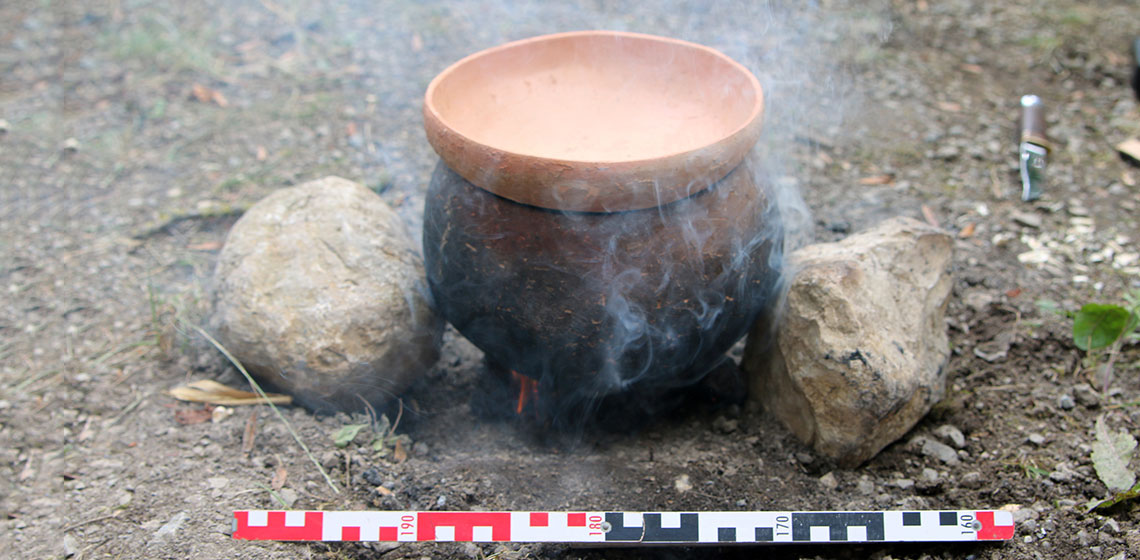
The Question of Fuel for Cooking in Ancient Egypt and Sudan
Publication Date
Little is known about the actual cooking processes and in particular fuel-related activities in Egypt and Northern Sudan (Nubia) in antiquity, especially during the Bronze Age. Considering that wood was, in general, rare along the Nile valley and therefore an expensive raw material, animal dung was tested in 2018 by means of...
Comparing Mummification Processes: Egyptian & Inca
Publication Date
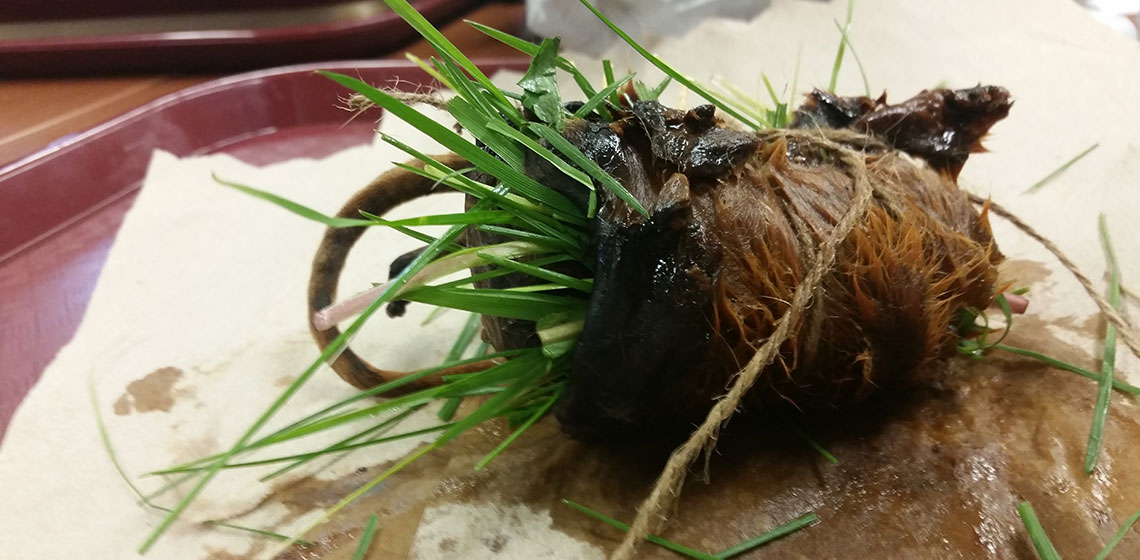
This two-year research project was carried out as part of SUNY Potsdam’s Presidential Scholars program which allows undergraduates to conduct independent research. The project employs controlled laboratory experiments to compare desiccation rates in natural and artificial mummification processes while considering the cultural context of the funerary practices. Artificial mummification techniques of ...
An Experimental Diachronic Exploration of Patination Methodology of Dark Patinated (Arsenical) Copper Alloys on Case Studies from the Eastern Mediterranean Bronze Age and Early Iron Age
Publication Date
10th EAC Leiden 2017
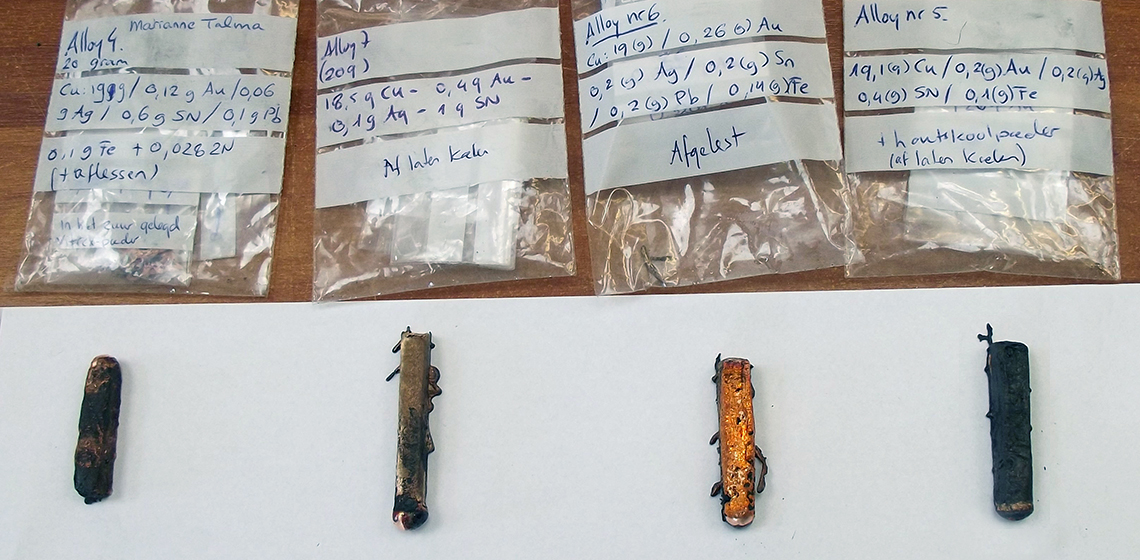
***Artificially patinated copper alloys are found archaeologically in polychrome artefacts from the 19th century BC Egypt to historical and contemporary Japan. The unusual colour variations observed in these patinas, ranging from black to blue to purple, is due to a minor amount of gold (Au) and silver (Ag) in their copper matrix, whereas accompanying elements such as tin (Sn), iron (Fe), and arsenic (As) might influence workability, hue or shine.
***Artificially patinated copper alloys are found archaeologically in polychrome artefacts from the 19th century BC Egypt to historical and contemporary Japan. The unusual colour variations observed in these patinas, ranging from black to blue to purple, is due to a minor amount of gold (Au) and silver (Ag) in their copper matrix, whereas accompanying elements such as tin (Sn), iron (Fe), and arsenic (As) might influence workability, hue or shine.
‘Re-rolling’ a Mummy: an Experimental Spectacle at Manchester Museum
Publication Date
10th EAC Leiden 2017
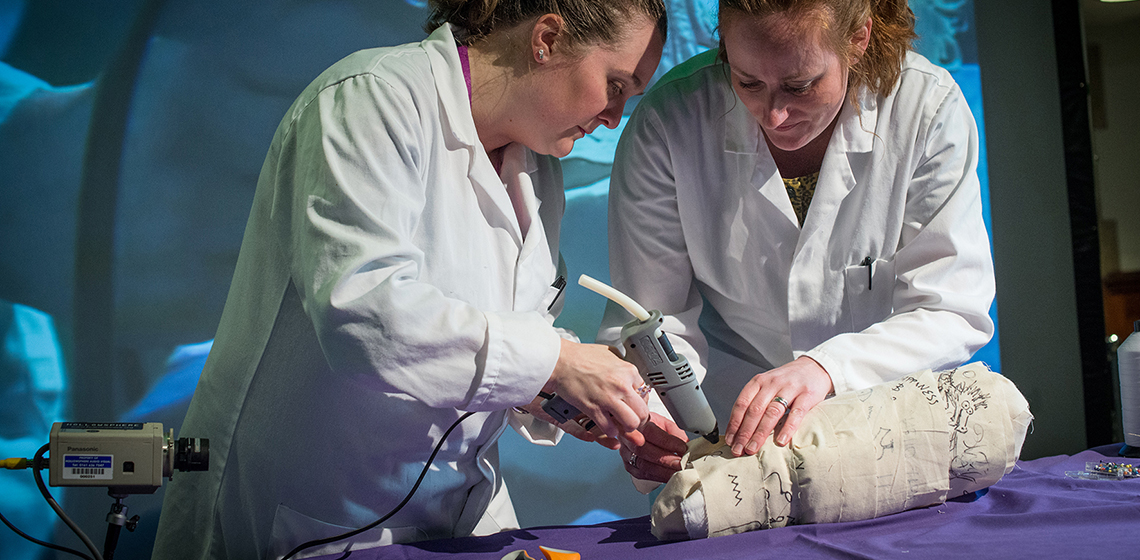
***Ancient Egyptian animal mummies and votive statuettes were often wrapped in linen, concealing the contents and conferring sanctity to the remains. Mummy autopsies were commonplace in 19th century Europe, when ancient mummified bodies were unwrapped to reveal what lay beneath the linen bandages. Similarly, votive statuettes were often unwrapped upon discovery, either by...
***Ancient Egyptian animal mummies and votive statuettes were often wrapped in linen, concealing the contents and conferring sanctity to the remains. Mummy autopsies were commonplace in 19th century Europe, when ancient mummified bodies were unwrapped to reveal what lay beneath the linen bandages. Similarly, votive statuettes were often unwrapped upon discovery, either by...
Book Review: Egyptology in the Present: Experiential and Experimental Methods in Archaeology by C. Graves-Brown (Ed)
Publication Date
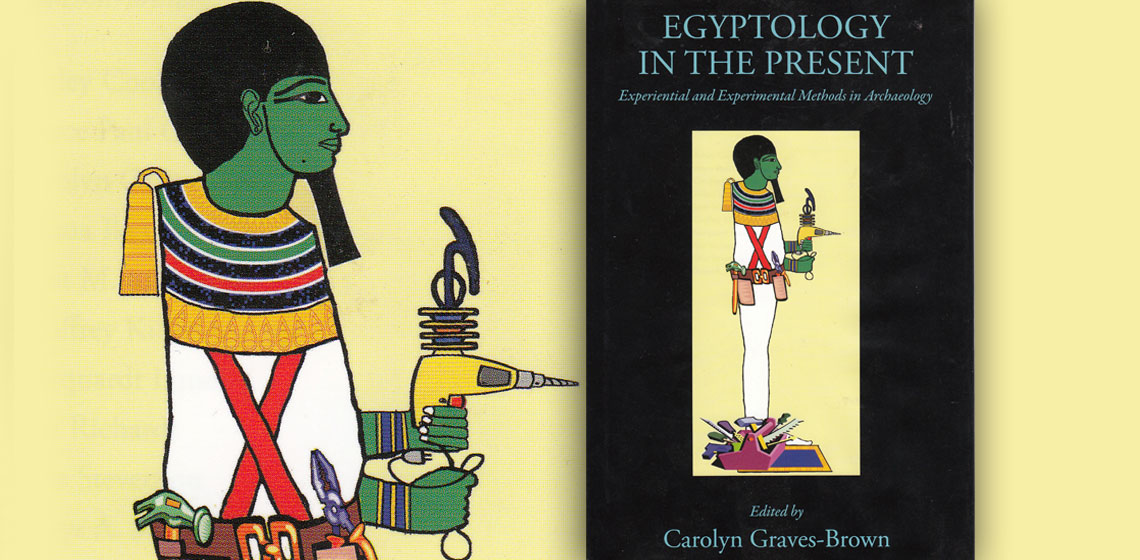
The eye-catching and colourful cover illustration of the Egyptian creator-God Ptah, fully-equipped with modern toolkit, promises an informative journey into experiential and experimental archaeology in Egyptology...
Reinventing the Egyptian Pulley
Publication Date
8th UK EA Conference Oxford 2014
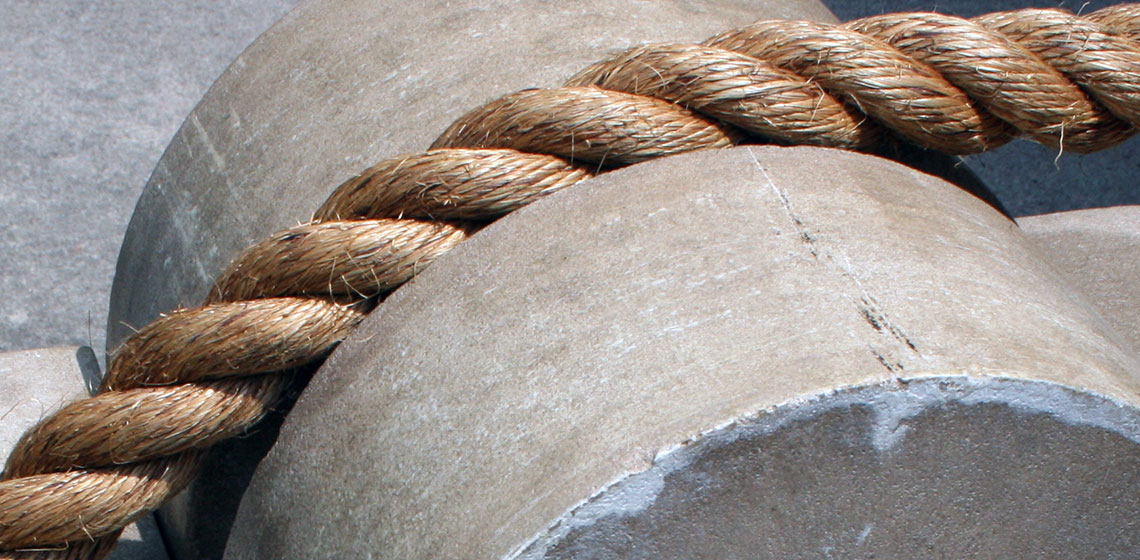
***The Egyptian pulley incorporates several novel, useful features. The design involves only significant compressive loading of its two components. The materials of construction are high compressive strength materials...
***The Egyptian pulley incorporates several novel, useful features. The design involves only significant compressive loading of its two components. The materials of construction are high compressive strength materials...
The Mummification of Votive Birds: Past and Present
Publication Date
7th UK EA Conference Cardiff 2013
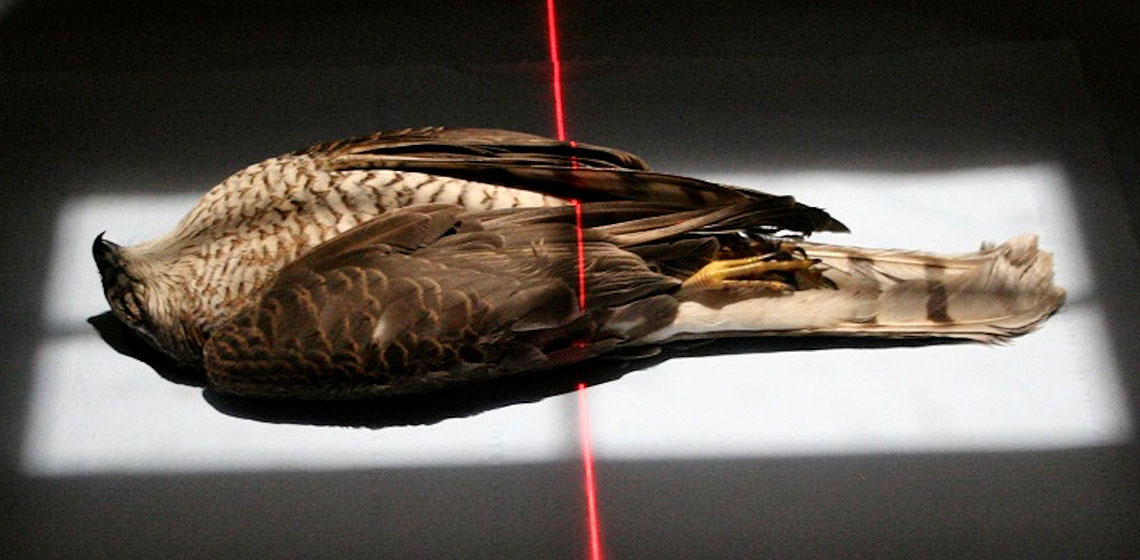
***A mummy is defined as a ‘well-preserved dead body’ (Cockburn, Cockburn & Reyman 1998, 1), achieved by either natural or anthropogenic methods and refers to both human and animal subjects. Mummies achieved through both these methods are found in ancient Egypt as a result of preservation through desiccation, achieved by direct contact between the corpse and a dry, sandy matrix (natural); or through the use of natron (anthropogenic), coupled with evisceration (the removal of the internal organs) and anointment with resinous compounds, followed by wrapping the corpse in layers of linen (Ikram and Dodson 1998; Taylor 2001).
***A mummy is defined as a ‘well-preserved dead body’ (Cockburn, Cockburn & Reyman 1998, 1), achieved by either natural or anthropogenic methods and refers to both human and animal subjects. Mummies achieved through both these methods are found in ancient Egypt as a result of preservation through desiccation, achieved by direct contact between the corpse and a dry, sandy matrix (natural); or through the use of natron (anthropogenic), coupled with evisceration (the removal of the internal organs) and anointment with resinous compounds, followed by wrapping the corpse in layers of linen (Ikram and Dodson 1998; Taylor 2001).