
Roman Era
Documentation Strategies at Butser Ancient Farm
Publication Date
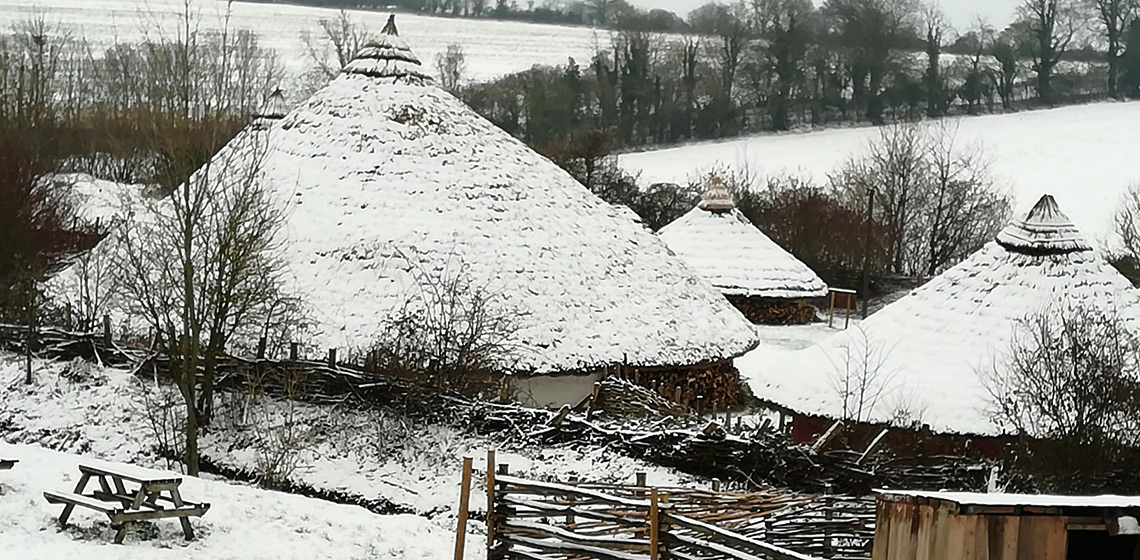
Butser Ancient Farm has been at the forefront of experimental archaeology in Britain1. for more than 45 years. The pioneering work of its first director Dr Peter Reynolds in the evaluation of Iron Age structures and agriculture demonstrated beyond doubt the importance of experiment in archaeology in the UK and international experimental archaeology work...
Experiment with Kindling Oil Lamps
Publication Date
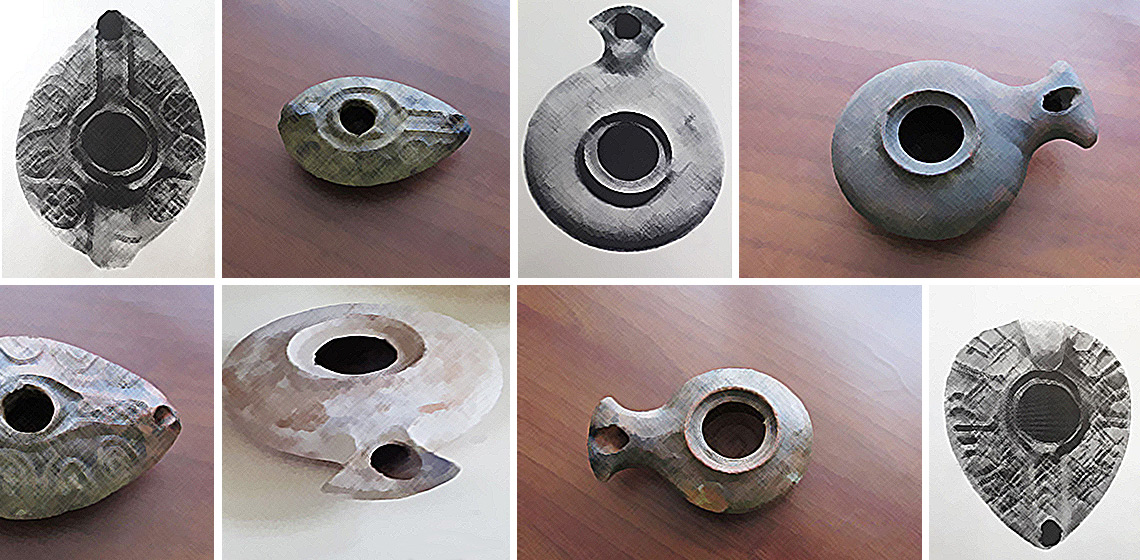
This article deals with the daily technology of ceramic oil lamps from the period of the 1st century AD until the first half of the 7th century AD. The questions underlying in this article include the following: How long did combustion take and what was its intensity? Were wicks pulled and when? Was the oil poured into an already-burning lamp...
The Vertical Olive Crushing Mill as a Machine and its Energy Balance - A Preliminary Approach
Publication Date
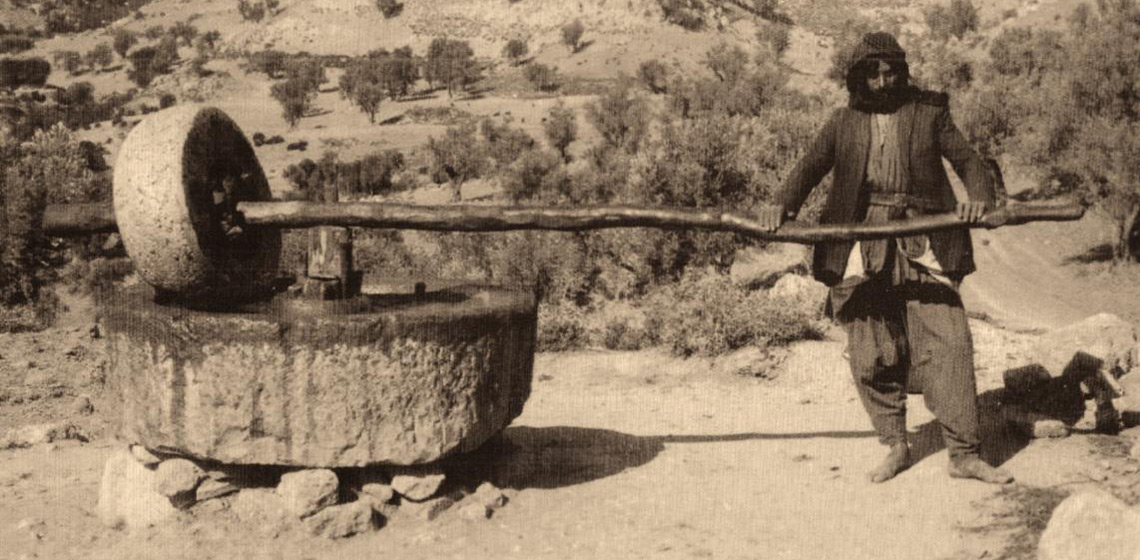
The vertical crushing mill turns the olives into pulp by combining the rotational and rolling motion of a heavy upright stone wheel that moves with continuous contact along a circular horizontal trajectory on a stationary base which forms the system's frame of reference. It was devised during the Hellenistic period and served as one of the most important and impressive means of production in the pre-industrial olive mills of Crete and the Mediterranean in general, until more advanced mill types gradually started replacing it from the mid-19th century onwards.
Bottle Gourd as an Implement for the Poor in Roman Italy
Publication Date
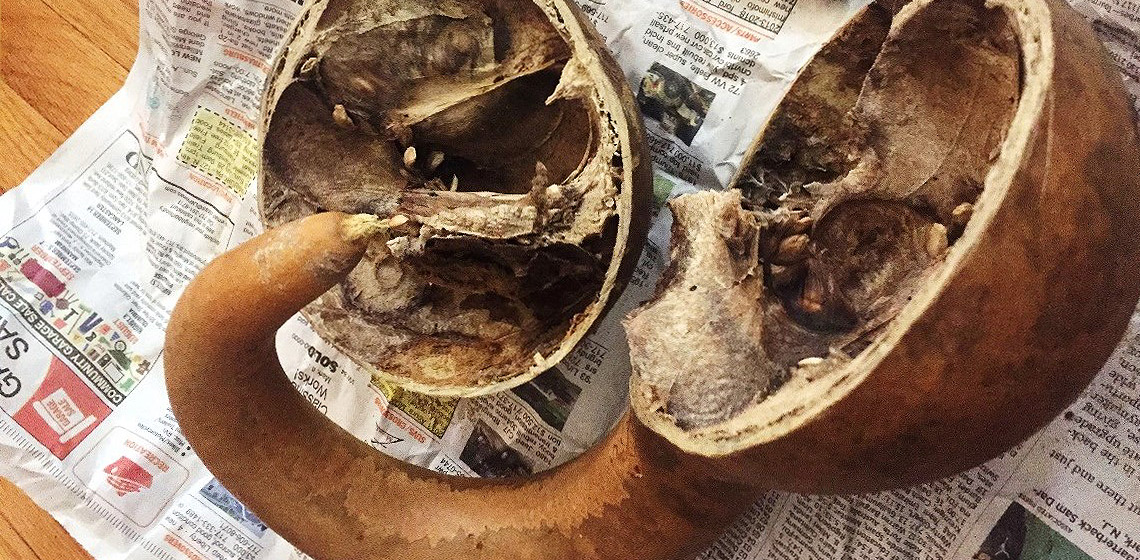
Bottle gourds, which are thought to have originated in Africa, have been collected and cultivated in Italy since antiquity for the making of vessels and utensils, as well as food, musical instruments, and fishing buoys. Columella and Pliny the Elder both write extensively about the uses of bottle gourds, yet the importance of this vegetable in antiquity is notably absent from modern scholarship...
Diet of the Poor in Roman Italy: An Exploration of Wild and Cultivated Plants as an Essential Dietary Component
Publication Date
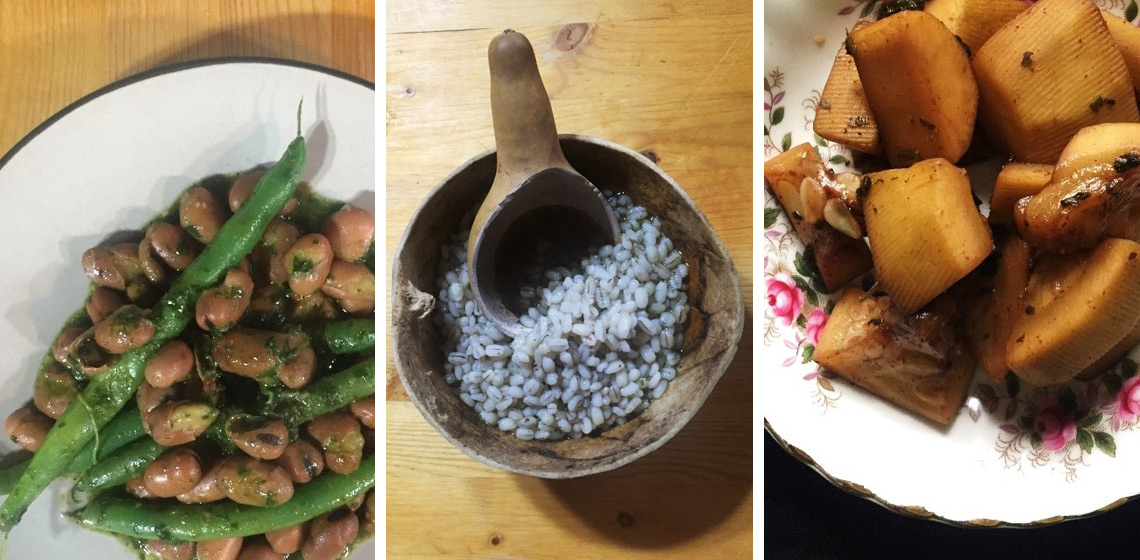
Most of the population of Roman Italy was poor, whether they were the poor who were constantly in search for food and shelter, or the temporarily poor who were artisans or shopkeepers but could fall into poverty at times. In classical literature, pleasures of the mind were favoured over pleasures of the body. Epictetus wrote that only stupid men spent time dwelling on matters of the body such as eating...
Smelting Conditions and Smelting Products: Experimental Insights into the Development of Iron Bloomery Furnaces
Publication Date
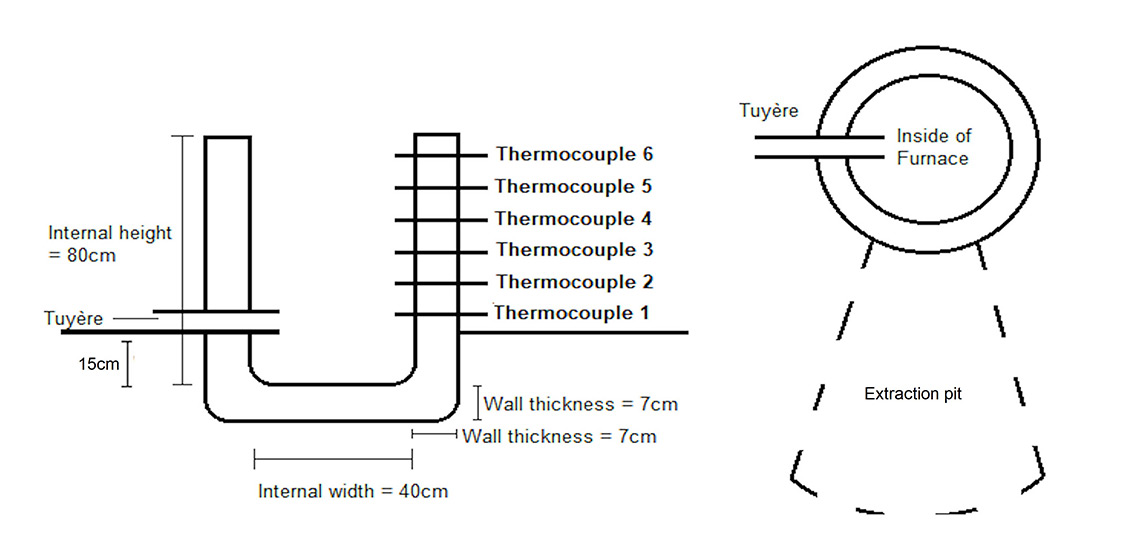
The material record for bloomery furnaces in Iron Age and Roman Britain is fragmentary and, because of this paucity of evidence, the reconstruction of the ceramic structures used in iron production is difficult. Experiments have nevertheless been carried out to ...
Columella’s Wine: a Roman Enology Experiment
Publication Date
11th EAC Trento 2019
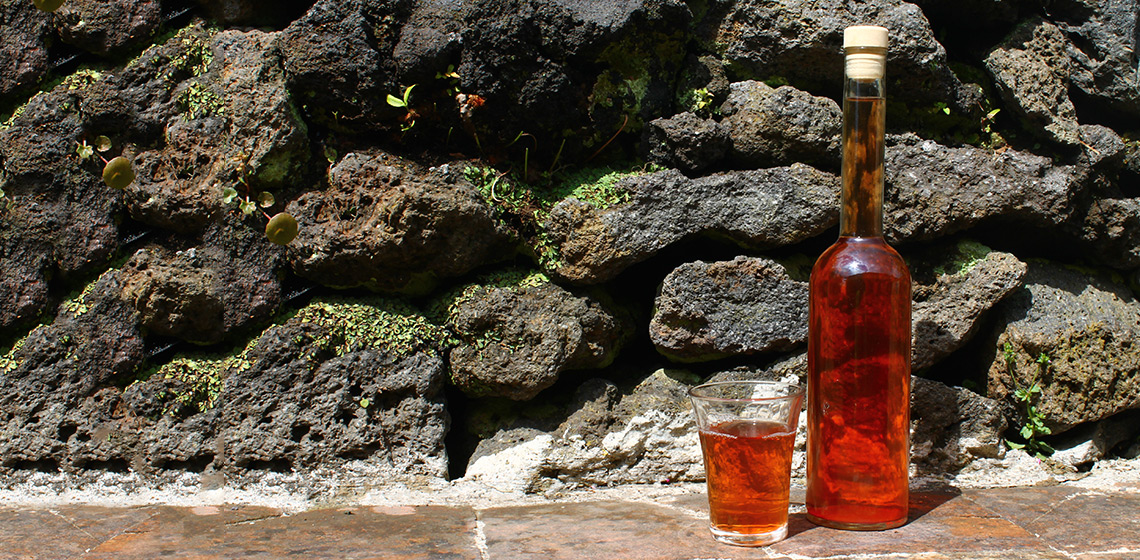
***The study of archaeological and written sources made it possible to commence an extensive research project on Roman viticulture, starting in 2013 on the slopes of Mount Etna, in Sicily (Indelicato, Malfitana and Cacciaguerra, 2017). The general aim is to thoroughly examine the knowledge of the Roman wine production cycle in the period between the first century BC and the second century AD, when wine production turned into an identifiable “industry”...
***The study of archaeological and written sources made it possible to commence an extensive research project on Roman viticulture, starting in 2013 on the slopes of Mount Etna, in Sicily (Indelicato, Malfitana and Cacciaguerra, 2017). The general aim is to thoroughly examine the knowledge of the Roman wine production cycle in the period between the first century BC and the second century AD, when wine production turned into an identifiable “industry”...
Book Review: Experimentelle Archäologie in Europa, Jahrbuch 2019
Publication Date
Annual Proceedings of the EXAR Tagung
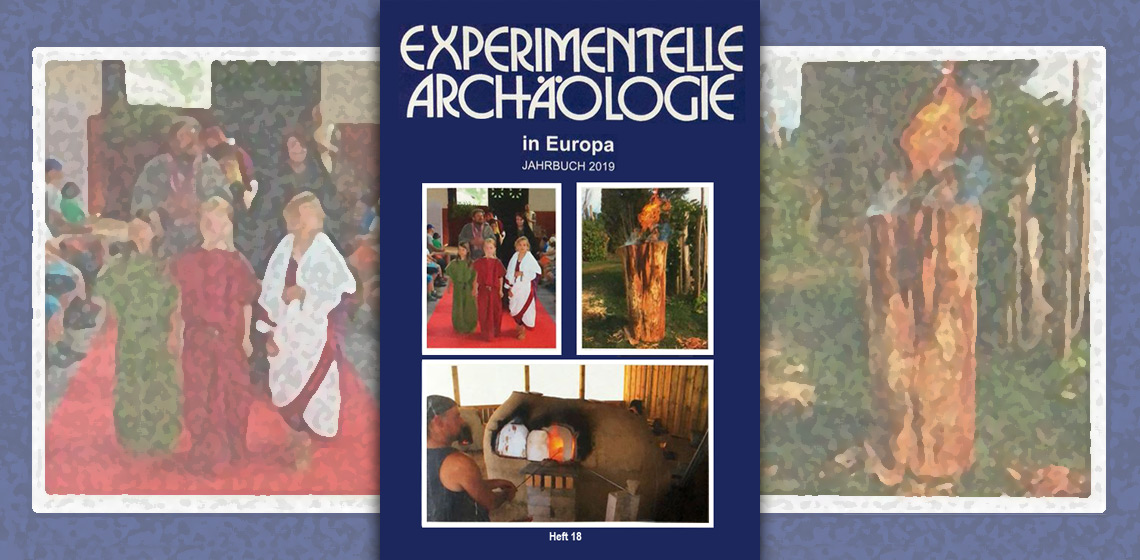
***It is the 18th issue of the periodical and includes 27 essays on experimental archaeology as well as an annual report (Jahresbericht, p. 321), an obituary for Sylvia Crumbach (p.325) and instructions for authors (Autorenrichtlinien, p. 326) of Experimentelle Archäologie in Europa on 328 pages...
***It is the 18th issue of the periodical and includes 27 essays on experimental archaeology as well as an annual report (Jahresbericht, p. 321), an obituary for Sylvia Crumbach (p.325) and instructions for authors (Autorenrichtlinien, p. 326) of Experimentelle Archäologie in Europa on 328 pages...
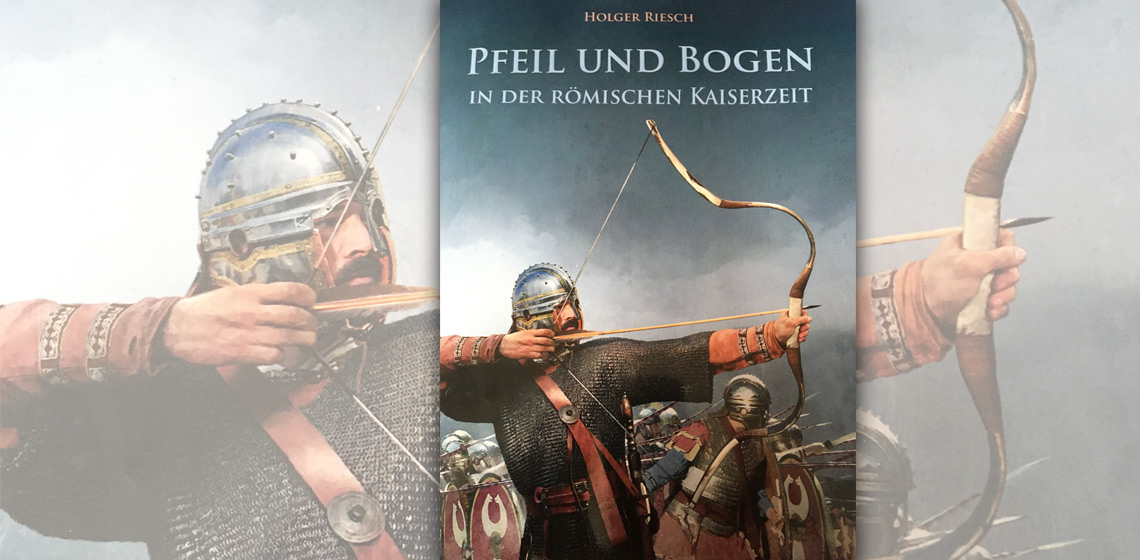
Book Review: Pfeil und Bogen in der Römischen Kaiserzeit, by Holger Riesch
Publication Date
This book closes a gap both in the documentation of the history of the Roman army as well as the history of archery in that it provides a very comprehensive overview on the use of bow and arrow in the Roman Empire. It collects and systematically discusses a wealth of information on a range of topics related to Roman archery in the imperial period and extends that discussion to previous and following periods...
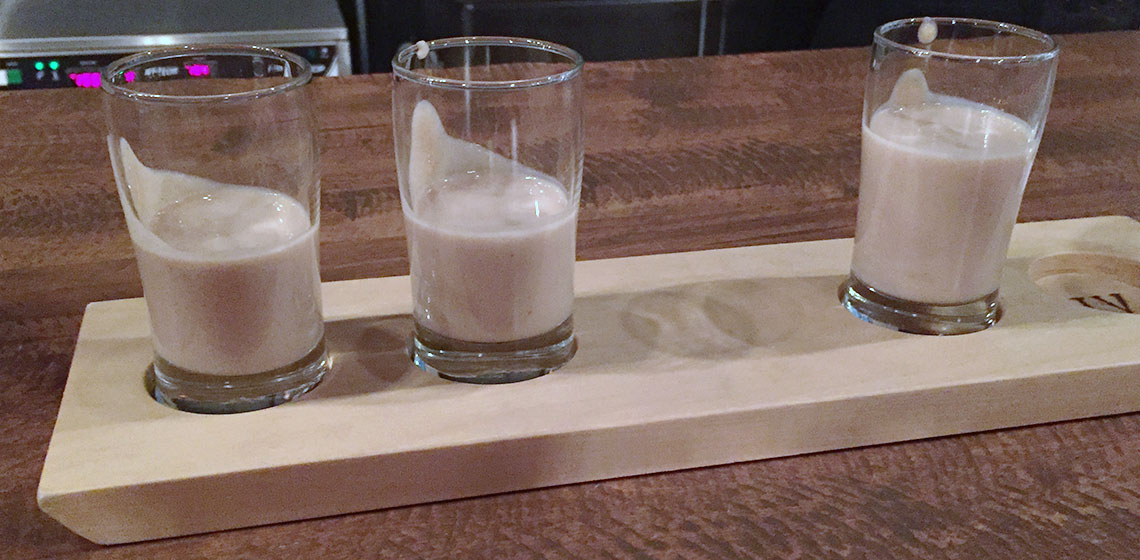
De Re Cervisia et Mulso, “on The Subject of Beer and Mulsum”
Publication Date
Beer has a long and ubiquitous history. Today it is the most consumed alcoholic beverage in the world; it is also the most popular drink after water and tea (Swot, 2016). But little consideration is typically given to how beer developed with respect to taste, and even less is given to why beer is thought of in the way that it is. There have been developments in this regard: the craft beer movement, ...