

The content is published under a Creative Commons Attribution Non-Commercial 4.0 License.
Themed Collections:
International Bronze Metallurgy Workshop
Persistent Identifier
https://exarc.net/ark:/88735/10079
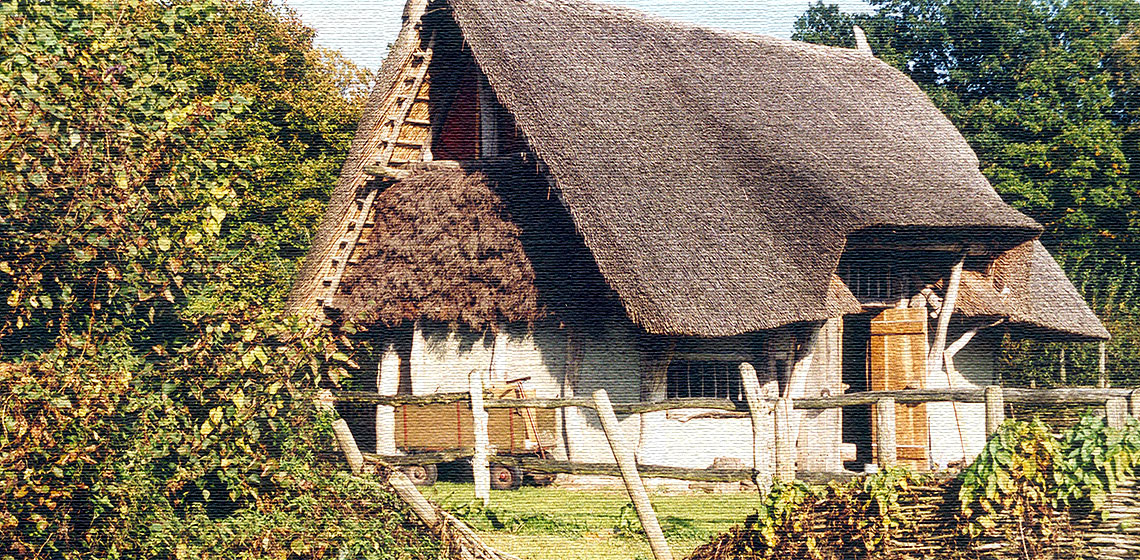
In 1999, at the archaeological education centre Wilhelminaoord, an international workshop took place, with a focus on the experimental and educational aspects of bronze metallurgy. The Proceedings, originally published in hard copy by VAEE, are republished here by EXARC.
Featured
Scandinavian Iron Age and Early Medieval Ceramic Moulds - Lost Wax or Not or Both?
Publication Date
1999 Wilhelminaoord Workshop
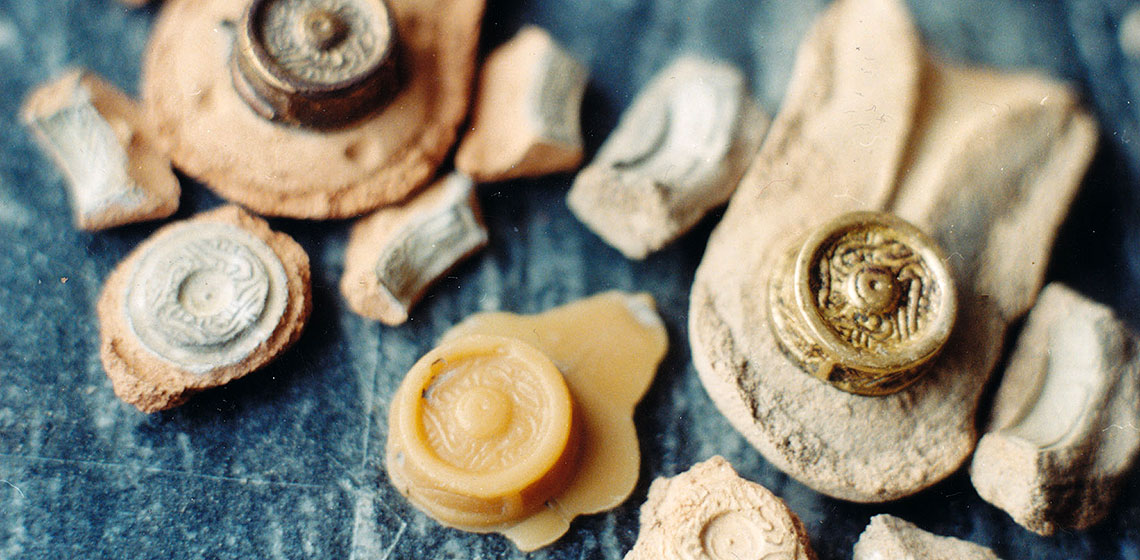
***Since the 1940s we have had a discussion in Scandinavia concerning ancient mould-making methods. The question of different methods in the production of ceramic moulds has taken a large part in these discussions; by lost wax or by direct matrix-methods...
***Since the 1940s we have had a discussion in Scandinavia concerning ancient mould-making methods. The question of different methods in the production of ceramic moulds has taken a large part in these discussions; by lost wax or by direct matrix-methods...
How Metallographic Examinations Can Give the Forming Process of Metal Artefacts? The Example of the Hoard of Farébersviller
Publication Date
1999 Wilhelminaoord Workshop
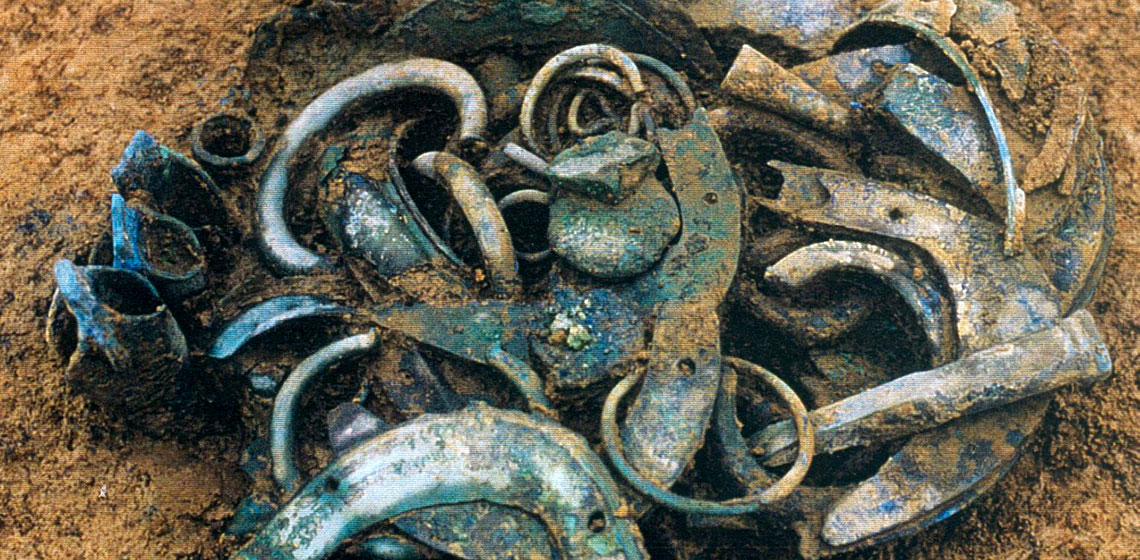
***The hoard of Farébersviller (Moselle, France) was discovered in 1991 during rescue excavations (See Image above). This set contains 130 "bronze" artifacts, which date to the Late Bronze Age (8th century BC)...
***The hoard of Farébersviller (Moselle, France) was discovered in 1991 during rescue excavations (See Image above). This set contains 130 "bronze" artifacts, which date to the Late Bronze Age (8th century BC)...
Historical Techniques: Cold Gilding
Publication Date
1999 Wilhelminaoord Workshop
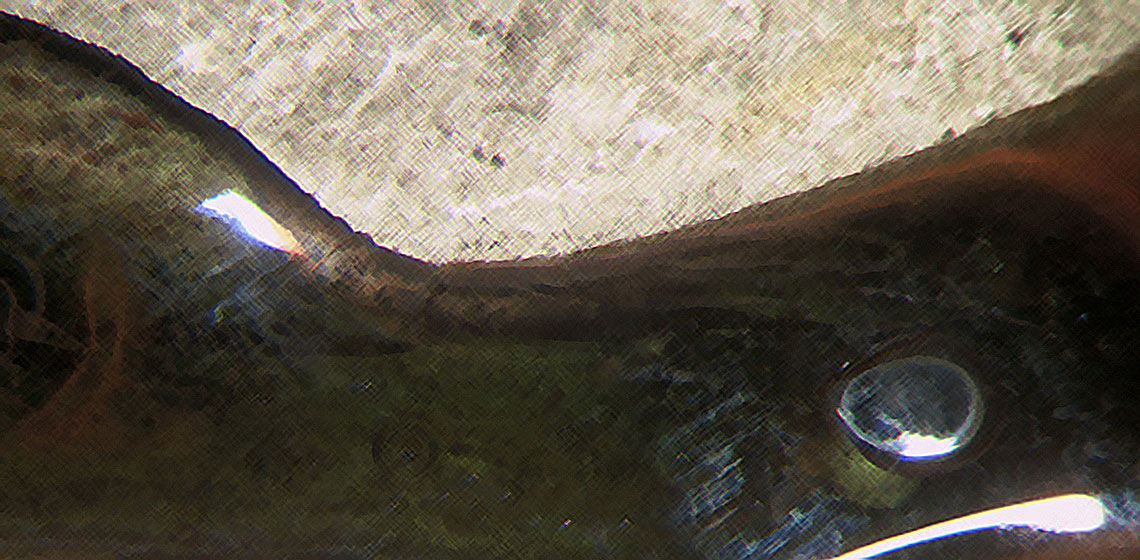
***An historal technique of goldplating, described in 18th century literature, was reproduced. This cold-plating technique uses salts of gold, produced by dissolving gold in aqua regia. these salts are then rubbed onto a silver surfaces...
***An historal technique of goldplating, described in 18th century literature, was reproduced. This cold-plating technique uses salts of gold, produced by dissolving gold in aqua regia. these salts are then rubbed onto a silver surfaces...
Precision Lost Wax Casting
Publication Date
1999 Wilhelminaoord Workshop
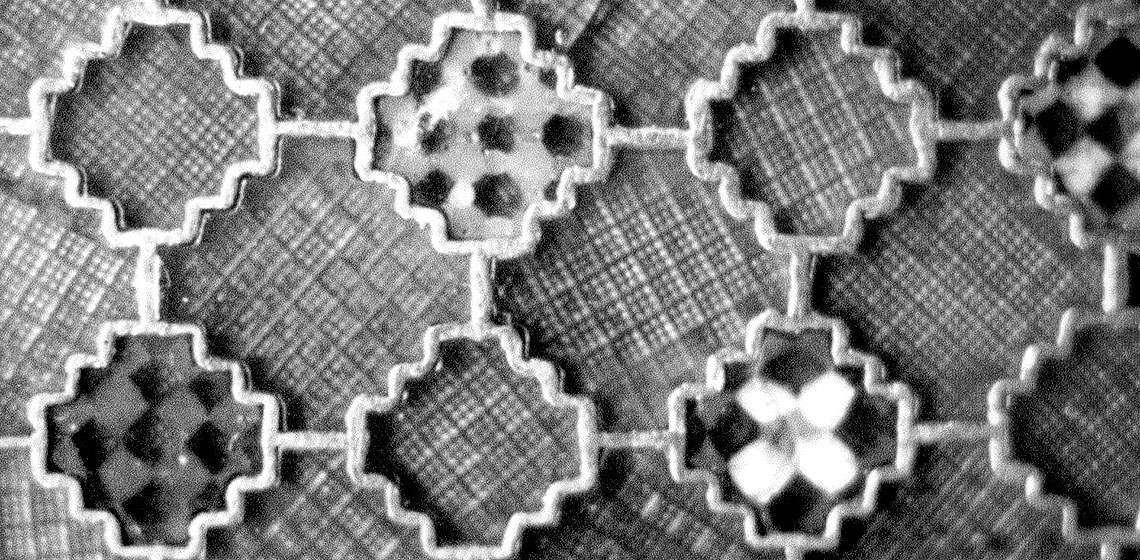
***The limits of precision casting were explored experimentally at the Bronze Casting Workshop at Wilhelminaoord, the Netherlands, by making wax models, moulds and lost wax castings using essentially early metalworking conditions. Geometrically patterned models of Dark Age type dies were used to...
***The limits of precision casting were explored experimentally at the Bronze Casting Workshop at Wilhelminaoord, the Netherlands, by making wax models, moulds and lost wax castings using essentially early metalworking conditions. Geometrically patterned models of Dark Age type dies were used to...
The Experimental Reconstruction in Bronze of a Merovingian Treasure Box from Sixth Century A.D.
Publication Date
1999 Wilhelminaoord Workshop
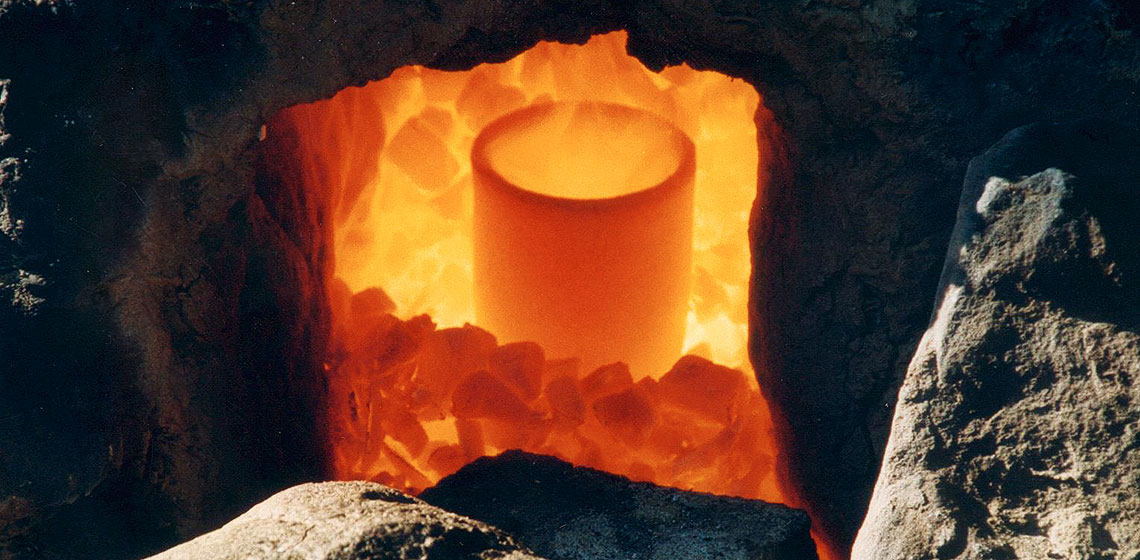
***Considerations about a lost ancient fabrication technique of bronze attachements from a merowingian treasure box pointed out that practical experiments had to be done to reconstruct the cast and coldwork. A self made oven and mould sould help to...
***Considerations about a lost ancient fabrication technique of bronze attachements from a merowingian treasure box pointed out that practical experiments had to be done to reconstruct the cast and coldwork. A self made oven and mould sould help to...
From the Object to the Mould: Is there a Connection between Microstructure of a Cast Bronze Object and its Mould Material Used?
Publication Date
1999 Wilhelminaoord Workshop
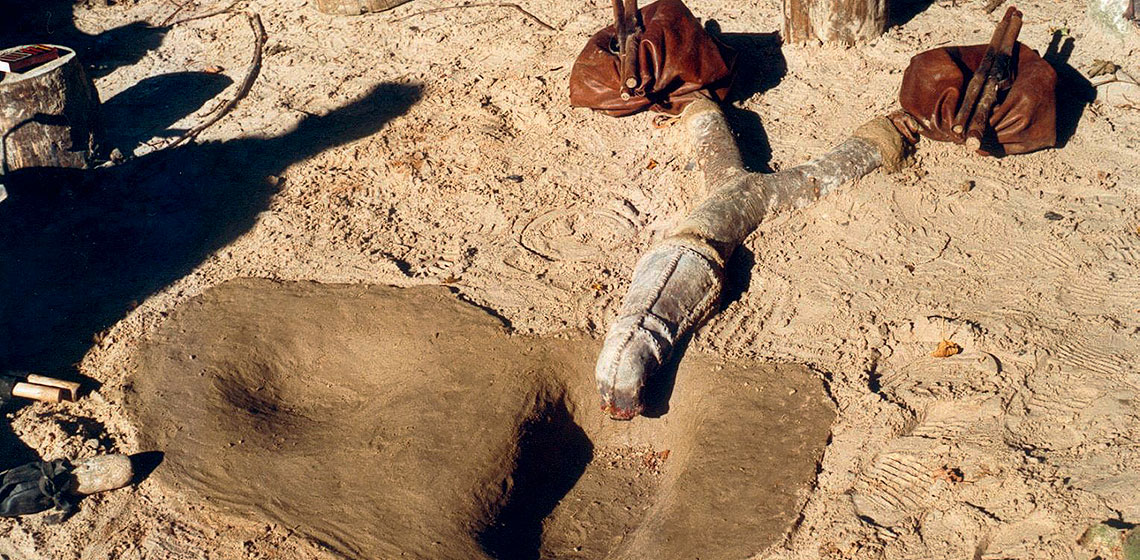
***The question studied within the framework of the Wilhelminaoord Workshop was: In which way the mould material does influence the cast structure of a bronze object? For this, casts in two different mould materials...
***The question studied within the framework of the Wilhelminaoord Workshop was: In which way the mould material does influence the cast structure of a bronze object? For this, casts in two different mould materials...
Producing Silver Sheet According to Cellini
Publication Date
1999 Wilhelminaoord Workshop
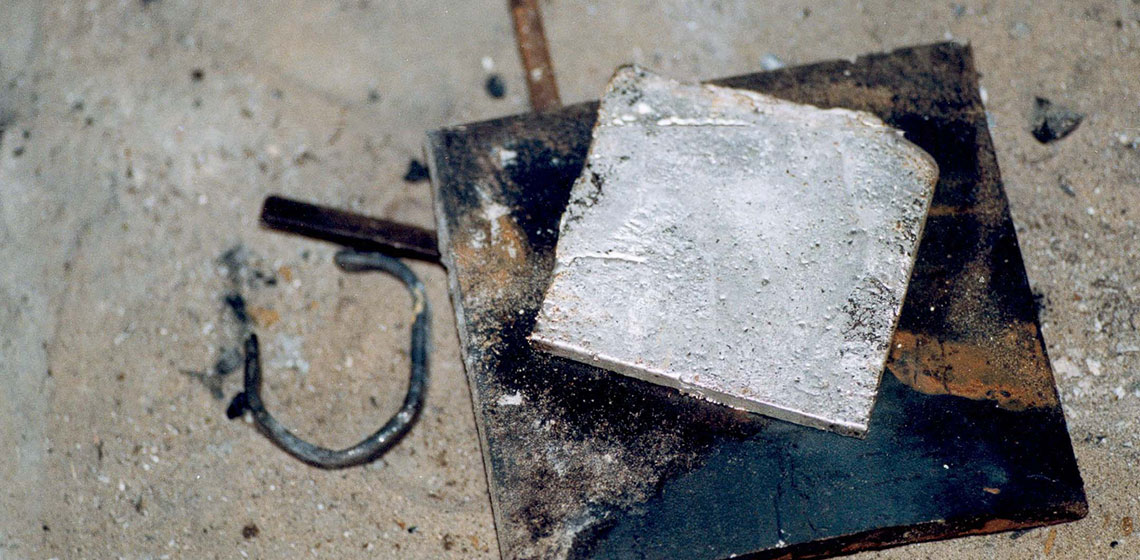
***During a short internship in The Hagues Municipal Museum, I noticed some blisters in a seventeenth century V.O.C.-dish. I thought they were gas bubbles which might have been introduced in the material during coagulation. When hammering to sheet the bubbles would take the shape of blisters which would turn visible during annealing. Why, however, were these shapes not visible on many other pieces?
***During a short internship in The Hagues Municipal Museum, I noticed some blisters in a seventeenth century V.O.C.-dish. I thought they were gas bubbles which might have been introduced in the material during coagulation. When hammering to sheet the bubbles would take the shape of blisters which would turn visible during annealing. Why, however, were these shapes not visible on many other pieces?
Ancient Repairs on Bronze Objects
Publication Date
1999 Wilhelminaoord Workshop
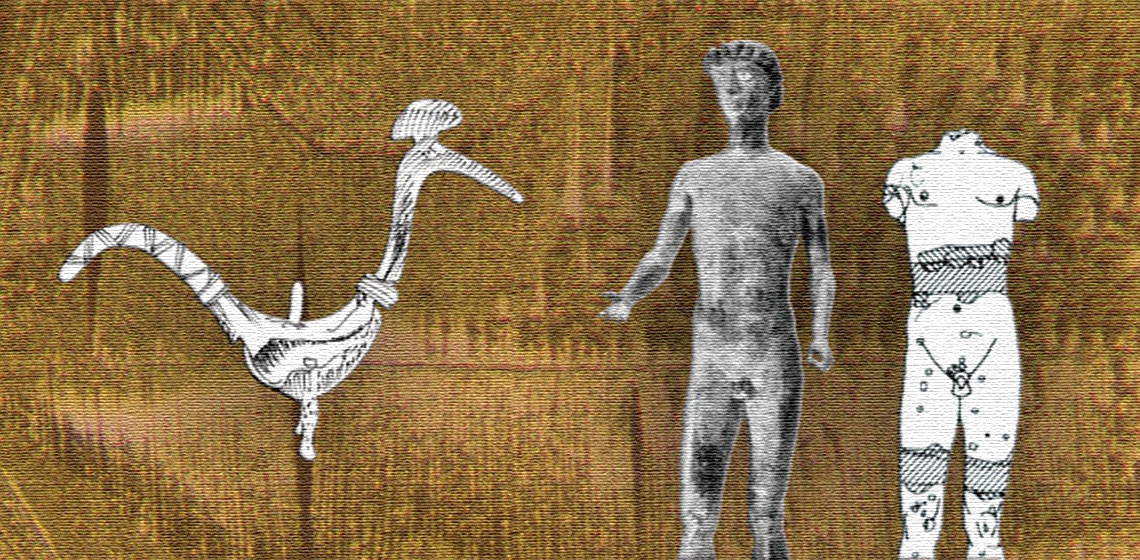
***Bronze objects can be damaged in many ways, for example during casting or during their time of use. Often this damage was repaired using various techniques. In this paper, some examples of ancient repairs and their techniques are described and illustrated with examples published in the literature...
***Bronze objects can be damaged in many ways, for example during casting or during their time of use. Often this damage was repaired using various techniques. In this paper, some examples of ancient repairs and their techniques are described and illustrated with examples published in the literature...