
The content is published under Creative Commons Attribution 4.0 International license (CC BY 4.0).
Reviewed Article:
Bread, Cereals and Fire: Experimental and Ethnoarchaeological Research on Iron Age Domestic Combustion Structures in North-Eastern Iberia
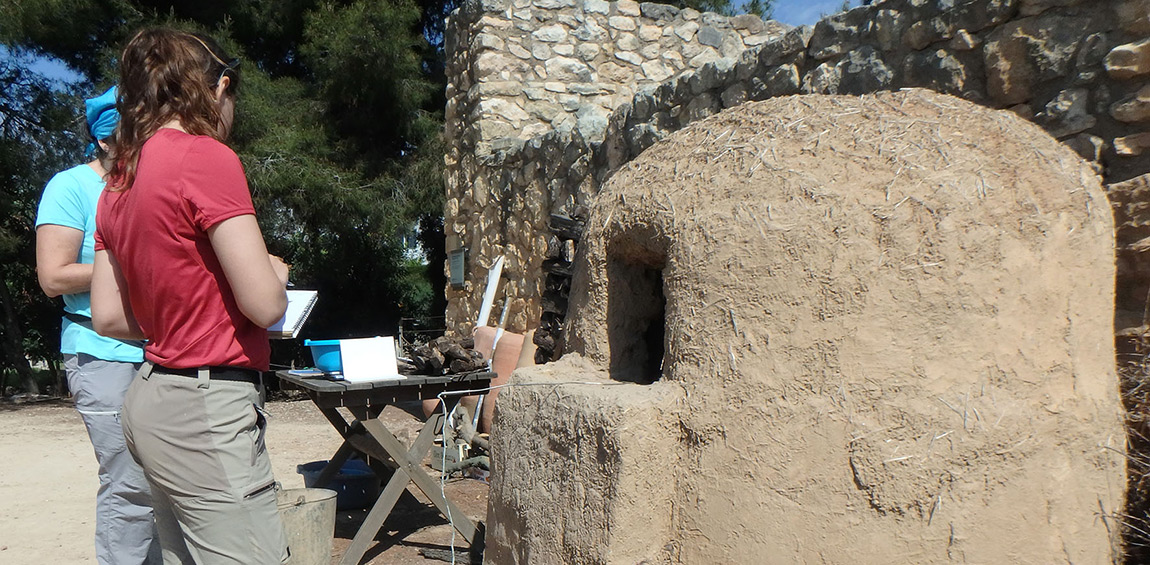
This paper presents the results of a series of experimental and ethnoarchaeological studies focusing on domestic combustion structures from the Iron Age of north-eastern Iberia, conducted between 2024 and 2026 within the TRANSCOMB Project. Building upon previous research, the study also combines archaeological evidence, experimental replication and ethnographic observations carried out in the Rif region of northern Morocco. The experiments investigated bread production and baking techniques using a reconstructed protohistoric oven, the intentional charring of bread to obtain comparative reference materials, and the roasting of cereals as a potential source of archaeobotanical remains. Systematic monitoring of fuel consumption, temperatures and combustion processes was combined with interdisciplinary sampling and analysis. The results provide new insights into the functioning of domestic ovens, traditional bread-making practices, and the formation and preservation of charred bread and cereal remains. More broadly, the study demonstrates the value of integrating experimental archaeology and ethnographic observation to improve interpretations of Iron Age domestic activities and combustion structures.
Ethnography and experimentation as complementary approaches
Combustion structures constituted one of the principal focal points of activity in past societies and were associated with numerous everyday practices, including food preparation, the production of heat and light, the transformation of materials, and a variety of other domestic activities (Fernández, Vergés and Allué, 2013; Aldeias, 2017). For this reason, they can be analysed from multiple perspectives and represent a particularly suitable field of study for experimental approaches. The construction of replicas of domestic hearths and ovens, together with the repeated ignition and use of these installations for cooking and other tasks, accompanied by systematic recording and sampling, can provide a substantial body of reference data for the study of both the structures themselves and the associated processes and activities (Fernández, Vergés and Allué, 2013; Belarte, Pastor, et al., 2023; Belarte, Portillo, et al., “Interdisciplinary approach”, 2023). The combination of experimental archaeology and ethnographic observation can bring us even closer to understanding the possible uses of these key elements of domestic life in the past (Mallol and Henry, 2017).
From earlier research to new experiments
Since 2020, we have been developing a research project focused on Iron Age domestic combustion structures in the north-western Mediterranean , with particular emphasis on north-eastern Iberia (Fig. 1a). Among its various methodological approaches, the project includes a significant experimental archaeology component. Part of the experimental work, carried out between 2021 and 2022, sought to determine whether significant variations could be observed in the use of combustion structures (hearths and ovens) of different construction types and locations, as well as in the use of different fuels, taking into account taphonomic factors that have proven fundamental for the interpretation of the archaeological record. Experimentation works took place at the Calafell Iberian Citadel, a reconstructed Iron Age site open to visitors and an institutional member of EXARC (Fig. 1c).
Systematic monitoring of the fuelwood used was incorporated into the experiments, focusing primarily on Pinus halepensis (Aleppo pine), Olea europaea (olive), and Quercus ilex (holm oak). The selection of fuel was based on archaeobotanical evidence from Protohistoric sites in north-eastern Iberia (Buxó and Piqué, 2008; Piqué, Vila Moreiras and Alonso, 2011; Vila Moreiras and Piqué, 2012; Vila Moreiras, 2018), as well as on our own ethnographic observations. The aim was to assess how different combustion regimes influence the preservation and anatomical characteristics of charred wood remains (Théry-Parisot, Chabal and Chrzavzez, 2010; Théry-Parisot and Henry, 2012; Chrzavzez, et al., 2014; Théry-Parisot, Henry and Chrzavzez, 2016). Attention was paid to charcoal vitrification by reproducing a range of combustion scenarios designed to identify the conditions under which this alteration may develop unintentionally during everyday domestic activities (McParland, et al., 2010; Vidal-Matutano, et al., 2019). To this end, different fire-extinction regimes were tested in both hearths and ovens, including rapid and gradual extinction (Braadbaart and Poole, 2008). Anthracological analysis of the resulting charcoal assemblages is currently in progress.
Some of this research has already been published, both in this journal (Belarte, et al., 2022) and elsewhere (Belarte, Pastor, et al., 2023; Belarte, Portillo, et al., “Interdisciplinary approach”, 2023; Mateu, et al., 2025). In addition, during 2024 and 2025 members of the research team carried out two short ethnographic fieldwork campaigns in northern Morocco, specifically within Al Hoceima National Park in the Rif region (Fig. 1a). Ethnographic work was conducted following ethical protocols under full permission, and enabled us to document the construction, maintenance and repair techniques of traditional ovens, whose primary function is bread baking (Fig. 1b). Reflections arising from observations made during the first visit also resulted in a paper published in EXARC Journal (Belarte, et al., 2024).
Observations carried out in the Rif led us to experiment with bread production and baking using a replica of a Protohistoric oven. To this end, we relied on available archaeological evidence while also drawing inspiration from Amazigh models. As will be discussed in this article, several different baking procedures were tested.
More recently, we sought to incorporate a topic of growing interest within archaeological research: the identification of charred remains that may correspond to bread products recovered from several Iron Age archaeological sites (Badal García, 2025; Chulvi-Escribà, Carrión Marco and Pérez-Jordà, 2026). Accordingly, as part of our experimental programme, bread was intentionally burnt both in an oven and in hearths in order to obtain reference samples for comparative purposes.
The experimental work was further complemented by cereal-roasting experiments involving both hulled barley ( Hordeum vulgare ) and common wheat ( Triticum aestivum ), the principal crops cultivated in north-eastern Iberia during the period under study (Alonso, 1999; López Reyes, Valenzuela-Lamas and Sanmartí, 2011). Roasting experiments were carried out both in hearths and in the oven. This practice was undoubtedly common in Protohistoric contexts, although it is not always easy to identify in the archaeological record, despite the existence of ethnographic evidence.
It should be noted that all experimental work carried out within the framework of our project has followed the same methodology (Belarte, et al., 2022; Belarte, Pastor, et al., 2023; Belarte, Portillo, et al., “Proposta metodològica”, 2023): initial weighing of fuel; systematic recording of temperatures, combustion duration and associated actions; collection and weighing of fuel residues at the end of each combustion event (for subsequent macrobotanical analysis following flotation and sorting); and systematic sampling for high-resolution interdisciplinary analyses, including phytoliths and calcitic plant and faecal micro-remains, FTIR, thin-section micromorphology and organic residue analysis.
The structures used consisted of one oven (Oven 2), described in the following section, and two hearths: an indoor hearth (Hearth 10) and an outdoor hearth (Hearth 4) (Fig. 2). Both hearths consisted simply of a layer of earth composed by calcite, clay and quartz (Belarte, Pastor, et al., 2023, p.76) laid directly on the ground surface, without any prior preparation.
Building and adapting an experimental oven
A significant part of the work presented in this article focuses on bread production and the use of domestic ovens during the Iron Age (7 th – 2 nd cent. BC). Archaeological evidence for Protohistoric ovens is relatively scarce, particularly regarding the vault that enclosed the combustion chamber and fundamentally distinguished these structures from hearths, which were open installations (Pons, Molist, and Buxó, 1994, pp.49-51). In some cases, the lower part of the vault is preserved, but never in its entirety. When even the lower section is absent, it becomes difficult to determine the location of the oven mouth, its dimensions, or whether the structure originally included additional openings. Another feature that distinguishes some ovens from hearths, is that they may be built on a raised platform of varying height, although this element is not always present (Belarte, Anguera, et al., 2026, Figure 3; Belarte, Pastor, et al., 2026).
During the first phase of experimental work within the project, already published elsewhere, we used a small pre-existing oven at the Calafell Iberian Citadel designed for educational purposes, modifying it only by applying a new external coating (Oven 1). This oven is made of mudbricks, and the walls were 16 cm thick, to which must be added the 1.5–2 cm thick coating layer. The oven measures externally 60 cm in height from the combustion surface to the top of the dome and is not raised on a platform (Belarte, et al., 2022, Figure 7). It has two openings: one frontal and one on the top. Its characteristics, particularly the fact that the oven floor was almost at ground level, made handling food and utensils inside the structure rather inconvenient.
For the work presented here, we used another pre-existing oven at the Calafell Citadel, also employed for educational activities, which differs significantly from Oven 1 and which we have designated Oven 2. Its design was inspired by Amazigh models, drawing on documentation gathered prior to this project as well as our ethnographic observations in the Rif region (Belarte, et al., 2024; Belarte, Anguera, et al., 2026). Oven 2 is larger than Oven 1, with an oval ground plan measuring 90 cm in diameter and a vault 72 cm high. The structure is also built of mudbrick, with walls 17 cm thick, and covered by a 2-3 cm thick layer of mud mixed with vegetal temper. The oven is raised on a platform 83 cm high.
Although the platforms documented for Protohistoric ovens were not as elevated as that of Oven 2 (Belarte, Anguera, et al., 2026, Figure 3), this height proved particularly practical for experimental work. Before using the oven, we modified its form on the basis of our observations in the Rif. Most of the observed ovens possess a projecting ledge in front of the oven mouth, known locally as a “lip”, which serves to retain the embers removed from the chamber during bread baking, as illustrated in Figure 1. Although there is no archaeological evidence for the existence of such a feature in Iron Age ovens, we added one to Oven 2 in Calafell in order to replicate more effectively the bread-baking technique observed ethnographically, namely baking with residual heat after the fuel has been consumed and the embers removed (Belarte, et al., 2024). To construct this feature quickly, we attached a small mudbrick pillar to the front of the oven and modelled a projecting ledge or “lip” using mud mixed with straw, creating a shelf-like structure in front of the oven mouth (Fig. 3).
Two recycled metal plates were used to cover the front and upper openings of the oven (Fig. 4), following examples observed in Morocco and also documented in other North African contexts, such as the Tunisian High Tell (Portillo, et al., 2017, Fig. 3d). We are aware that such materials would not have been used during the Iberian period. However, our objective in this case was primarily to reproduce the bread-making process documented ethnographically. For the Iron Age, no artefacts can confidently be interpreted as oven covers, although ceramic lids, earth mixed with straw, or stone slabs, perhaps sealed with mud, may have been employed. In some Rif examples, the upper opening was covered with ceramic dishes or earthen lids.
We also employed tools similar to those used in the region today, particularly a type of mop used to clean the interior of the oven, as well as wooden paddles for handling loaves during baking, comparable to the baker’s peels still used in modern bakeries (Fig. 4).
Baking bread in a protohistoric oven
The first bread-making experiment within our project took place in Oven 2 in September 2024 and followed the procedure observed in the Rif during April of the same year (described in Belarte, et al., 2024).
To prepare the bread, we mixed 500 g of commercial wheat flour, 125 g of water, one sachet of yeast (5 g), and a small amount of salt in a bowl. The dough was allowed to rest for ten minutes before being shaped into three loaves, which were then left to prove for about thirty minutes.
At the same time, the oven was lit using approximately 5 kg of fuel consisting mainly of pine (twigs, wood shavings and cones) and olive/wild olive branches in roughly equal proportions, together with several palm leaves (Table 1). Preference was given to small branches and other plant materials that would burn quickly after ignition.
Only twenty minutes after lighting the fire, the fuel had been reduced to embers and the temperature of the oven floor had reached 451°C . At this point, the embers were removed and the oven was cleaned using a wet mop made from strips of cloth tied around a wooden pole, inspired by the tool observed in use in the Rif. The embers were left concentrated on the oven “lip”, the loaves were placed inside, and the oven was sealed (Fig. 5). During the cleaning process, however, the temperature dropped considerably to below 100°C.
From the moment the oven was lit until the baked loaves were removed, temperatures were continuously monitored and were found to remain around 90°C. After 47 minutes, the loaves were removed. They had baked at a relatively low temperature (Table 1). The dough had risen only slightly and remained undercooked in the interior. The temperature achieved was probably insufficient, either because the upper and front covers did not fit tightly enough and allowed heat to escape, or because too much time elapsed between removing the embers and sealing the oven after cleaning. Based on these observations, we concluded that the process needed to be carried out more rapidly.
Two days later, a second bread-making experiment was conducted using the same general method, although several aspects of the procedure were refined. The dough recipe remained broadly similar, but this time consisted of 500 g of commercial flour, 195 ml of water, 14 g of fresh yeast dissolved in 50 ml of water, and salt. The principal difference therefore lay in the use of fresh rather than powdered yeast. After mixing, the dough was left to rest for ten minutes. It was then divided into three loaves, which were covered and left to prove for approximately two hours.
Meanwhile, the oven was lit using 6.5 kg of plant fuel composed of pine (twigs, needles, bark and cones), olive/wild olive branches and a single palm leaf (Table 1).
The fuel took around 20 minutes to burn down while the chamber temperature remained close to 500°C. The embers were then removed, the remaining fuel residues cleared away, and the oven floor cleaned. Before introducing the loaves, the upper opening was sealed. The bread baked for 44 minutes at an average temperature of approximately 150°C both in the chamber and on the oven floor. This time the loaves baked more successfully and rose somewhat better than during the previous experiment. A greater quantity of fuel had been used, the embers were removed more rapidly, and the oven remained hotter throughout the baking process.
We are aware that environmental conditions may affect the results of the experiments in some way. Calafell is located by the sea and has a very humid climate. Since the beginning of our project, the experimental work was carried out during various periods of the year and under different climatic conditions —sometimes including rain— and we observed that humidity has a particular impact on the processes described, particularly when the fuel is wet (Belarte, et al., 2022).
Weather conditions during the experiments described here were quite favourable. During the first bread-making experiment, the temperature was of 27°C and the relative humidity of 56%. During the second experiment, the atmospheric conditions were slightly different, with a lower temperature (24°C) and lower relative humidity (38%). These drier conditions perhaps had a favourable effect on the process. However, we believe that, more than weather conditions, the key factors in the second experiment were more precise control of the fuel (by better adjusting the amount used) and the duration for which the oven remained open (thereby preventing the oven chamber from cooling down).
TABLE 1
In April 2025 we returned to the Rif. In addition to observing newly constructed ovens that had appeared since our previous visit, we again participated in the preparation and baking of bread in the same oven studied during the earlier campaign (Belarte, et al., 2024). The goal was to verify whether we had replicated the process correctly. On this occasion we also brought a portable pyrometer to measure temperatures directly (Fig. 6) and compare them with our experimental results.
The general procedure was essentially the same, although some differences were observed. Most notably, additional fuel was added several times immediately before the bread was placed in the oven. Local informants explained that they feared the temperature would otherwise be insufficient. In this context, temperature was estimated not through instruments or test materials but through accumulated experience. Furthermore, extra fuel was added between the two successive batches of bread. According to our pyrometer measurements, the combustion surface reached approximately 420°C and remained at around 200°C after the embers had been removed. The bread was baked at temperatures above 100°C.
Beyond establishing the actual temperature at which the bread was baked and confirming that our first experiment had been conducted at too low a temperature, observing the process demonstrated the crucial importance of experience in mastering traditional and craft-based technologies.
These experiments led us to reflect on how bread may have been produced in morphologically similar archaeological domestic ovens. The system we tested is rapid and effective but not particularly efficient, as it requires large quantities of fuel. According to our informants, this is precisely why such structures have largely fallen out of use in traditional societies (Belarte, et al., 2024). Today, in our study area in the Rif, the system is economically viable only when used on a communal basis: fuel is gathered collectively, bread is baked for several households at once, and the residual heat of the oven may subsequently be used to cook other foods as well.
Identifying charred bread in the archaeological record: a reassessment
Archaeological remains of charred bread-like products have been known since the mid-nineteenth century from a variety of contexts and preservation conditions, the most iconic example being Pompeii (Cardenas, et al., 2023). With the introduction of scanning electron microscopy (SEM), the study of these remains has expanded beyond macrostructural analysis to include the examination of their microstructure, particularly the identification of the plant tissues they contain (Valamoti, 2011; Heiss, 2014; González-Carretero, 2020; Corti, et al., 2024). As a result, the number of cases in which flour-derived products have been identified in archaeological contexts has increased considerably in recent years. The earliest examples originate in the Near East and date to the Natufian period, approximately 14,400 years ago (Arranz-Otaegui, et al., 2018). Closer to the contexts discussed in this article, such products have been identified at Iron Age sites in eastern Iberia and the Balearic Islands among charred remains recovered through the flotation of archaeological sediments (Pérez-Jordà, Carrión and Esquembre, 2024; Badal García, 2025; Chulvi-Escribà, Carrión Marco and Pérez-Jordà, 2026).
Knowledge of these discoveries prompted us to reflect on the methods that may have been used for bread baking in the past. If all embers are removed and the oven is cleaned before the bread is introduced, it seems unlikely that the bread will burn. This observation led us to reconsider our experimental method and to examine other examples of traditional ovens still in use today, looking for variations in baking practices that we may have overlooked. In particular, we searched for evidence closer to our study area. Such information is scarce because traditional ovens are no longer commonly used. In Spain, in cases where knowledge of their use still survives, these installations are generally communal ovens housed in dedicated buildings rather than domestic structures, and they differ significantly from archaeological examples, especially in their much larger dimensions, such as those described by Albir Herrero (2010). Some traditional houses and farmsteads still preserve ovens, but either they are no longer used or those who use them no longer know the traditional procedures. Furthermore, as these ovens are often located inside buildings rather than standing independently, access generally requires contacting the owners, who are not always easy to locate. Fortunately, among the limited available sources, there is an online publication describing bread production and oven operation, together with other aspects of rural life, in the Maestrat region of northern Castellón Province (Spain).
According to this online publication, traditional bread-making in rural farmhouses was very similar to the process described and observed in the Rif. Fuel consisted mainly of gorse branches and other shrubs. The oven was not filled with fuel all at once, as this would make ignition more difficult. Instead, it was partially loaded and additional fuel was gradually added until the appropriate baking temperature, generally around 240°C, had been reached. Bakers employed various methods to assess when this temperature had been achieved, such as observing the colour of the vaulted roof, which was typically made of stone and turned whitish when sufficiently heated; holding a hand near the oven opening to gauge the heat; or sprinkling a little flour inside and observing how quickly it browned or burned. Once the oven was considered ready, the embers were gathered on the left-hand side using a stick, after which the oven floor was swept with a reed carrying tied bundles of brushwood or damp cloths at one end. Once the ashes had been moved aside, the loaves were introduced and baked for approximately 25 to 60 minutes. In other words, the embers were not removed from the oven before baking but were merely pushed to one side.
A further indication that embers remained inside traditional ovens during bread baking can be found in the study by Albir Herrero (2010) of a modern communal oven at Alpuente, in the Serranía region of Valencia (Spain). Although the author does not explicitly state that the loaves were introduced without completely removing the embers, the article does mention that ashes from previous firings had to be removed before lighting the oven (Albir Herrero, 2010, p.154). In this case as well, the fuel consisted of gorse and other shrubs.
Taken together, these accounts demonstrate that baking bread in ovens without completely removing embers and ashes was also a common practice in the Iberian Peninsula in the more recent past. It is during this type of bread-baking process that accidents could occur, resulting in the bread being burnt, or that small pieces of discarded bread might be intentionally thrown into the oven.
Experimental production of charred bread samples
The research described above and the reflections arising from it led us to undertake a new phase of experimental work in 2026. This time, the principal objective was to obtain reference samples of burnt bread that could be compared with archaeological remains, thereby improving our understanding of these baked products. A second objective was to test bread baking while leaving embers inside the oven, a procedure that might also allow fragments of bread to become burnt.
In addition, two experimental hearths were used to increase the number of reference samples of burnt bread.
Bread baking and the experimental charring of loaves
During this new phase of experimentation, carried out between 27 and 29 April 2026, three additional combustions were conducted in Oven 2 (hereafter referred to as Combustions 1/26, 2/26 and 3/26), each involving slight procedural variations (Table 2).
Combustion 1/26
The aim of the first combustion was not bread baking itself but the intentional burning of loaves to obtain reference samples. The loaves introduced into the oven had been baked three days earlier by the Calafell Citadel team specifically for the experiment. To produce bread-like product comparable to that which may have been made in Protohistoric times, they were prepared using stone-ground common wheat flour, without added yeast or salt. The use of unrefined flour was also necessary to facilitate the identification of plant remains once the bread had been burnt.
In this experiment, 2,347 g of fuel was used, consisting of oak logs and bark, pine needles, twigs, and wood shavings. This quantity was lower than that used in previous experiments because no actual baking was required and therefore high temperatures were unnecessary. The fuel took 46 minutes to burn down to embers. Once the embers had been pushed to the rear of the chamber, two loaves were placed inside close to them. They became partially burnt but did not carbonise because the embers were no longer incandescent. The maximum temperature recorded was 103°C (Table 2; Fig. 7a).
TABLE 2
Combustion 2/26
For the second combustion, approximately 4,500 g of fuel was used, consisting of oak (logs and bark), pine (needles, branches and wood shavings), and straw from both common wheat and hulled barley.
The objective in this case was to bake bread while leaving the still-hot fuel pushed against the walls of the oven. The bread had been prepared the previous day using stone-ground wheat flour mixed with water and 5.5 g of baker’s yeast.
The fuel was consumed more rapidly, burning down within 22 minutes. The embers were then moved to the sides of the chamber. Four loaves were introduced into the oven: one in the centre and three around the sides, close to the fuel. The central loaf baked for 47 minutes and reached a temperature of 93°C in its surface, while the loaves placed near the sides remained in the oven for almost an hour and reached temperatures of up to 125°C. Loaves temperatures were measured with an infrared pyrometer PCE-889B.
Combustion 3/26
During the third combustion, a substantially larger amount of fuel was used (approximately 11,700 g), consisting of pine logs, wood shavings, twigs, needles and cones, together with holm oak logs and bark. The objective was to achieve complete carbonisation of loaves that had already been baked, as in the first firing.
The fuel took approximately one hour to burn down. Two loaves were then placed inside the oven: one in the centre of the chamber (Bread 1) and the other at the rear (Bread 2), close to the embers. Bread 1 remained inside for 24 minutes and Bread 2 for 34 minutes. Rather than being removed, both loaves were left inside the chamber near the mouth of the oven, away from the embers and direct heat, and the oven remained sealed until the following day. Under these circumstances, the loaves became heavily carbonised (Fig. 7b).
Following each firing, the methodology employed throughout the project was followed (Belarte, Pastor, et al., 2023; Belarte, Portillo, et al., “Proposta metodològica”, 2023). The oven floor was sampled for interdisciplinary analyses, including calcitic wood ash pseudomorphs, FTIR, residue analysis and micromorphology (Fig. 8a), while all fuel residues were collected for recovery of macrobotanical remains through flotation. The charred loaves, which retained their shape despite burning, were collected, individually wrapped in aluminium foil (Fig. 8b) and reserved for later microscopic examination.
Completing the record of charred remains: bread burning in hearths
In addition to bread baking and burning in Oven 2 (Table 2), the 2026 programme included experimental hearth combustions (Table 3) for several purposes, principally the investigation of cereal roasting discussed in the next section. During some of these experiments, fragments of the loaves made from stone-ground flour were thrown directly into the flames to obtain additional reference samples (Fig. 9a).
In this case, bread exposed directly to the flames appeared much more heavily carbonised than bread placed inside the oven in contact with embers, to such an extent that it could easily be mistaken for charred fuelwood (Fig. 9b). As has already been demonstrated for archaeological charred bread remains, it is expected that these carbonised fragments will nevertheless be identifiable following flotation.
The carbonised remains of one of the samples have been analysed with a scanning electron microscope (SEM) to examine both the microstructure and the ingredients used (common wheat). In Figure 10 we can observe a high percentage of micro-pores, which are diagnostic of leavened bread (González Carretero, Wollstonecroft and Fuller, 2017; González Carretero, 2020). The SEM study shows the presence of cereal tissues, specifically fragments of the pericarp and the aleurone layer (Fig. 10b). In figure 10c we can see the protein within the aleurone layer.
Experiments involving burnt bread showed that it is difficult for such remains to become fully carbonised accidentally during the baking process. Complete carbonisation occurred only when bread fragments were placed directly in the flames. Consequently, the charred fragments identified in archaeological settlement contexts are more likely to represent discarded material deliberately thrown into fires or the result of accidental settlement fires.
Roasting cereals: experiments and observations
The final objective of the project was to investigate cereal roasting experimentally. Numerous ethnographic parallels exist for this practice (Alonso, 2014), whose purpose is to facilitate the dehusking of cereals and improve the efficiency of the grinding process. In our 2024 research on Rif ovens, already mentioned above, one of our informants referred to the roasting of hulled barley as a preparatory stage in the production of semolina, a staple food in the region (Belarte, Anguera, et al., 2026).
The discovery of charred grains in archaeological contexts (Alonso, 1999; López Reyes, 2009; López Reyes, Valenzuela-Lamas and Sanmartí, 2011) indicates that this activity was also practised in the past. Cereal roasting may occasionally result in some grains accidentally falling into the fire and becoming charred. This could explain the occasional presence of carbonised seeds near combustion structures, although such remains are not common in the contexts considered here, where these installations generally appear relatively clean (Alonso, et al., 2008).
The experimental roasting programme was carried out using handmade ceramic vessels, produced specifically for this purpose by the Calafell Citadel team. Two pots of different sizes were employed, designated Pot 1 (23 cm in diameter and 9.7 cm high) and Pot 2 (12.3 cm in diameter and 9.5 cm high), together with a flat rectangular tray measuring 18 × 22.5 × 6.5 cm (Fig. 11). The walls of the three vessels had an average thickness of 1 cm. Variable quantities of grain were placed in these vessels (Fig. 11; Table 3), which were then positioned either over flames or on embers in both experimental hearths (Indoor Hearth 10 and Outdoor Hearth 4) and in Experimental Oven 2. Roasting trials were conducted during three separate firings in Hearth 10, two firings in Hearth 4, and one firing in the oven (Firing 2/26). The cereals used were hulled barley, bread wheat and malt (hulled barley that had been allowed to germinate for 72 hours) (Table 3).
TABLE 3
The roasting of the cereals was successful in almost all the combustions. The time required for roasting varied on the structure, firing conditions and vessel employed. The only instance in which the well-roasted grain did not exceed 85% was in the first combustion of Hearth 10, in which an excessive amount of grain was introduced. In the remaining cases it was observed that the best vessel was Pot 2, smaller and apparently better at concentrating heat, thus favouring this process. At the opposite end of the spectrum, the flat tray yielded the slowest roasting process (Table 3).
The experiments demonstrate that, when the temperature of the combustion surface remains high at the moment the vessels containing the grain are placed on it (above 500°C), and especially when flames are still present, cereals can be roasted relatively quickly, within 12 to 26 minutes depending on the size of the container. In all cases, and although the grains were regularly stirred with a wooden spoon, roasting was uneven (Fig. 12), and a small proportion of the grain became burnt even though it was not in direct contact with the fire (Table 4).
TABLE 3
When wheat and barley were roasted under the same conditions and in the same container, no differences were observed. In all the roasts, a slight loss of weight was observed, due to moisture loss as well as some grains falling into the fire while being stirred to prevent them from burning. This latter case is particularly evident in the malted barley, which lost almost half its weight, corresponding to the water that these seeds had previously absorbed and which evaporated during the roasting.
Final remarks
The work carried out between 2024 and 2026 on bread and cereals at the Calafell Iberian Citadel has enhanced our understanding of the domestic activities associated with these products and with the use of domestic combustion structures. Throughout the experimental programme, the integration of ethnoarchaeological and experimental approaches has proved essential, not only for understanding and interpreting practices associated with archaeological combustion structures, but also for appreciating the socio-economic significance of reconstructing these fundamental household activities.
At the same time, experimentation provides invaluable reference materials for highly fragile remains, such as seeds and bread-like products, which frequently fail to survive due to taphonomic processes.
Our ethnographic observations in the Rif have not only enabled us to reproduce traditional techniques but have also encouraged us to formulate new experimental hypotheses and generate new archaeological questions, particularly concerning bread baking and the ways in which its remains can be identified in the laboratory. The development of experimental work over several field seasons has allowed us to continually revise and refine our protocols in order to address emerging research questions.
Experimental archaeology is a dynamic and ongoing process, in which each experiment generates new questions that inform subsequent investigations and ultimately contribute to a more accurate interpretation of the archaeological record.
IA Use Statement
No artificial intelligence (AI) tools or generative AI technologies were used in the research, creation, or writing of this work.
The authors used Microsoft Copilot to check grammar and spelling and to write the abstract of the paper. The authors reviewed and edited the text and take full responsibility for the content.