

The content is published under Creative Commons Attribution 4.0 International license (CC BY 4.0).
Unreviewed Mixed Matters Article:
Conference Review: Who Cares? Museums, Wellbeing and Resilience - NEMO 2025
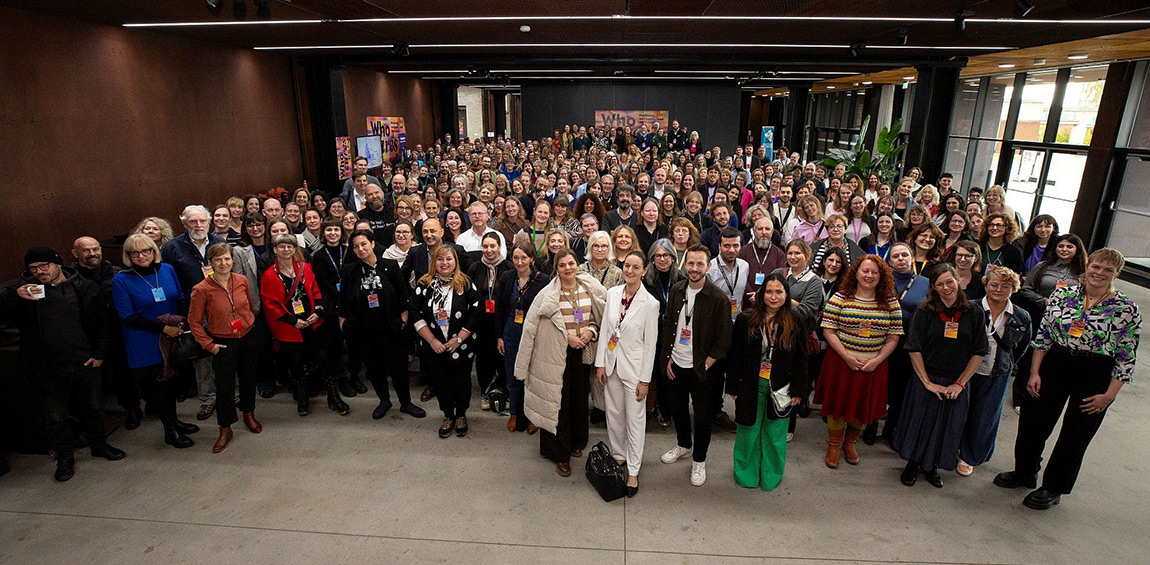
“Who cares? Museums, wellbeing and resilience” - Horsens (Denmark), 26-28 October 2025. More than 300 museum and cultural sector professionals from 37 countries all over Europe and beyond gathered over three intense days in Horsens for NEMO European Museum Conference. This year's conference asked a fundamental question: Who cares? Turns out that 327 people do, including EXARC delegates Dr. Roeland Paardekooper, Jannie Marie Christensen, and Vittoria Faga.
The topic challenged us to envision museums not only as places of heritage or display, but as active contributors to wellbeing, mental health, community resilience, and social care. Over the three days, the atmosphere felt less like a traditional conference and more like a collective experiment toward what museums could become: therapeutic, inclusive, caring spaces. The venue itself, FÆNGSLET, a former prison turned museum and cultural hub in the Jutlandic town of Horsens, offered not only a wide and welcoming atmosphere that stereotypically only such a thing as Danish prisons can have, but also a powerful metaphor: from confinement to openness; from incarceration to creative liberation.
From the very start, the conference combined professional exchange with embodied, playful, healing experiences: a reminder that wellbeing is not only an intellectual concern, but also a bodily, emotional, and communal one. On Sunday, 26 October, this approach had already been made tangible. The former prison museum welcomed us with a playful ice-breaker based on a classic – Bingo – an apparently simple activity that immediately dissolved hierarchies and awkwardness. It set the tone for what the conference would consistently try to do, which was create connection before content, and trust before theory.
Monday 27 October, the first official day, opened with a welcome by Petra Havu, Chair of the NEMO Board, followed by a message from Glenn Micallef, European Commissioner for Intergenerational Fairness, Youth, Culture and Sport, who stressed the growing importance of museums in supporting wellbeing across European societies. Rather than rushing into presentations, participants were invited into a moment of guided mindfulness led by Jolien Posthumus. It was a small but meaningful gesture: a collective pause, an acknowledgement that we were not only professionals, but bodies and minds entering a shared space. The keynote by Elizabeth Merritt pushed this reflection further, asking us to imagine museums as part of a broader “infrastructure of care”. Her intervention resonated strongly throughout the conference: what if museums were not peripheral cultural actors, but central partners in health, social care, and community support systems? What if they could respond to loneliness, trauma, and social fragmentation as actively as they preserve collections?
This question found concrete answers in the following panel on collective care. Case studies from across Europe showed that this shift is already happening. The Ovartaci Museum presented its holistic work with people experiencing mental health challenges, where art is not only exhibited but lived as a process of expression and healing. The National Gallery of Ireland shared its “No Words” programme, a cultural art psychotherapy initiative developed with marginalised communities, where the museum becomes a safe, mediated space for emotional exploration. Other contributions highlighted dance-based programmes for people with Parkinson’s, teenagers in distress, and cancer survivors, showing how movement, creativity, and shared experience can become powerful and cathartic tools for care. What emerged was not a single model, but a constellation of practices. Museums across Europe are already experimenting with being more porous, more attentive, and more human.
The afternoon sessions expanded this perspective through workshops and discussions addressing institutional wellbeing, burnout prevention, collaboration with the health sector, and methods for evaluating social impact. Literary therapy exercises invited participants to write, reflect, and reframe their own professional and emotional experiences. These moments felt particularly important: if museums are to become caring institutions, those who work within them must also be supported, heard, and cared for.
The day took a more intense turn with a deep dive into trauma-informed practices. Jolien Posthumus returned with a focus on trauma-sensitive mindfulness and artistic approaches, while museum professionals from Ukraine shared their work on cultural rehabilitation for war-affected communities. Their testimonies grounded the conference in reality: museums are not abstract spaces, but can become sites of recovery, memory, and resilience in the context of profound crisis.
The evening offered a different yet equally meaningful form of engagement. At the Horsens Art Museum, participants gathered for a dinner that was both elegant and intimate, combined with a private visit and a collaborative art-therapy workshop. Creating together, rather than simply observing, transformed the museum space into something softer and more relational. It was not just about looking at art, but about inhabiting it.
The second day, Tuesday 28 October, opened with a choice that already reflected the spirit of the conference: participants could either join a peer-to-peer exchange on museum challenges, or take part in a Dance Well session led by Hanna Kushnirenko with Roberto Casarotto, Aerowaves.
The dance session became, for many, one of the most powerful experiences of the entire conference. Around one hundred people moved together in a space that felt completely free and non-judgemental. Bodies stretched, hesitated, released. Some participants cried, others embraced. It was an intense, sweet, and liberating moment, a kind of choreomania in a museum context. Professional roles dissolved, and what remained was something deeply human: vulnerability and connection.
At the same time, the peer exchange sessions created space for honest conversations around the difficulties of implementing wellbeing practices within institutions, those being lack of resources, structural limitations and emotional fatigue. Sharing these challenges openly was, in itself, an act of care.
Later in the morning, the focus shifted to cross-sector collaboration. The panel on caring collaborations brought together perspectives from the World Health Organization, academia, and regional governance. The discussion made it clear that while inspiring projects exist, there is an urgent need to move beyond isolated initiatives. To become true actors in the field of wellbeing, museums must be embedded in long-term strategies, supported by policy, funding, and frameworks that are shared with the health and social sectors.
The afternoon sessions once again moved between experimentation and application. Projects such as the use of AI-driven avatars for empathetic interaction in museum settings challenged conventional ideas of care, while other workshops focused on measuring wellbeing impact and designing inclusive programmes. The “Care to share” slam presentations brought together a multitude of grassroots initiatives including intergenerational activities, community-based art projects, and inclusive educational practices. Each short presentation added another piece to what is an already rich and diverse mosaic. Attention then once again turned inward to the question of organisational culture. Discussions around building a culture of care within museums highlighted leadership, communication, and workplace wellbeing.
The message was clear: museums cannot externally promote care if they do not practice it internally, by such means as supporting staff, acknowledging emotional labour, and fostering inclusive, sustainable environments, all of which are essential steps in this transformation. One last playful activity led by Mads Lemvigh Fog and Lisette de Jonge from the LEGO Group challenged us to build a small LEGO duck - which was hidden underneath each seat - in 60 seconds to see how different minds perceive the same subject whilst using the same tools. The differing results show how creativity can be the most powerful engine humans posess.
The conference closed with a final gathering and dinner, where reflections, fatigue, and gratitude intertwined. There was a sense of having shared something intense and meaningful, which extended beyond professional development and into personal experience.
On Wednesday 29 October, the post-conference tour offered a quieter continuation of these reflections. At the Ovartaci Museum, participants encountered the life and work of an artist who challenged norms around mental health, gender, and identity, embodying many of the themes discussed during the conference. The visit to ARoS in Aarhus provided a final immersion in contemporary art, allowing the attendees space to process, absorb, and reconnect.
By the end of the conference one thing felt particularly clear – museums are already changing. Not everywhere, and not evenly, but undeniably. They are becoming places where people can reflect upon themselves, their role in society, and their relationship with others and with the environment. They are becoming spaces where it is possible to feel, to question and to heal.
For us, our presence meant not only learning, but also connecting… With so many professionals, with so many ideas, with a shared sense of urgency and possibility. It meant becoming more aware of mental health, not as an abstract topic, but as something that runs through institutions, practices, and personal experiences.
It also meant having a good time, in the most meaningful sense of the expression: laughing and joking during the games, creating during the evening workshop, moving and freely crying with no fear of being judged during the dance therapy and talking endlessly between sessions. Care, after all, is not only serious, it is also joy, play, and presence.
The final statement adopted by NEMO calls for the structural integration of museums into health and social care policies. It is an ambitious goal, but after these three days, it no longer feels unrealistic. It feels necessary.
Leaving Horsens, what remained was not just a set of ideas, but a feeling: that museums can care, that some already do, and that we must continue to learn how to do it better.
Keywords
Country
- Denmark