
The content is published under Creative Commons Attribution 4.0 International license (CC BY 4.0).
Unreviewed Mixed Matters Article:
Carving Memory in Stone: An Experimental Archaeology Project on Runic Inscription and Collective Heritage
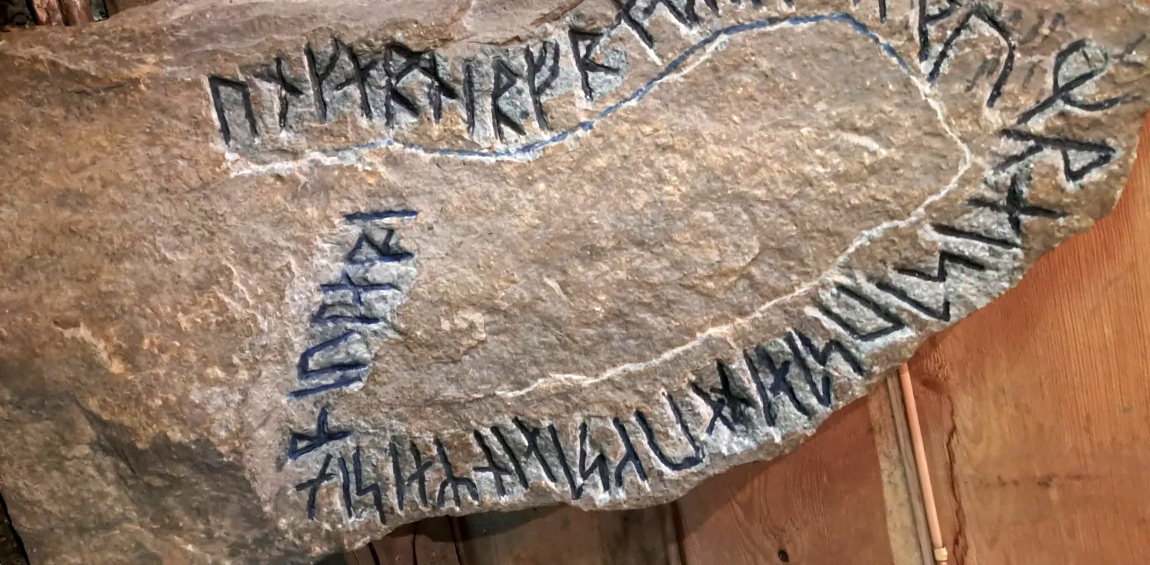
This article presents an experimental archaeology project, conducted at Kvernsteinsparken in Hyllestad, Western Norway, involving the creation of a runic inscription carved into a stone slab by the museum educator (archaeologist Filippo Olari) and primary school students during the academic year 2024–2025. The project aimed to investigate both the technical processes involved in producing a runic monument and the social meanings associated with Viking Age and medieval commemorative practices. Rather than focusing exclusively on the practical aspects of stone carving, the initiative explored how runic inscriptions functioned as material expressions of collective memory, preserving names, identities, and shared experiences across generations. The inscription was composed in Old Norse with linguistic guidance from Professor Elisabeth Maria Magin at Kulturhistorisk museum, University of Oslo. The text was subsequently transferred onto stone and carved using traditional stone-working techniques inspired by historical practices. Particular attention was given to the use of Younger Futhark rune forms, including both long-branch and short-twig variants, reflecting the diversity of Viking Age writing traditions. The completed monument is now permanently displayed at Kvernsteinsparken, where it functions both as an educational resource and as a contemporary continuation of historical commemorative practices. The project demonstrates how experimental archaeology can contribute not only to the understanding of past technologies but also to the investigation of memory, identity, craftsmanship, and community participation.
Introduction
Runic inscriptions represent one of the most distinctive forms of written and material expression from Viking Age Scandinavia. Beyond their linguistic significance, runestones provide important insights into the ways individuals and communities used monuments to communicate identity, memory, and social relationships.
These monuments were not simply texts carved into stone. They were carefully constructed statements placed within the landscape, intended to preserve names, genealogies, achievements, and important events. Through their physical presence, runestones connected communities with specific places and ensured that particular memories could remain visible across generations.
The production of a runestone was both a technical and social process. The selection of suitable stone, preparation of the surface, composition of the inscription, and carving of the runes required specialised knowledge and cooperation between different individuals. The finished monument therefore represented not only the person or event being commemorated but also the collective effort involved in creating a permanent expression of memory.
The project presented in this article was carried out at Kvernsteinsparken in Hyllestad, Western Norway, during the academic year 2024–2025. As part of the museum’s educational programme, primary school students participated in the creation of a commemorative runic monument inspired by Viking Age traditions.
The objective was not to reproduce an existing historical monument but to investigate the processes involved in creating a new runestone and to explore how technical practice, collective participation, and memory-making are connected. Through involvement in planning, carving, and completing the monument, students experienced archaeology not only as the study of past objects but as an active process of interpretation and creation.
Historical Background: Runestones, Memory and Stone Tradition
Runestones represent one of the most characteristic forms of monumental expression in Viking Age Scandinavia. Although primarily associated with commemoration, these monuments fulfilled several interconnected social functions. They preserved personal names, recorded family relationships, expressed social status, and contributed to the construction of collective identities.
Runestones were integrated into the landscape and often placed in visible locations such as roads, bridges, settlements, or assembly places. Their purpose was not only to record information but also to ensure that memories remained present within the community. The monument became a physical connection between people, places, and historical events.
The inscriptions were generally written using the Younger Futhark, the runic alphabet used throughout Scandinavia during the Viking Age. Unlike modern writing systems, runes maintained a close relationship with the material object on which they were carved. The act of writing was therefore also an act of craftsmanship, requiring knowledge of both language and material properties.
Many inscriptions reveal that runestone production was a collaborative activity. Some mention the person who commissioned the monument, the individual being commemorated, and occasionally the craftsman responsible for carving the inscription. These references demonstrate that runestones were the result of cooperation between different forms of expertise.
The region of Hyllestad provides a particularly meaningful and natural context for this project. The area is internationally known for its medieval quernstone production, where stone was extracted and worked for distribution throughout Northern Europe. This long tradition of specialised craftsmanship created an appropriate environment for an experimental project focused on stone carving.
Although the production of millstones and runestones had different purposes, both required a detailed understanding of stone, tools, and craftsmanship. The project is not based on a real runestone or a local finding but instead established a connection between the historical working landscape of Hyllestad and Viking Age traditions of monumental carving.
The Runic Inscription: Language, Meaning and Rune Forms
A central element of the project was the creation of a new runic inscription following historical linguistic and epigraphic principles. The text was composed in Old Norse under the guidance of Professor Elisabeth Maria Magin at the Kulturhistorisk museum , University of Oslo.
The structure of the inscription follows the conventions of Viking Age commemorative texts. A collective group is presented as responsible for raising the monument, followed by the mention of another participant who contributed to the undertaking.
The runic version follows the orthographic conventions of the Younger Futhark rather than standardized Old Norse spelling. Viking Age runes did not correspond directly to modern letters, and individual runes could represent different sounds depending on linguistic context and regional tradition.
Two versions of the inscription were considered, representing the two principal graphic traditions of the Younger Futhark: long-branch runes and short-twig runes. These variants differ only in the shape of the rune forms. Long-branch runes are characterized by longer side strokes extending from the main stave, whereas short-twig runes employ simplified forms. The distinction is primarily palaeographic and does not affect the meaning of the inscription.
The Old Norse inscription reads:
"Ungarnir frá Hyllistöðum reistu stein ok steinmeistari Olari"
In Younger Futhark orthography, the text is written slightly differently:
"unkarnir fra hyllistoþum raistu stain auk stainmaistari u/olari"
Long-branch rune version:
ᚢᚾᚴᛅᚱᚾᛁᚱ ᛬ ᚠᚱᛅ ᛬ ᚼᛦᛚᛁᛋᛐᚬᚦᚢᛘ ᛬ ᚱᛅᛁᛋᛐᚢ ᛬ ᛋᛐᛅᛁᚾ ᛬ ᛅᚢᚴ ᛬ ᛋᛐᛅᛁᚾᛘᛅᛁᛋᛐᛅᚱᛁ ᛬ ᚢᛚᛅᚱᛁ
Short-twig rune version:
ᚢᚿᚴᛆᚱᚿᛁᚱ ᛬ ᚠᚱᛆ ᛬ ᚽᛦᛚᛁᛌᛐᚭᚦᚢᛙ ᛬ ᚱᛆᛁᛌᛚᚢ ᛬ ᛌᛐᛆᛁᚿ ᛬ ᛆᚢᚴ ᛬ ᛌᛐᛆᛁᚿᛙᛆᛁᛌᛐᛆᚱᛁ ᛬ ᚭᛚᛆᚱᛁ
English translation:
"The children of Hyllestad raised the stone, together and (with) the master stone carver Olari."
For the final monument, the long-branch version was selected, while the students were encouraged to make minor individual variations during the carving process. This approach reflects the evidence from authentic Viking Age inscriptions, in which long-branch and short-twig rune forms are frequently mixed within the same text. A carver might use the long-branch form for one rune and the short-twig form for another without any change in meaning. Although some experts have suggested that long-branch runes were reserved for more formal or prestigious inscriptions, this interpretation remains uncertain. It is more likely that the choice of rune forms reflected the individual carver's training, familiarity with a particular rune tradition, and personal preferences rather than any strict functional distinction.
Experimental Methodology: From Historical Research to Stone Carving Practice
The project combined archaeological research, linguistic reconstruction, and practical stone-working. The methodology was based on the understanding that a runestone should not be studied only as a finished object but as the result of a complex process involving materials, tools, skills, and social cooperation.
Before beginning the practical work, participants were introduced to Viking Age runic traditions and examined examples of historical inscriptions. Discussions focused on the relationship between writing, landscape, memory, and identity.
The students then participated in the different stages of monument production, including planning the inscription, preparing the stone surface, transferring the runes, and carving the text.
The practical work demonstrated that carving a runestone required more than knowledge of the rune symbols. It demanded precision, patience, understanding of stone properties, and the ability to adapt techniques according to the material.
The process also revealed the importance of embodied knowledge. Historical craftsmen possessed skills that cannot always be reconstructed through written sources alone.
Results and Conclusions
The runic inscription project at Kvernsteinsparken demonstrates how experimental archaeology can extend beyond the reconstruction of ancient technologies to investigate the social and symbolic dimensions of the past. By participating directly in the design and carving of the stone, students experienced the relationship between human action, craftsmanship, and material culture, contributing not only to the study of Viking Age traditions but also to the creation of a new monument within their own cultural landscape.
The practical challenges encountered during the carving process provided valuable insight into the technical skills and planning required by historical stone workers, demonstrating the complexity behind seemingly simple runic inscriptions. At the same time, the collaborative nature of the project encouraged reflection on the connections between craftsmanship, memory, identity, and community, highlighting that runestones were not merely inscribed stones but also products of social interaction and cultural communication.
Rather than attempting to replicate an original Viking Age artefact, the commemorative stone represents a contemporary interpretation inspired by historical traditions. Its significance lies in illustrating how material culture continues to preserve and communicate collective memory across generations. The project also demonstrates the potential of museums and experimental archaeology to create meaningful dialogue between past and present through active participation and shared cultural heritage.
Acknowledgements
The author would like to thank Professor Elisabeth Maria Magin at Kulturhistorisk museum, University of Oslo, for her linguistic guidance and assistance with the Old Norse formulation of the inscription.
Special thanks are extended to the students who participated in the project and the teacher Morten Askvik, whose engagement and practical contribution made the creation of the monument possible.
The author also wishes to acknowledge Museumsleder Alexander Rauboti, Kvernsteinsparken and Musea i Sogn og Fjordane for supporting experimental approaches to archaeology, craftsmanship, and heritage education.
Keywords
Country
- Norway