
The content is published under Creative Commons Attribution 4.0 International license (CC BY 4.0).
Reviewed Article:
Bonfire or Kiln? Experimental Pottery Firing and Technological Control in Greyware Production
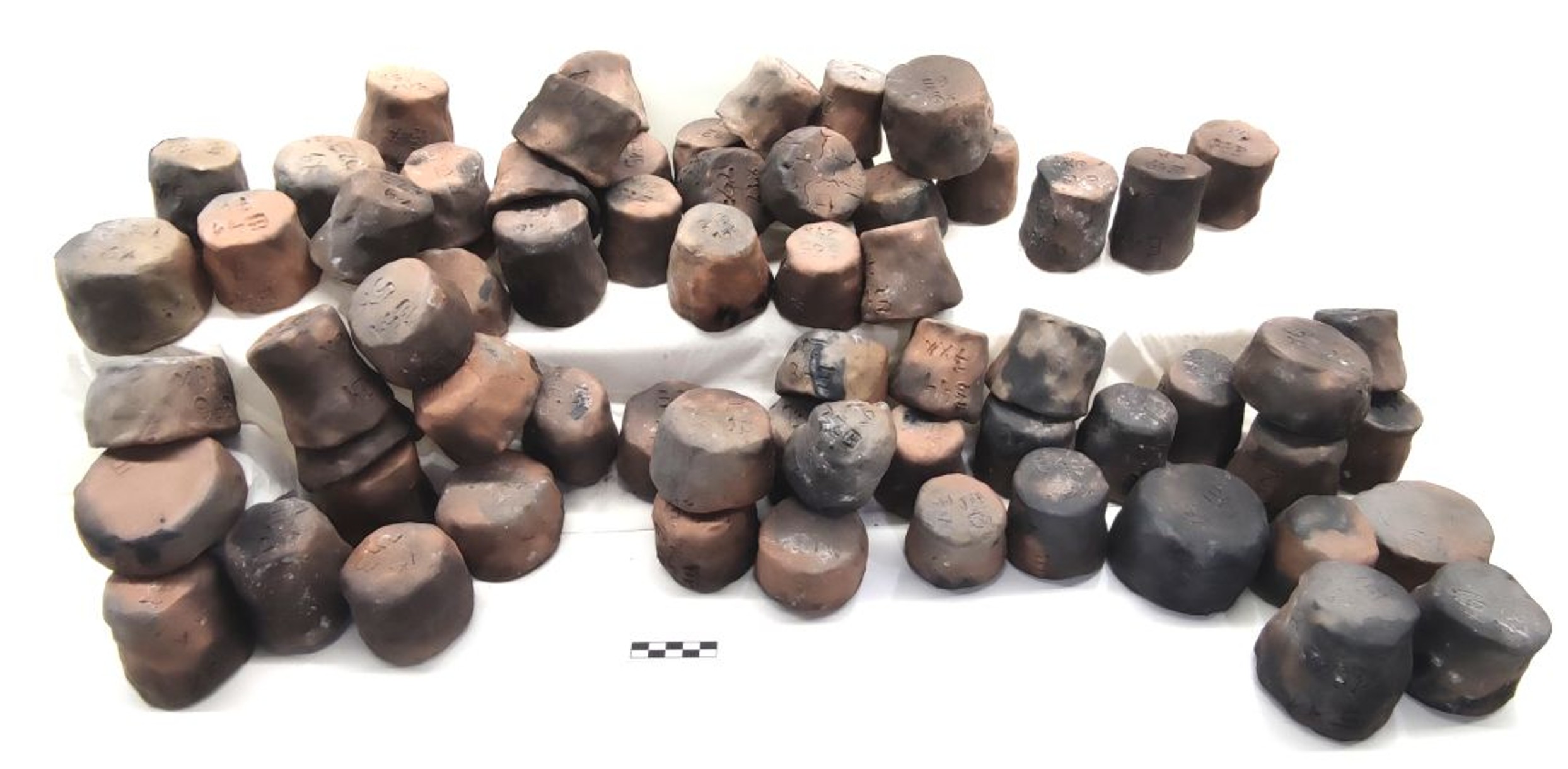
This paper presents the preliminary results of an experimental programme designed to explore firing technologies associated with greyware pottery production. Two experimental firings were conducted at the archaeological sites of Santa Margarida and l’Esquerda (Catalonia), using contrasting firing structures: an open bonfire and a small single-chamber kiln. Both experiments were systematically documented through temperature monitoring, observation of combustion and cooling processes, spatial recording of the vessels, and archaeological excavation of the resulting deposits. The experiments revealed significant differences in firing dynamics and ceramic outcomes. The bonfire reached higher but markedly fluctuating temperatures and produced comparatively homogeneous grey surfaces, whereas the kiln provided greater thermal stability, maintaining temperatures around 800°C for several hours, but resulted in more heterogeneous colouration and partial reduction. These results highlight the complex relationship between firing structure, temperature control, combustion dynamics, atmosphere, and vessel position, and suggest the need for caution when establishing straightforward associations between structural complexity and the degree of technological control achieved during pottery firing.
Introduction: About Pottery Firing Techniques
Pottery firing constitutes one of the most critical stages in ceramic production, as it directly affects the physical, mineralogical, and visual properties of the finished vessels. In archaeological literature, a close relationship is often assumed between the degree of control over firing atmosphere and temperature and the use of permanent or technically elaborate firing structures. In this perspective, kilns or built combustion facilities are generally regarded as indicators of greater technological control, more stable firing conditions, and more predictable ceramic outcomes than simpler firing arrangements such as open bonfires or pit firings (Rice, 1987; Maniatis, 2009; Guo, 2017). However, the extent to which this assumption accurately reflects firing performance and material results remains insufficiently explored through systematic experimentation.
Recent experimental work has suggested that the relationship between firing structure, temperature control, and final ceramic characteristics may be more complex and less direct than traditionally assumed. Experimental approaches have increasingly demonstrated that relatively simple combustion settings may, under certain conditions, achieve temperatures and atmospheres comparable to those expected in more elaborate installations, while producing ceramic assemblages with unexpected degrees of homogeneity or variability (Amicone, et al., 2023). Such observations raise important questions regarding the archaeological interpretation of firing structures and the technological assumptions commonly associated with them.
In order to explore these questions, an experimental programme was designed within the framework of a research project devoted to the study of greyware pottery fired under reducing conditions. The experiment aimed to assess the influence of firing structures on ceramic performance by comparing two different firing scenarios: on the one hand, an open bonfire-type firing without any permanent or architecturally complex structure, consisting essentially of a pit in the ground; and, on the other hand, a more elaborate firing installation inspired by archaeological evidence for medieval kilns. By comparing these two settings, the experiment sought to evaluate how different combustion environments may create the conditions seen in the final characteristics of fired pottery and the archaeological traces generated during the firing process.
Beyond this primary objective, the experimental design was also conceived to address several complementary research questions. These included the behaviour of specific minerals during firing, the microstructural features derived from temper addition —particularly in relation to bimodal distribution, sorting and shape of inclusions, proportion of inclusions, matrices and voids, etc— and the influence of firing temperature and atmosphere on the colour and final characteristics of the vessels (Travé Allepuz, 2021). The experimental assemblage was therefore designed not only to test firing performance, but also to provide a controlled corpus of materials suitable for subsequent laboratory analyses.
This article presents the results of the first phase of the research. At this stage, we focus on the design and execution of the experiments, the firing procedures employed, and a preliminary assessment of the resulting materials based primarily on macroscopic observations. More detailed mineralogical and microstructural analyses are currently in progress and will be addressed in future publications.
Context and Materials of the Experiment
The experimental programme was conducted at the experimental annexe areas of two archaeological sites in Catalonia: Santa Margarida, in Martorell (Baix Llobregat) (Navarro and Mauri, 1993; Travé Allepuz, Del Fresno Bernal and Farreny Agràs,2024), and L’Esquerda, in Roda de Ter (Osona) (Ollich, et al., 2015), both of them in the province of Barcelona (Catalonia, Spain) (See Figure 1). Although both experiments shared the same broad research objectives and general methodological principles, they were carried out in different archaeological and experimental settings and involved distinct firing structures and ceramic assemblages.
At Santa Margarida, the experiment built upon previous experience accumulated over more than a decade of pottery firings within the practical training activities of the Archaeology degree programme at the University of Barcelona. These previous firings were generally short in duration and conceived primarily as teaching exercises carried out by students using an excavated pit for that specific purpose (Thér, 2014, p.81), and not involving a reduction phase. After a few years since the last experiment took place, and building upon this previous experience, we designed an experiment to perform a monitored 48-hour-long firing, including a reduction phase, in order to obtain greyware pottery.
In contrast, L’Esquerda offered a long-standing tradition of experimental archaeology involving a wide range of research topics, including medieval agriculture (Ollich, 2002; Cubero, et al., 2008), construction techniques (Ollich, et al., 2017), or warfare and fortification systems (Ollich, et al., 2018). However, despite this extensive experimental background, no pottery firing experiment comparable to the one presented here had previously been conducted at the site. Building upon the experience gathered in Santa Margarida regarding firing practices, we considered the experimental area of l’Esquerda as a most suitable environment to build a kiln, to perform one first firing and further explore other archaeological issues related to kiln preservation and reuse, and the future transformations that the structure might undergo after abandonment. Indeed, the kiln was refilled with stone blocks, covered and protected to perform other firings in forthcoming years and to assess the degree of maintenance of the structure and the potential in-use life of this sort of archaeological structures.
The two firings were designed to compare the effects of different combustion settings on ceramic performance and firing outcomes (Thér, 2014). At Santa Margarida, the experiment took place between 16 and 18 May 2025 and consisted of an open bonfire-type firing carried out in a pit dug directly into the ground, without any permanent structure. As previously mentioned, the pit had previously undergone more than ten firings before the one in 2025. By contrast, the experiment at l’Esquerda, conducted between 26 and 28 March 2026, employed a small single-chamber kiln constructed specifically for the purpose of the experiment and loosely inspired by archaeological evidence of historical firing installations.
The construction of the kiln was not without challenges. Work began within the experimental area, where an artificial slope (See Figure 2.1) created during the construction of the site granary between 1996 and 1998 offered suitable conditions for kiln excavation. The initial plan consisted of cutting vertically into the slope (See Figure 2.2) and excavating inward in order to create the single firing chamber. However, the unexpected appearance of bedrock at a very shallow level conditioned the excavation process and required a partial reconsideration of the kiln’s location in order to achieve greater depth within the chamber (See Figure 2.3).
Once the stone deposit forming part of the slope was identified, it proved advantageous for the excavation process, as the selective removal of some stones allowed the cavity to be enlarged relatively quickly (See Figure 2.4). Excavation eventually exposed a large, relatively flat slab gently sloping towards the north, which provided a suitable access to the firing chamber. At the same time, a series of flat stones forming the northern side of the structure offered stable support for the arrangement of the vessels to be fired, while leaving sufficient space in front of them for combustion. This configuration helped prevent direct contact between flames and ceramics during the heating phase and likely favoured the final drying of the vessels prior to full firing. After construction, the kiln was cleaned and documented photographically (See Figure 2.5), and both plan and section drawings were produced (See Figure 2.6).
Weather and environmental conditions were documented using meteorological data from two complementary sources. For the Santa Margarida experiment, records from the nearest meteorological station operated by the Catalan Meteorological Service (Servei Meteorològic de Catalunya), located in Castellbisbal, were used. For the experiment at l'Esquerda, environmental conditions were documented using the meteorological station installed at the l'Esquerda Museum, immediately adjacent to the experimental area, which provides continuous local measurements of temperature, relative humidity, atmospheric pressure, precipitation, wind and solar radiation. Data from the Vic station of the Catalan Meteorological Service (See Figure 1) were consulted only as a regional reference. Together, these datasets provided a framework for assessing the potential influence of external climatic conditions on firing performance and cooling processes.
Despite taking place under generally stable and dry weather conditions, the two experiments were conducted in markedly different seasonal environments. At Santa Margarida, the firing was undertaken under mild late-spring conditions, with average daily temperatures around 18.5°C and daytime maximum temperatures reaching 26°C around midday to early afternoon. Relative humidity remained moderate (66–68%), no precipitation was recorded, and solar radiation values were consistently high. Wind conditions were generally moderate, although occasional gusts exceeded 30 km/h.
By contrast, the experiment at l’Esquerda took place under considerably cooler early-spring conditions, with average daily temperatures ranging between 8.0°C and 8.4°C. Maximum daytime temperatures reached 17.3°C, while nocturnal minima fell to 1.6°C and 1.1°C. Relative humidity remained moderately high, averaging 73.6% on 26 March and 77.5% on 27 March, and no precipitation was recorded throughout the experiment. Wind conditions remained generally light to moderate and did not interfere with the firing process. These substantially cooler ambient temperatures, together with the pronounced day–night thermal amplitude, may have influenced combustion efficiency, heat retention within the structure, and particularly the post-firing cooling dynamics.
The ceramic assemblages prepared for the experiments also differed in scale and configuration. At Santa Margarida, a total of 65 vessels of varying forms and dimensions were produced from approximately 30 kg of paste clay. Half of the assemblage was made using red clay from la Bisbal mixed with either metamorphic temper (crushed slate) (See Figure 3.1) or siliceous temper (fluvial sand) (See Figure 3.2), while the remaining half consisted of commercially prepared grog-tempered clay with a 25% inclusions content and no further modifications to the paste. Before paste preparation, both the sand and crushed slate were sieved and separated into grain-size fractions according to the Udden–Wentworth scale in order to control temper particle size (See Figure 3.3). The proportion of clay and temper used in each mixture (See Figure 3.4) was systematically recorded and labelled (See Figure 3.5) before vessel shaping (See Figure 3.6). All vessels were handmade using the coil-building technique. In addition to the vessels (See Figure 3.7), a series of experimental test briquettes was produced for each clay recipe. All pieces were graphically documented (See Figure 3.8) and photographed (See Figure 3.9) both before and after firing.
At l’Esquerda, 66 vessels were produced using approximately 15 kg of red clay from la Bisbal combined with the same metamorphic and siliceous tempers. While the total number of vessels was similar to that of Santa Margarida, their dimensions were considerably smaller. Vessel forms were also more standardised than in the previous experiment. As at Santa Margarida, the proportions of clay and temper were systematically recorded, experimental briquettes were produced for each mixture, and all materials were comprehensively documented through drawings and photography. Additional clay recipes were also incorporated into the experimental programme in order to broaden the comparative potential of the resulting assemblage.
Results. Firing Procedures and Collected Data
Both experimental firings extended over approximately 48 hours and followed comparable monitoring protocols, although the combustion structures, fuel requirements, and firing dynamics differed substantially.
Santa Margarida: Open Bonfire Firing
The firing at Santa Margarida was carried out in an open pit structure (See Figure 4.1) and relied on approximately 800 kg of oak wood (Quercus sp.) , supplemented with around 3 kg of wood shavings and small fragments of mixed species used to ignite the fire. The experiment began at 9:00 a.m. on 16 May 2025 with the ignition of a small initial fire prior to the placement of the vessels (See Figure 4.2). This procedure was necessary in order to allow access to the pit for the lighting and management of the fire during its earliest stages. Once this initial combustion had been established, the vessels were gradually arranged around the fire at a prudent distance in order to ensure slow heating and complete drying before the firing process intensified (See Figure 4.3). During the first three hours, the structure was progressively heated until temperatures of approximately 400°C were reached (See Figure 4.4). Temperature measurements were taken using a handheld pyrometer fitted with a 20 cm probe, following the measurement procedures detailed below in the analytical protocol section. A further four hours of firing allowed temperatures to rise above 1000°C at peak moments. This was followed by a maintenance phase lasting around three hours, during which temperatures fluctuated between approximately 400°C and 500°C (See Figure 4.5).
The final load of fuel was introduced at 7:00 p.m., after which the firing was sealed by covering the structure with sod blocks and loose earth (See Figure 4.6 and 4.7). This procedure ended at 8:00 p.m (See Figure 4.8). Cooling was monitored continuously during the following 36 hours. Several phenomena were documented during this stage. Most notably, despite the complete covering of the firing structure, the bonfire continued to “breathe”, releasing a faint but uniform vapour across the surface. Rather than escaping through specific fissures or chimney-like openings, this moisture appeared diffusely over the entire structure and was interpreted as water vapour primarily originating from the moisture retained in the sod blocks and earth used to seal the bonfire and associated with the firing and cooling process.
At the same time, the ongoing smouldering combustion beneath the earthen cover progressively hardened the outer surface of the deposit, eventually creating an artificial crust or dome-like layer. On the evening of the second day –17 May–, around 8:00 p.m., a small fissure was detected in this hardened surface, through which smoke escaped and the intense red glow of still-active embers could be observed. The opening was sealed with a small amount of additional soil, sufficient to prevent smoke leakage without exerting excessive pressure on the partially consolidated surface. No further incidents were recorded during the remainder of the cooling process. On the morning of the third day (18 May), beginning at approximately 8:30 a.m., the pit was excavated and the ceramic assemblage recovered (See Figure 4.9). Throughout the cooling stage, a strong and unpleasant sulphurous smell was consistently perceptible both within the structure and in the surrounding area.
Excavation revealed that the hardened earthen crust was limited to the uppermost 3–4 cm of the deposit, beneath which the soil remained loose and unconsolidated. Near the surface, mixed with the covering earth, a small quantity of partially carbonised wood was recovered, although this material appeared clearly residual. Below this level, a thick deposit of well-formed charcoal became visible (See Figure 4.10), initially preserving the microstructure of the wood and becoming progressively more fragmented with depth. The charcoal layer reached an approximate thickness of 30 cm before the first ceramic vessels appeared, embedded within a substantial ash deposit at the base of the pit (See Figure 4.11).
The fired vessels displayed relatively homogeneous surface characteristics. Most exhibited a fairly uniform light grey colouration on the exterior (See Figure 4.12), while cross-sections revealed varying degrees of chromatic gradation within the ceramic body. In most cases, grey tones remained limited to the surface and the outer 3–4 mm of the wall section, eventually revealing a reddish core within the ceramic paste.
L’Esquerda: Single-Chamber Kiln Firing
The experiment conducted at l’Esquerda employed a small single-chamber kiln with an access pit (See Figure 5.1) , constructed specifically for the experiment on the day preceding the firing. Approximately 450 kg of holm oak (Quercus ilex) were used as fuel, together with around 5 kg of wood shavings and fragments of pine and olive wood for ignition.
We attempted to replicate the timing of the Santa Margarida experiment as closely as possible, and the firing therefore began at 9:00 a.m. on the first day (26 March). In this case, however, the vessels were loaded into the kiln prior to ignition (See Figure 5.2), as the configuration of the structure provided sufficient space between the pottery and the access stone to comfortably light and manage the initial fire (See Figure 5.3). The relatively small dimensions of the kiln also facilitated this procedure. During the initial heating stage, maintaining combustion proved somewhat difficult, particularly in relation to the ignition and sustained burning of the holm oak fuel. Nevertheless, owing to its high calorific value, temperatures of approximately 650°C were reached after three to four hours (See Figure 5.4). During the following three hours, temperatures gradually increased and stabilised around 800°C as combustion became more effective (See Figure 5.5). Although temperatures briefly declined to approximately 550°C around mid-afternoon, a new fuel load allowed the firing to recover and remain within a range of approximately 800–900°C until closure of the kiln between 7:00 and 7:30 p.m.
As at Santa Margarida, the final stage consisted of adding a last fuel load and covering the structure with sod blocks (See Figure 5.6) and loose earth (See Figure 5.7). Cooling was monitored during the following 36 hours. In contrast to the bonfire experiment, observations suggested that combustion within the chamber became extinguished relatively earlier. The slight water vapour initially visible due to moisture retained in the soil progressively disappeared, while the strong odour documented at Santa Margarida remained considerably weaker and subtler at l’Esquerda (See Figure 5.8). Likewise, the hardening of the earthen cover observed at Santa Margarida did not occur in this case, and no significant incidents were recorded during cooling. On the third day morning (March 28th), at approximately 8:00 a.m., the kiln was opened, excavated, and the fired assemblage recovered. A further distinction between the two experiments concerned the spatial relationship between vessels and fuel: at Santa Margarida, the vessels were initially arranged around the fire but subsequently surrounded and covered by burning fuel, whereas at L’Esquerda they were positioned further inside the chamber, away from the main area of fuel combustion.
After removal of the upper earthen layer, which showed no significant compaction beyond that produced during deposition, the final fuel load was recovered almost intact (See Figure 5.9). Once this upper layer of faggots, only slightly smoke-blackened and minimally carbonised, had been removed, a charcoal-rich deposit became visible. Charcoal fragments were slightly larger than those recovered at Santa Margarida but were already highly fragmented and heavily mixed with ash from the outset (See Figure 5.10). Near the kiln walls, ash concentrations increased noticeably, and the first ceramic vessels appeared at relatively shallow depths within the charcoal layer (See Figure 5.11). Towards the lower part of the kiln, whitish ash deposits became progressively denser, eventually dominating over charcoal remains almost completely.
The resulting ceramic assemblage displayed markedly greater variability than that recovered at Santa Margarida. Some spatial differences in firing outcomes were observed in relation to vessel position within the chamber, although these cannot be attributed solely to proximity to the burning fuel, as discussed below. Surface colours ranged from irregular greyish to reddish tones, often within the same vessel (See Figure 5.12). Only around 25% of the assemblage exhibited dark brown or grey surfaces suggestive of reducing conditions. In these cases, however, reduction appeared complete, as colouration remained homogeneous and uniform throughout the entire fracture section.
Documentation and Analytical Protocol
In both experiments, the same documentation and recording protocol was employed. The initial position of vessels was documented through sketches and comprehensive photographic coverage throughout the entire process (See Figure 6.1 and 6.2). Temperature measurements were systematically recorded (See Figure 6.3) using a handheld portable digital pyrometer (ANPER PI005010) equipped with a 200 mm type K thermocouple probe (See Figure 6.4). During active firing, the probe was positioned at predefined measurement points close to the walls of each structure, using a heat-resistant glove to approach the combustion area safely. Once the structures had been sealed, the probe was inserted through the earthen cover, which did not exceed 20 cm in thickness, allowing measurements to be taken at the same locations. Although this procedure did not provide access to temperatures at the centre of the structures, it ensured a consistent spatial reference for monitoring and comparing temperature changes throughout the firing and cooling processes. Measurements were ideally taken at intervals of approximately 10–20 minutes, although the practical demands of fuel loading and fire management occasionally prevented a strictly regular schedule. Rather than maintaining identical intervals between readings, emphasis was placed on the systematic recording of the exact time and measurement location for each observation, allowing the thermal sequence of the firing to be reconstructed with precision. At Santa Margarida, measurements were taken at four points (north, south, east, and west) of the bonfire structure. Due to the smaller dimensions of the kiln at l’Esquerda, meaningful differentiation between four measuring points proved impractical, and measurements were therefore restricted to north and south positions.
Temperature monitoring during the cooling phase was more intensive at Santa Margarida, where measurements were generally recorded every three hours. At l’Esquerda, readings were taken at intervals of approximately five to eight hours, with interpolated estimates used between measurements. During cooling, temperature readings were also taken as close to the surface as allowed by the length of the probe. In addition, all observations and incidents were systematically recorded in a dedicated log (See Figure 6.5), including the time, observer, and a brief description of the documented phenomenon. The opening of the kiln and the recovery of the vessels were subsequently undertaken following archaeological excavation methods (See Figure 6.6), allowing each depositional layer to be documented individually in order to record the stratigraphy of the entire assemblage (See Figure 7).
Following recovery, all ceramic materials were transferred to the laboratory, where a preliminary macroscopic assessment was undertaken. An approximate reconstruction of the original position of the vessels within the firing structures was also attempted in order to evaluate whether colour alterations might correlate with spatial distribution or instead reflect more randomised firing dynamics (See Figure 8). Refined sampling for thin-section preparation and additional analytical procedures is currently underway. Consequently, the present study remains limited to a preliminary macroscopic assessment of the experimental assemblage.
Discussion. Quality Control and Comparative Review
Firing Structures and Technological Control
One of the principal aims of this experiment was to explore the extent to which the use of different firing structures may condition ceramic performance and final firing outcomes. Archaeological interpretations of pottery production have frequently associated permanent firing structures with improved control over temperature, atmosphere, and firing conditions, often assuming kilns to provide more stable and predictable firing environments than open or pit firings (Rice, 1987; Maniatis, 2009; Guo, 2017). Within this perspective, built kilns are often implicitly understood as technologically superior solutions, capable of producing more homogeneous ceramic results than simpler firing arrangements, such as open bonfires or pit firings. Ethnographic observation, and experimental work, however, suggest that this relationship may be more complex and less linear than traditionally assumed (Gosselain, 1992). The results obtained in the present study invite a more nuanced interpretation of this relationship in line with recent experiences attesting the difficulty to control temperatures and atmospheric conditions in kiln firing experiments (Amicone, et al., 2023).
Our observations suggest that the existence of a permanent firing structure alone does not necessarily guarantee more standardised ceramic outcomes (See Figure 9). Rather, firing performance depends on a complex interaction between temperature stability, combustion dynamics, kiln management, and post-firing atmospheric conditions. Regarding temperature control, the bonfire in Santa Margarida reached temperatures exceeding 1000°C, but these peaks were neither sustained over time nor evenly distributed throughout the firing structure. During the temperature maintenance phase, conditions generally fluctuated between approximately 300°C and 500°C, suggesting a firing process characterised by marked thermal variability. By contrast, the kiln experiment at l’Esquerda did not attain similarly high temperature peaks, although such temperatures were not necessarily required for the type of pottery being fired. While maximum temperatures of approximately 900°C were reached intermittently, the most notable feature of the kiln firing was its ability to maintain temperatures close to 800°C for at least four hours during the maintenance phase, indicating a comparatively greater degree of thermal stability and sustained heat control.
At the same time, temperature control alone does not appear to fully explain firing outcomes. Although the single-chamber kiln at l’Esquerda provided a more formally structured combustion environment, the resulting assemblage displayed considerable chromatic variability and only a limited proportion of vessels showed evidence of complete reduction. This phenomenon is not uncommon in experimental pottery firing, and comparable studies have documented marked chromatic variability within the same firing event, including vessels displaying residual red surfaces, grey-black colouration, and only partial reduction, even where the deliberate production of reduced wares was not the principal objective (Hanning, et al., 2016). By contrast, the open bonfire experiment at Santa Margarida, despite its apparent structural simplicity, produced ceramics with relatively homogeneous grey surface colours. A preliminary reconstruction of vessel positions within both firing structures suggests that spatial location may have influenced firing outcomes to different degrees. At Santa Margarida, vessel colouration remained remarkably homogeneous across most of the assemblage, with only minor indications of increased oxidation in certain areas of the pit (See Figure 8b). By contrast, the kiln at l’Esquerda displayed a more evident spatial pattern, with some sectors yielding more completely reduced vessels than others (See Figure 8d). Although several exceptions were observed, these distributions suggest that local variations in airflow, combustion dynamics, and oxygen availability may have contributed to the heterogeneous firing results documented within the kiln.
Therefore, the experiments also underline the importance of the cooling stage, a phase often less systematically documented in experimental firing studies despite its likely relevance for final ceramic characteristics. At Santa Margarida, combustion beneath the earthen cover continued in a smouldering state for an extended period. Persistent vapour release, the gradual hardening of the earthen surface suggest that heat retention and low-intensity combustion continued long after the structure had been sealed. Such conditions may have contributed to maintaining reducing environments during cooling, potentially explaining the comparatively homogeneous grey surface colours observed in much of the assemblage. Conversely, although the kiln at l’Esquerda provided a more stable thermal environment and a more effective maintenance phase, its smaller dimensions and the relatively rapid closure of the structure may have limited the development of prolonged reducing conditions, resulting in a more heterogeneous assemblage and only partial reduction in many vessels.
At the same time, these results should not be interpreted as evidence that simpler firing systems were inherently more efficient or technologically advantageous. Rather, they highlight the complexity of firing processes and suggest that successful outcomes may depend not only on structural design, but also on the management of fuel, combustion dynamics, thermal stability, and the duration of post-firing conditions within a complex chaîne opperatoire worth being explored in detail (Jeffra, 2015). In this sense, technological control may be understood not solely as a structural issue, but also as a procedural one. While climatic conditions differed considerably between the two experiments, their impact on firing performance appears to have been limited and secondary in comparison with factors such as fuel management, thermal stability, and post-firing combustion dynamics.
Archaeological Signatures of Firing Events
Beyond ceramic performance itself, the experiments generated observations of potential relevance for archaeological interpretation. The excavation of both firing structures following cooling revealed markedly different depositional and combustion patterns, highlighting the diversity of traces potentially associated with pottery firing activities. At Santa Margarida, excavation revealed the formation of a hardened superficial crust, a substantial charcoal layer, and a stratigraphic sequence characterised by loose soil, residual partially carbonised wood, well-preserved charcoal deposits, ash concentrations, and the ceramic assemblage itself. By contrast, the kiln at l’Esquerda produced no comparable hardened surface and preserved the final fuel load in a relatively intact state beneath the earthen covering. Ash concentrations appeared considerably greater, especially near the base of the structure, where whitish ash deposits became dominant.
These differences highlight an important methodological issue for archaeological interpretation: combustion events of apparently similar duration and purpose may leave substantially different material signatures depending on firing structure, combustion dynamics, and post-firing processes. Consequently, some firing activities may generate archaeological traces that are considerably more ephemeral, ambiguous, or difficult to recognise than might traditionally be assumed. It should be noted, however, that the experimental structures were carefully excavated, with vessels progressively removed and their spatial relationships and associated combustion deposits documented stratigraphically. In historical contexts, less controlled vessel removal, cleaning, and possible reuse of firing structures may have substantially altered or removed these traces, further complicating their archaeological identification. Nonetheless, the experimental excavation of firing structures therefore provides an opportunity not only to evaluate ceramic performance, but also to better understand how firing events become materially transformed into archaeological deposits.
Concluding Remarks and Future Prospective
This study has presented the first results of an experimental programme aimed at exploring the relationship between firing structures, combustion dynamics, and ceramic outcomes through the comparative analysis of two different firing settings: an open bonfire firing at Santa Margarida and a small single-chamber kiln at l’Esquerda. Beyond the comparison of two technical solutions, the experiments sought to investigate broader questions concerning technological control, firing atmospheres, and the archaeological signatures generated by pottery production processes.
Rather than establishing a straightforward opposition between “simple” and “complex” firing systems, the experiments underline the importance of approaching pottery firing as a dynamic and highly contingent process. The results suggest that structurally simple firing settings may, under certain conditions, achieve effective and relatively homogeneous outcomes, while more elaborate installations do not necessarily guarantee uniformity in ceramic appearance or firing atmosphere. In this respect, the experiments highlight the need to move beyond overly linear assumptions regarding technological control and to consider pottery firing as the product of multiple interacting variables, including fuel management, combustion dynamics, cooling conditions, and the specific configuration of each firing event.
At the same time, the experiments have demonstrated the value of integrating detailed process documentation with archaeological excavation methods. The systematic recording of combustion dynamics, temperature evolution, and post-firing stratigraphy has provided insights not only into ceramic performance but also into the material traces that different firing events may leave in the archaeological record. In this respect, the experiments contribute to a more nuanced understanding of how pottery firing structures and combustion deposits might be identified and interpreted archaeologically.
The present contribution nevertheless remains intentionally limited to a preliminary macroscopic assessment of the experimental assemblages and their associated firing contexts. At this stage, the interpretation of firing conditions relies primarily on temperature measurements, visual observations during combustion and cooling, and the macroscopic characteristics of the recovered ceramics. While these observations already offer valuable insights into the relationship between firing structures and ceramic outcomes, they do not yet fully resolve several of the questions that motivated the experimental programme. More detailed laboratory analyses remain necessary in order to evaluate mineral transformations, microstructural changes within ceramic matrices, and the influence of firing atmosphere and temperature on the behaviour of different clay recipes and tempers.
Particular attention will be devoted to microscopic analyses of the recovered materials, including thin-section studies aimed at assessing the behaviour of mineral inclusions and the evolution of ceramic microstructures under different firing conditions. Likewise, the role of temper selection and paste composition —systematically documented throughout the experiment— remains to be explored in greater detail. Although the present study has focused primarily on firing processes and combustion structures, these variables form an integral part of the broader research design and will constitute a central component of future phases of the project.
Funding and Acknowledgements
The experimental archaeology programme and research presented here are part of the ongoing ARTIFACTA project, developed at the University of Barcelona in collaboration with the Centre d’Estudis Martorellencs, the Fundació Privada l’Esquerda, and other partner institutions. The project, entitled ARTIFACTA: Producción, tradición, resignificación y cambio social. Un estudio interdisciplinar de la alfarería postmedieval de obra negra en Cataluña (14th–20th centuries) (Grant No. PID2023-146298NB-I00), is funded by the Spanish Ministry of Science, Innovation and Universities and the State Research Agency (MICIU/AEI/10.13039/501100011033), and co-funded by the European Union through FEDER funds.
The authors wish to acknowledge the collaborators who participated in these experiments at different stages of research, listed here in alphabetical order: Oriol Amblàs, Adrián Belinchón, Montserrat Farreny, Muriel Ferruz, Josep M. Gómez, Carlos-Antoni Martín, Sonia Medina, Rosario Navarro, Isidre Ot, Josep Pascual, Miquel Pol, Cristina Rafart, Claudia Rodríguez, Pol Sancho, Gerard Soldevila, Jan Torra, Montserrat Torres and Joan Vicens. The authors also wish to thank the potters Josep (Pep) Madrenas and Rosa García-Moreno, who generously shared their knowledge, experience, and practical insights into pottery production. Their advice and discussions greatly contributed to the development and interpretation of the experimental programme.
Special thanks are due to Jaume Orra and Sergi Coromina, who generously supplied the wood used in the firing experiment at L’Esquerda. Their contribution was essential to the successful completion of the experiment and is gratefully acknowledged.
Country
- Spain
Bibliography
Amicone, S., Memmesheimer, A., Solard, B., Gur‑Arieh, S., Rogier, M., Qarni, A.M., Seidler, J., Sconzo, P., Heinze, L., Morandi, L.F., Kiemle, T., Miller, C.E., Nickel, K.G., Berthold, C., 2023. An interdisciplinary approach to the study of kiln firing: a case study from the Campus Galli open‑air museum (southern Germany). Archaeological and Anthropological Sciences , 15, a.111.
Cubero, C., Ollich, I., Rocafiguera, M., Ocaña, M., 2008. From the granary to the field; archaeobotany and experimental archaeology at l’Esquerda (Catalonia, Spain). Vegetation History and Archaeobotany, 17, pp.85-92.
Gosselain, O.P., 1992. Bonfire of the Enquiries. Pottery Firing Temperatures in Archaeology: What For? Journal of Archaeological Science, 19, pp.243-259.
Guo, M., 2017. Variability in pottery firing technology: choice or technical development? Chinese Archaeology, 17, pp.179-186.
Hanning, E., Döhner, G., Grunwald, L., Hastenteufel, A., Rech, A., Axtmann, A., Bogott, A., 2016. Experimental Reconstruction and Firing of a 5/6th Century Updraft Kiln from Mayen, Germany. Experimentelle Archäologie in Europa, 15, pp.60-73.
Jeffra, C.D., 2015, Experimental approaches to archaeological ceramics: unifying disparate methodologies with the chaîne opératoire. Archaeological and Anthropological Sciences, 7, pp.141-149.
Maniatis, Y., 2009. The Emergence of Ceramic Technology and its Evolution as Revealed with the use of Scientific Techniques. In A.J. Shortland, I.C. Freestone and T. Rehren, eds., From Mine to Microscope: Advances in the Study of Ancient Technology. Oxford: Oxbow Books. Chapter 2, pp. 11-28.
Navarro, R., Mauri, A., 1993. Santa Margarida de Martorell: la transició de l’Antiguitat Tardana al món medieval. In R. Azuar, J. Martí Oltra and M.T. Llopis García, eds., IV Congreso de Arqueología Medieval Española. Sociedades en transición. Alicante: Diputación Provincial de Alicante. pp. 341‑344.
Ollich, I., 2002. Research and teaching in experimental medieval archaeology. L’Esquerda, a project about agriculture, tools and construction in medieval ages. In: IV European symposium for teachers of Medieval Archaeology. Universidad de Sevilla, Universidad de Córdoba, pp. 23–29.
Ollich, I., Pratdesaba, A., Rocafiguera, M., Ocaña, M., Amblàs, O., Pujol, M.À., Serrat, D., 2018, The Experimental Building of a Wooden Watchtower in the Carolingian Southern Frontier. EXARC Journal Issue 2018/1. < https://exarc.net/ark:/88735/10336 >
Ollich, I., Rocafiguera, M., Amblàs, O., Pratdesaba, A., Pujol, M.À., 2015, Visigots i carolingis a Osona. Novetats arqueològiques des del jaciment de l’Esquerda. In III Jornades d’Arqueologia de la Catalunya Central. Actes. Roda de Ter: Museu Arqueològic de l’Esquerda / Generalitat de Catalunya, pp.14-22.
Ollich, I., Rocafiguera, M., Adell, J.-A., Serrat, D., Ocaña, M., Amblàs, O., Cubero, C., 2017. L’Esquerda. Archaeological experiments in medieval and ancient building techniques. In R. Alonso, D. Canales and J. Baena, eds., Playing with the time. Experimental archaeology and the study of the past. Madrid: Servicio de Publicaciones de la Universidad Autónoma de Madrid.
Rice, P.M., 1987. Pottery Analysis. A sourcebook. Chicago: University of Chicago Press.
Thér, R., 2014. Identification of pottery firing structures using the thermal characteristics of firing. Archaeometry 56, Suppl. 1, pp.78-99.
Travé Allepuz, E., 2021, Colour Transformation and Textural Change in Biotite: Some Remarks for the Interpretation of Firing Technology in Greyware Pottery Thin-Sections, Minerals , 11(4), 428.
Travé Allepuz, E., Del Fresno Bernal, P., Farreny Agràs, M., 2024, Ocupaciones tempranas y habitat altomedieval en el yacimiento de Santa Margarida (Martorell, Barcelona): Nuevos hallazgos para la interpretación de un asentamiento rural (siglos V-X d.C.). In S. Gómez, M.A. Hervás and M. Melero, eds.,. VII Congreso de Arqueología Medieval (España-Portugal) Sigüenza, 2023. Madrid: Asociación Española de Arqueología Medieval, pp. 79-86.