
Germany
Conference Review: Exploring Heritage, Museums Mediating Archaeology
Publication Date
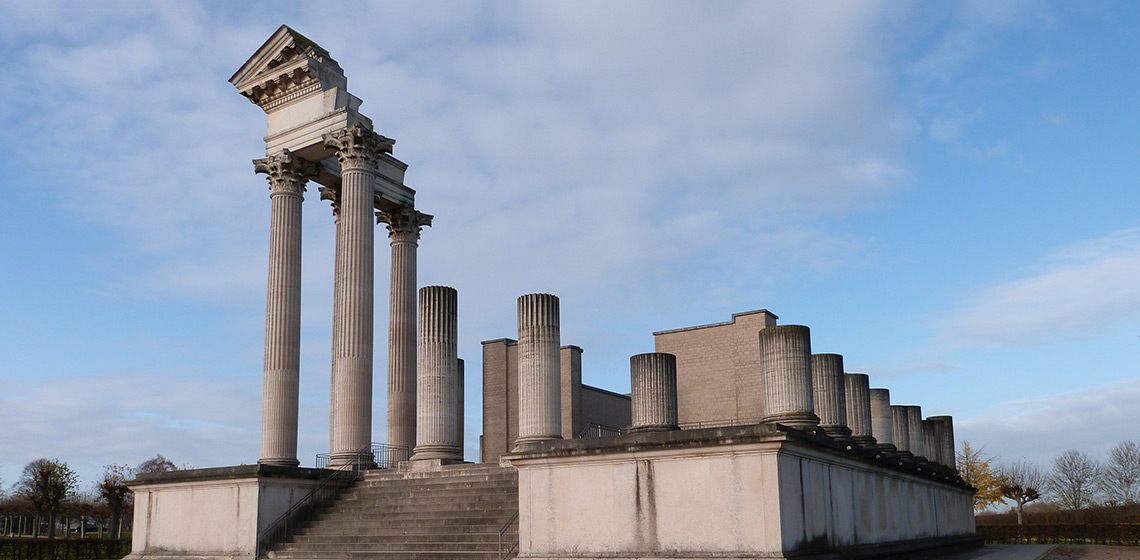
Our colleagues in Xanten invited us for a conference on the use of digital media in museums. Eleven speakers from Germany, Italy, Spain, Switzerland and Austria captivated an audience of about 75 participants. Many of the presented ideas were delivered by larger museums, some of them in the phase of execution...
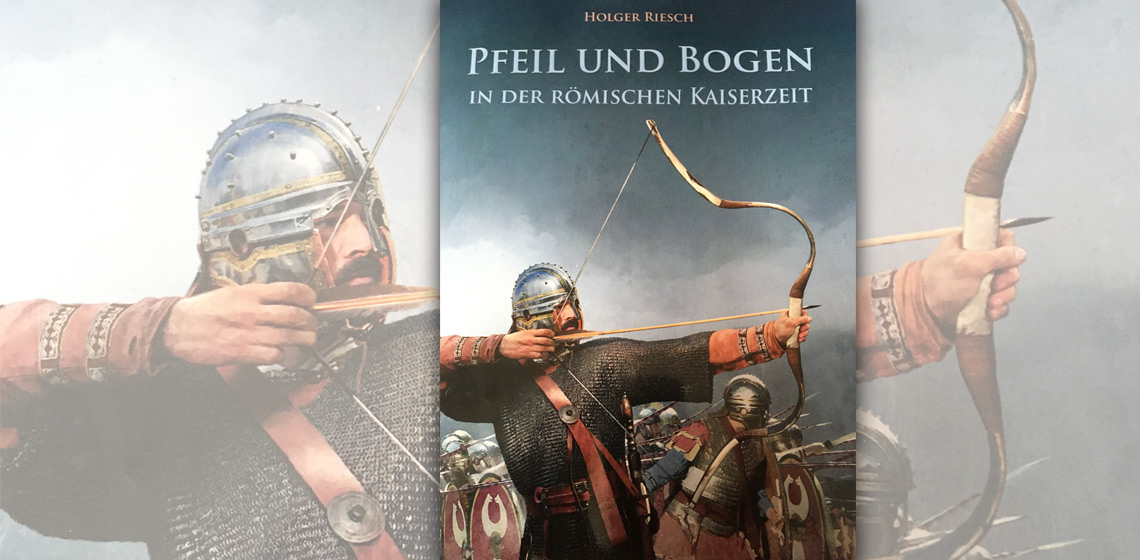
Book Review: Pfeil und Bogen in der Römischen Kaiserzeit, by Holger Riesch
Publication Date
This book closes a gap both in the documentation of the history of the Roman army as well as the history of archery in that it provides a very comprehensive overview on the use of bow and arrow in the Roman Empire. It collects and systematically discusses a wealth of information on a range of topics related to Roman archery in the imperial period and extends that discussion to previous and following periods...
Engaging Diverse Audiences at the Archaeological Open-Air Museum Düppel in Berlin – Practical Examples and New Strategies
Publication Date
2018 EXARC in Kernave
***In 1939, a boy called Horst Trzeciak was playing on a piece of land on the outskirts of Berlin. While playing, he found a number of pottery sherds. In an exemplary fashion he brought the sherds to the “Märkisches Provinzialmuseum”, which was, at that time, the city museum of Berlin...
***In 1939, a boy called Horst Trzeciak was playing on a piece of land on the outskirts of Berlin. While playing, he found a number of pottery sherds. In an exemplary fashion he brought the sherds to the “Märkisches Provinzialmuseum”, which was, at that time, the city museum of Berlin...
Shooting Experiments with Early Medieval Arrowheads
Publication Date
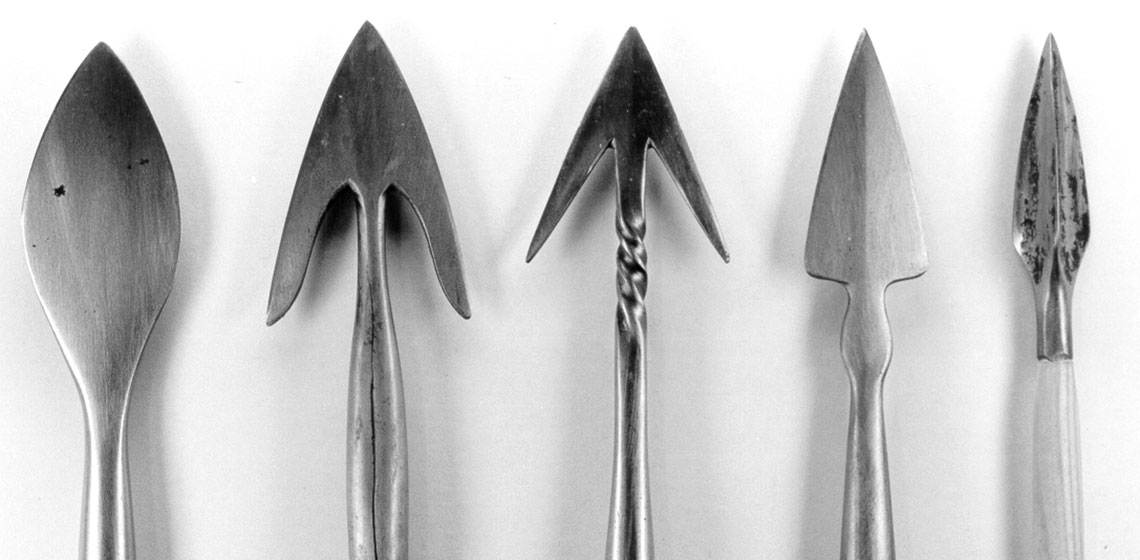
In the Merovingian era (5th-8th century AD) a lot of variously shaped iron arrowheads were used by the Franks, Alemannians and Bavarians, who dwelled in the region known today as Germany, Austria and Switzerland. As archaeological artefacts, two-winged arrowheads with rhombic, willow-leaf or triangular blades represent a standard Germanic type. Iron bodkin and needle-shaped tips are also...
Event Review: Third Annual Bronze Casting Festival, Uelsen (DE)
Publication Date
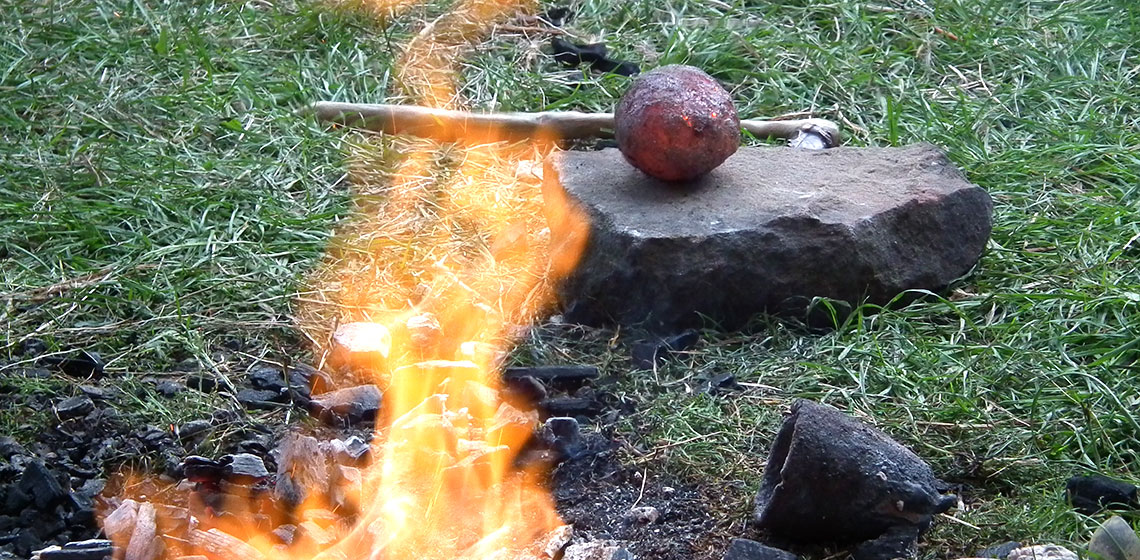
The third annual Bronze Casting Festival at the Bronzezeithof in Uelsen continued its theme of metalworking and experimental archaeology in a Bronze Age setting. The event drew participants from around Europe and the US to combine their knowledge and share experiences...
Book Review: Experimentelle Archäologie in Europa, Jahrbuch 2018
Publication Date
Annual Proceedings of the EXAR Tagung
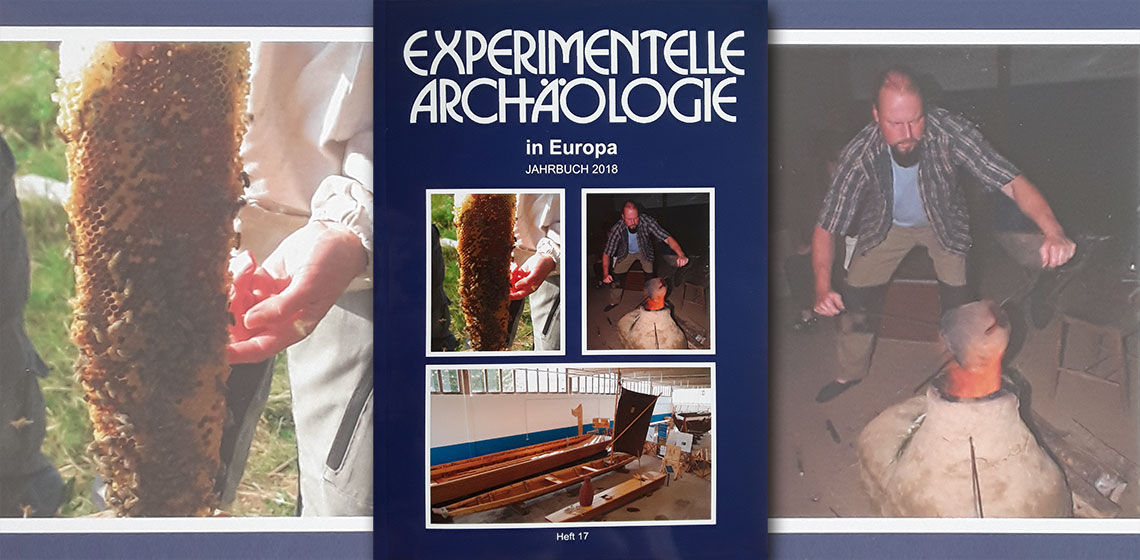
***Like the previous issues, this periodical (Jahrbuch) is published by Gunter Schöbel and the European Association for the advancement of archaeology by experiment e. V. (Europäische Vereinigung zur Förderung der Experimentellen Archäologie) in collaboration with the Pfahlbaummuseum Unteruhldingen...
***Like the previous issues, this periodical (Jahrbuch) is published by Gunter Schöbel and the European Association for the advancement of archaeology by experiment e. V. (Europäische Vereinigung zur Förderung der Experimentellen Archäologie) in collaboration with the Pfahlbaummuseum Unteruhldingen...
Interview: "Right Time, Right Place" with Jürgen Weiner
Publication Date
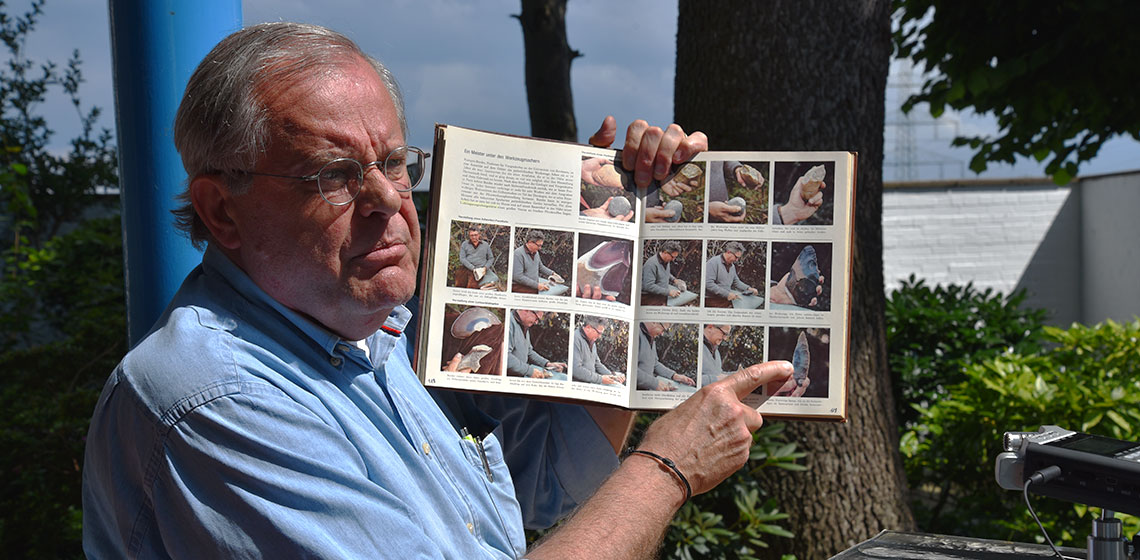
Jürgen Weiner - you can’t get away with not knowing this name if you are involved in Experimental Archaeology, even more if it involves flint. Weiner has published numerous works and he is known as a walking encyclopaedia. Along with Marquardt Lund, I met Jürgen and his charming wife in their house near Cologne. Our interview took place on a pleasant June afternoon in the garden...
Conference Review: 2018 EXAR Tagung in Unteruhldingen (DE)
Publication Date
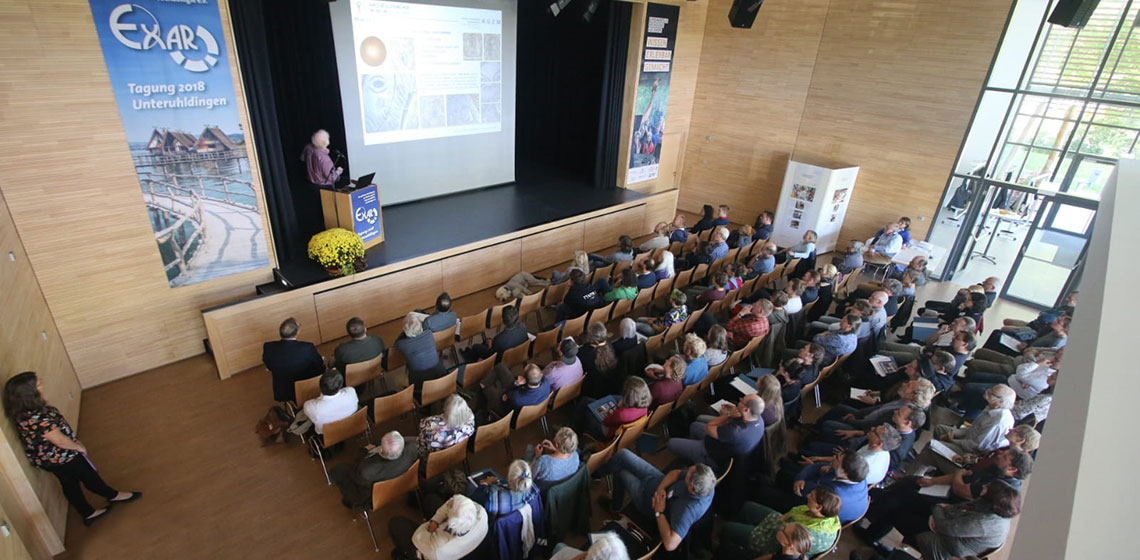
For the annual Tagung (conference), about 120 people convened in the southernmost point of Germany, at Lake Constance, near the borders of Switzerland and Austria. This conference is the perfect networking event for experimental archaeology in the German spoken part of Europe. Out of the 27 lectures, 25 were presented in German. The strength, but also its weakness, of the conference is that anything goes...
Event Review: Archäotechnika, the Bronze Age in Brandenburg
Publication Date
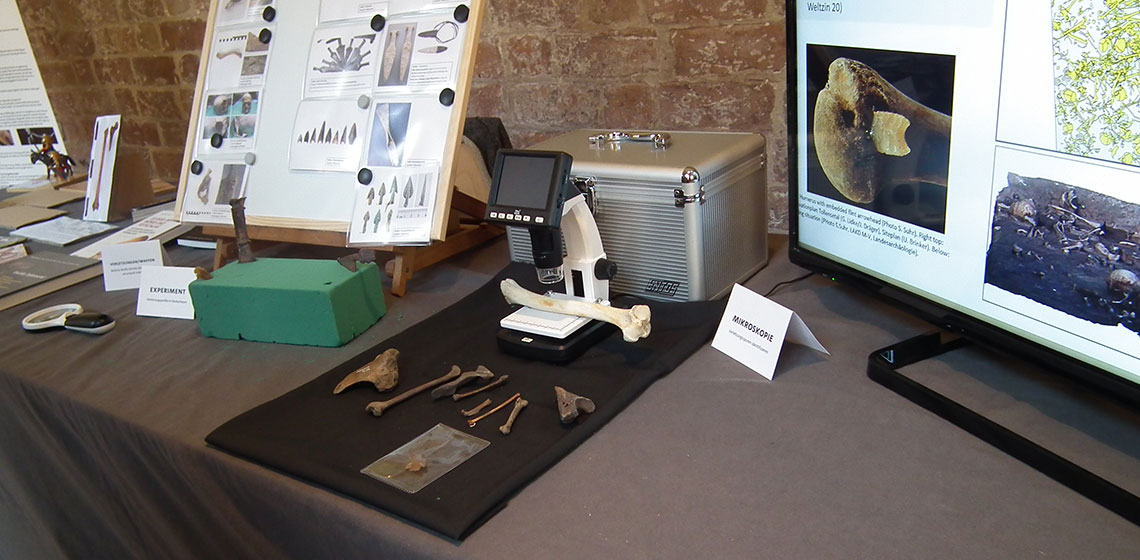
The Archäologisches Landesmuseum in Brandenburg hosted the annual Archäotechnika living history event, during the weekend of 11 to the 13 August 2018. Participants were attired in clothing appropriate to the period and worked in a variety of crafts including metalwork, stone tool production, textiles, salt production, fishnets and traps, textiles and dying, and demonstrations in horsemanship...
Scientific Profit through Daily Routine
Publication Date
10th EAC Leiden 2017
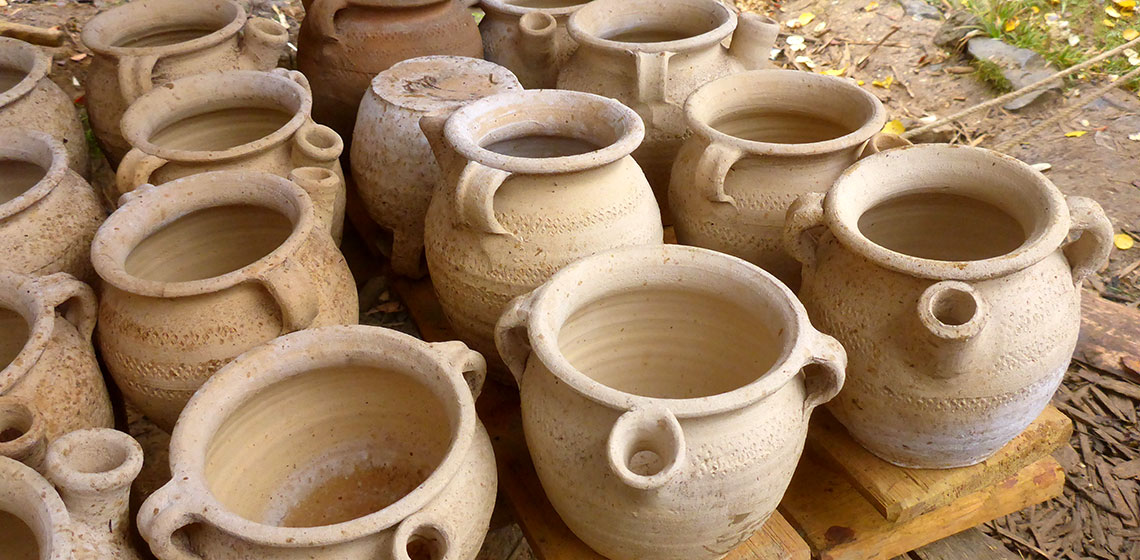
***The open-air museum Campus Galli is a construction site where we built an early medieval monastery, following the so-called “Plan of St. Gall”, an architectural drawing from the first half of the 9th century (Carolingian period) as our major reference source (cf. Schedl, 2014; Facsimile: Tremp, 2014)...
***The open-air museum Campus Galli is a construction site where we built an early medieval monastery, following the so-called “Plan of St. Gall”, an architectural drawing from the first half of the 9th century (Carolingian period) as our major reference source (cf. Schedl, 2014; Facsimile: Tremp, 2014)...