
Italy
Conference Review: Archaeological Reconstructions and Tourism, Mistelbach (AT)
Publication Date
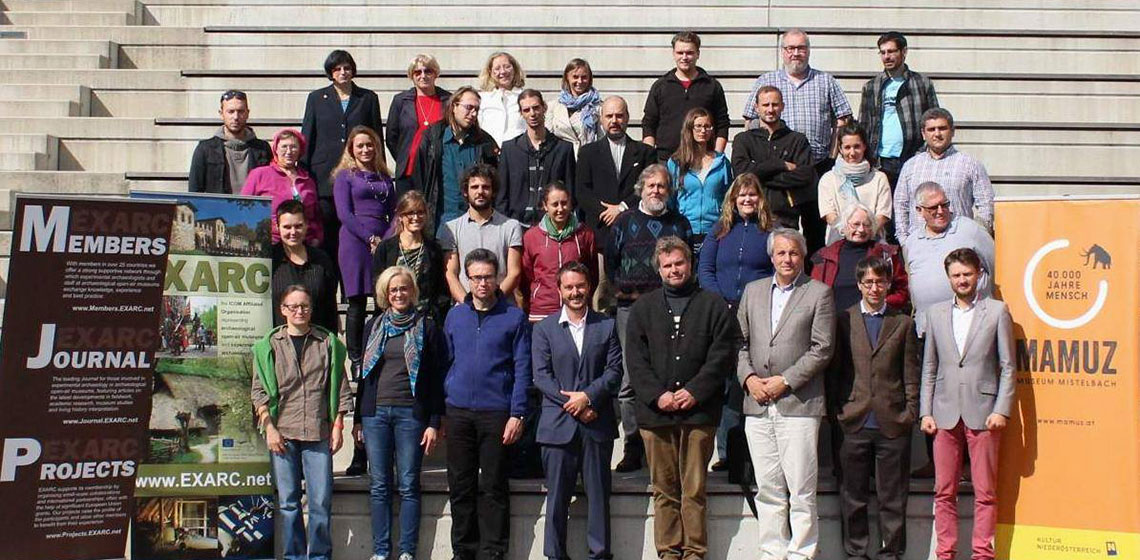
EXARC and Urgeschichtemuseum MAMUZ Schloss Asparn/Zaya joined forces to organise an international conference from the 25th to 27th of September 2015, held in Mistelbach, near Vienna focusing on Archaeological Reconstructions and Tourism...
Experiencing Visible and Invisible Metal Casting Techniques in Bronze Age Italy
Publication Date
OpenArch Dialogue with Skills Issue
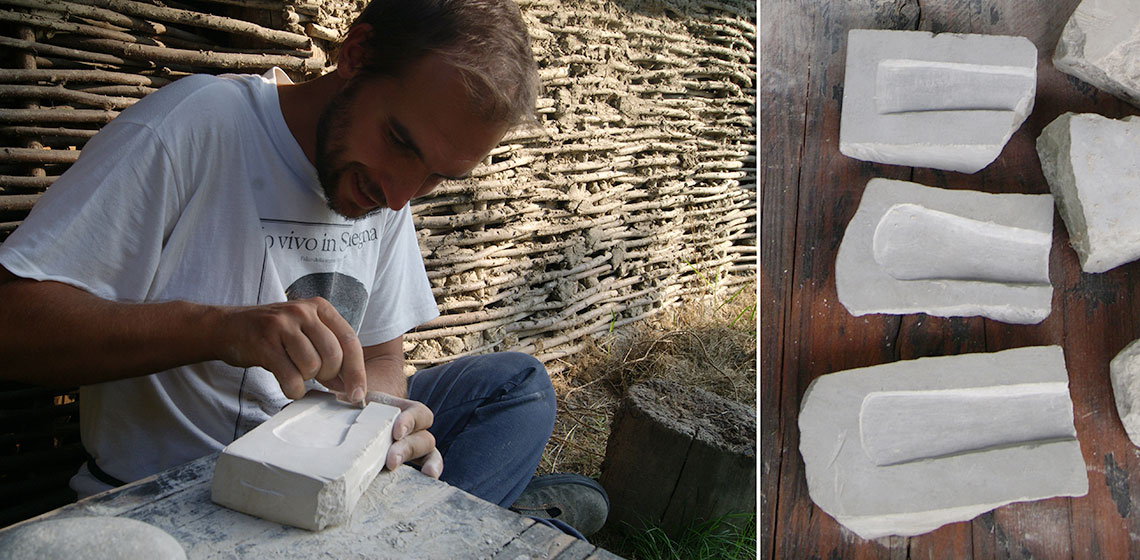
***What we know about Bronze Age metalworking in Italy basically relies on finished artefacts and on stone, clay or bronze implements involved in the process of manufacturing (tuyères, crucibles, moulds, hammers, chisels, et cetera; Bianchi, 2010; Bianchi, in press).
***What we know about Bronze Age metalworking in Italy basically relies on finished artefacts and on stone, clay or bronze implements involved in the process of manufacturing (tuyères, crucibles, moulds, hammers, chisels, et cetera; Bianchi, 2010; Bianchi, in press).
Roundtables at University College Dublin, January 2015
Publication Date
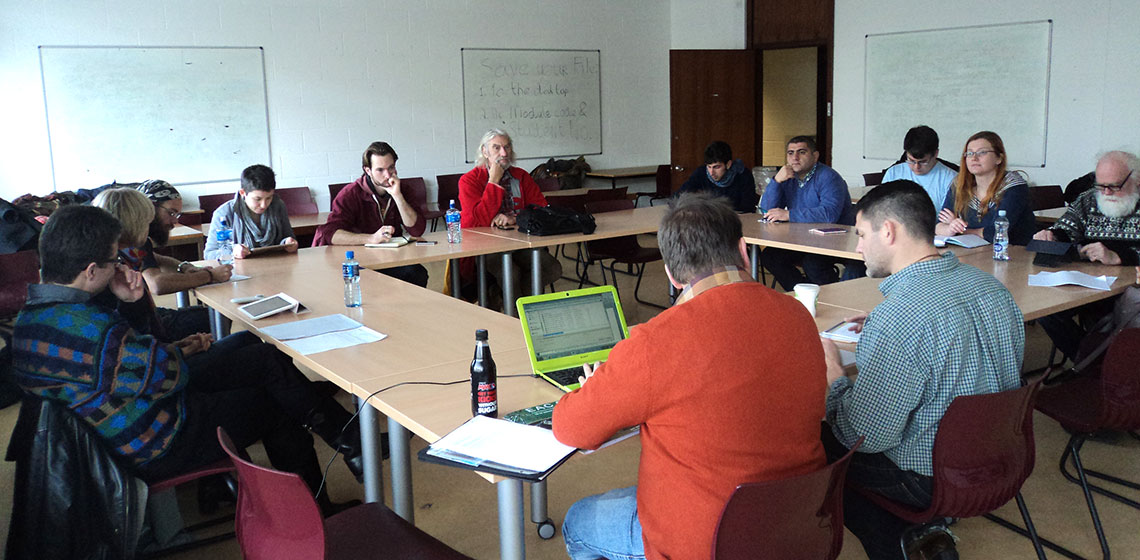
On 15 January 2015 around 25 people participated in the Academic Round Table chaired by Professor Bill Schindler from Washington College, and later this day in the Experimental Archaeology Networks Roundtable, with Roeland Paardekooper from EXARC chairing. Attendees came from a variety of countries, including Malta, Germany, Switzerland, Italy, Latvia, UK, Sweden, the US and Poland...
Book Review: "Experiments Past" Edited by Jodi Reeves Flores & Roeland P. Paardekooper
Publication Date
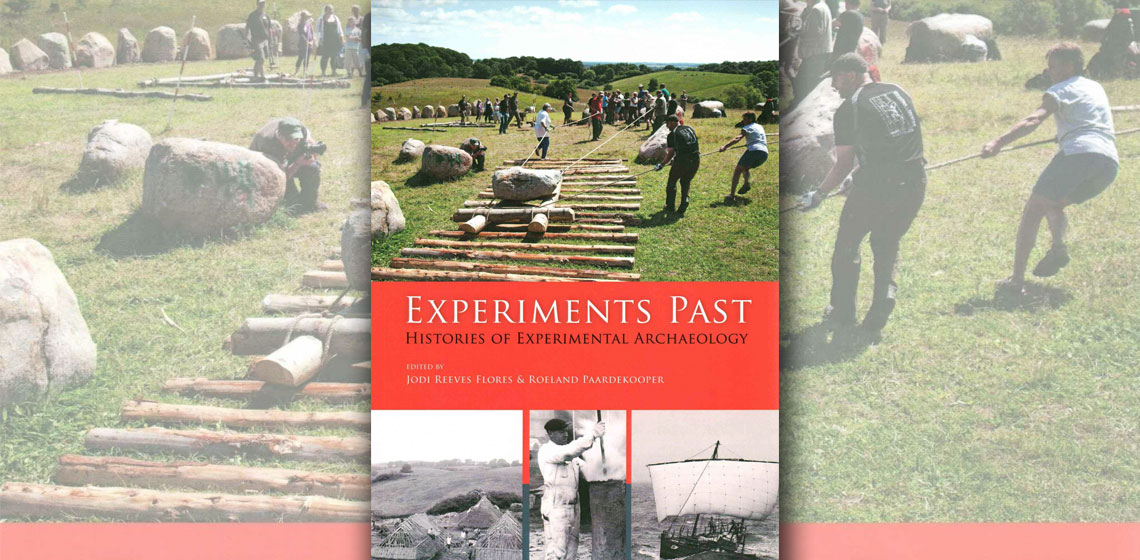
The publication in 1979 of the John Coles’ book Experimental Archaeology can be called the vademecum of the experimental archaeology. Many particular experiments have been published since then, such as A Bibliography of Replicative Experiments in Archaeology (Graham et al. 1972) and...
Investigating the Influence of the Kettle Material on Dyeing in the Industry of Pompeii
Publication Date
7th UK EA Conference Cardiff 2013
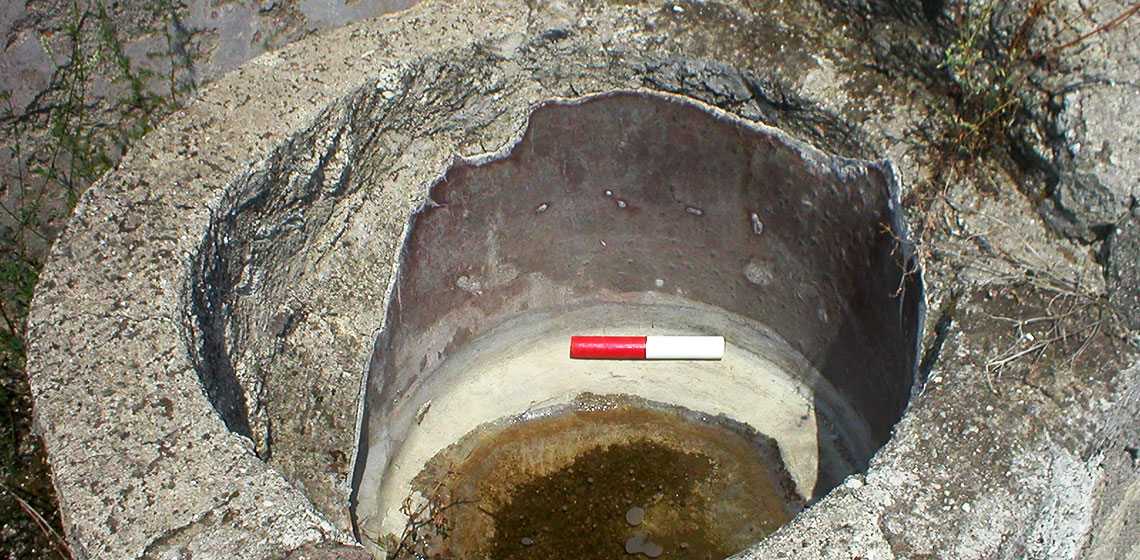
***Dyeing, especially in bright, intense colours, has been one of the methods used to embellish textiles and add to their value. A considerable dyeing industry can be shown to have existed in Pompeii. The city of Pompeii was destroyed in a volcanic eruption in AD 79, but its remains were preserved in situ...
***Dyeing, especially in bright, intense colours, has been one of the methods used to embellish textiles and add to their value. A considerable dyeing industry can be shown to have existed in Pompeii. The city of Pompeii was destroyed in a volcanic eruption in AD 79, but its remains were preserved in situ...
Book Review: Archaeological and Anthropological Sciences by L. Shillito, E. Fairnell and H. S. Williams (eds)
Publication Date
A set of eleven articles resulting from the call for papers for the Sixth UK Experimental Archaeology Conference (held in York in January 2012) is now published in a special issue of the Journal of Archaeological and Anthropological Sciences...
Stone Moulds from Terramare (Northern Italy): Analytical Approach and Experimental Reproduction
Publication Date
7th UK EA Conference Cardiff 2013
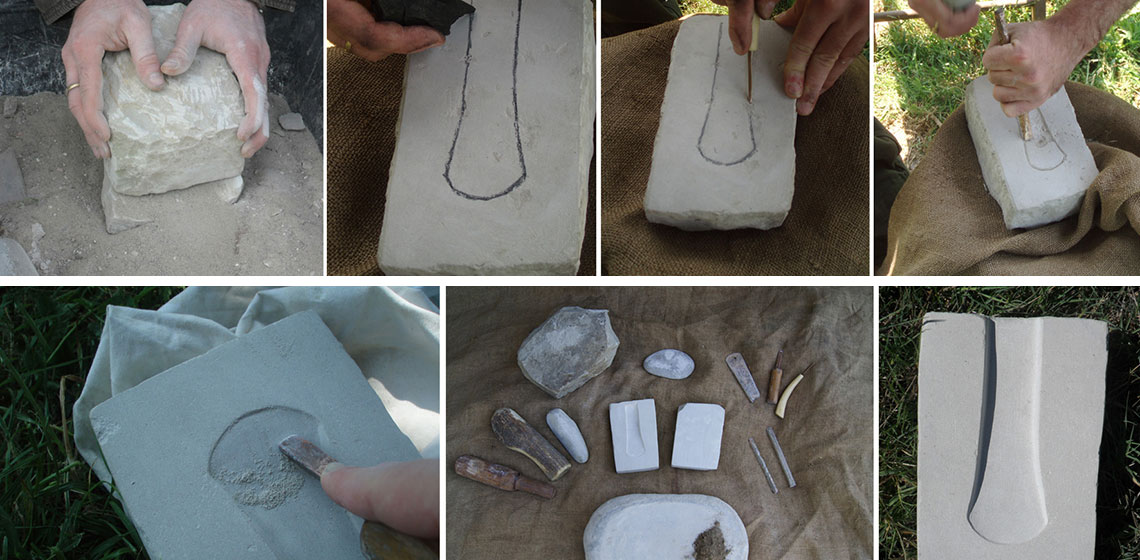
***A large number of stone moulds, dating to Middle and Late Bronze Age (approximately 1650-1150 BC) has been found in Terramare sites since the 19th century. They were made to produce a wide range of bronze objects, such as ornaments, weapons and tools. Empirical observations of casting experiments revealed that different types of stone do not give the same response to the heat of molten metal...
***A large number of stone moulds, dating to Middle and Late Bronze Age (approximately 1650-1150 BC) has been found in Terramare sites since the 19th century. They were made to produce a wide range of bronze objects, such as ornaments, weapons and tools. Empirical observations of casting experiments revealed that different types of stone do not give the same response to the heat of molten metal...
Observations on Italian Bronze Age Sword Production: The Archaeological Record and Experimental Archaeology
Publication Date
7th UK EA Conference Cardiff 2013
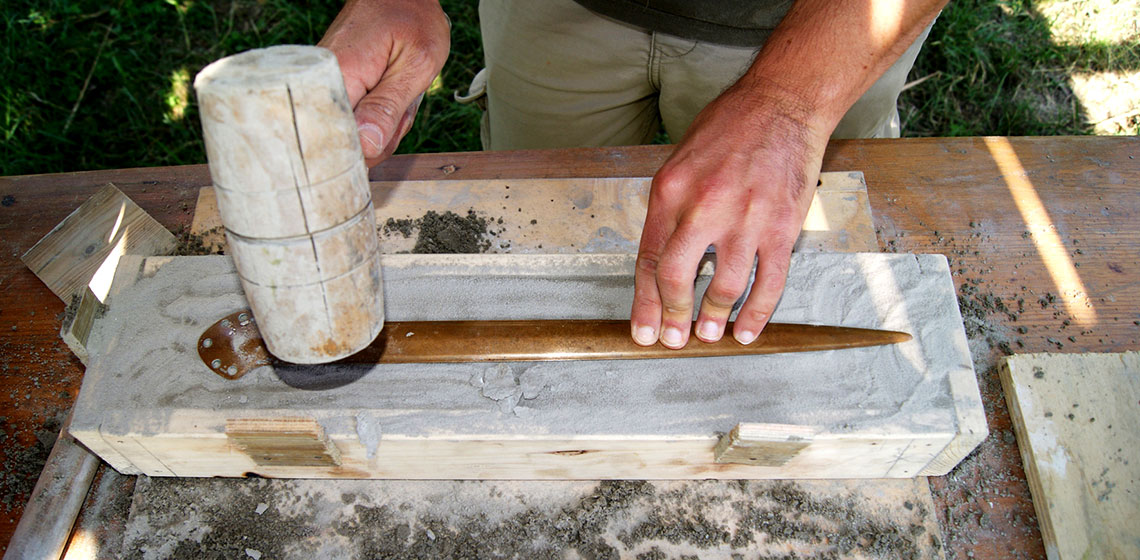
***In spite of the very large quantity of Bronze Age swords in Northern Italy, only a few stone moulds have been found. Tests have shown that carving such big stone moulds (more than 60 cm long) requires a large amount of raw material, deep knowledge and skill, rather than a wide set of implements...
***In spite of the very large quantity of Bronze Age swords in Northern Italy, only a few stone moulds have been found. Tests have shown that carving such big stone moulds (more than 60 cm long) requires a large amount of raw material, deep knowledge and skill, rather than a wide set of implements...
A Picenian Warrior Who Lived in the Eight Century BC: A Hypothetical Reconstruction
Publication Date
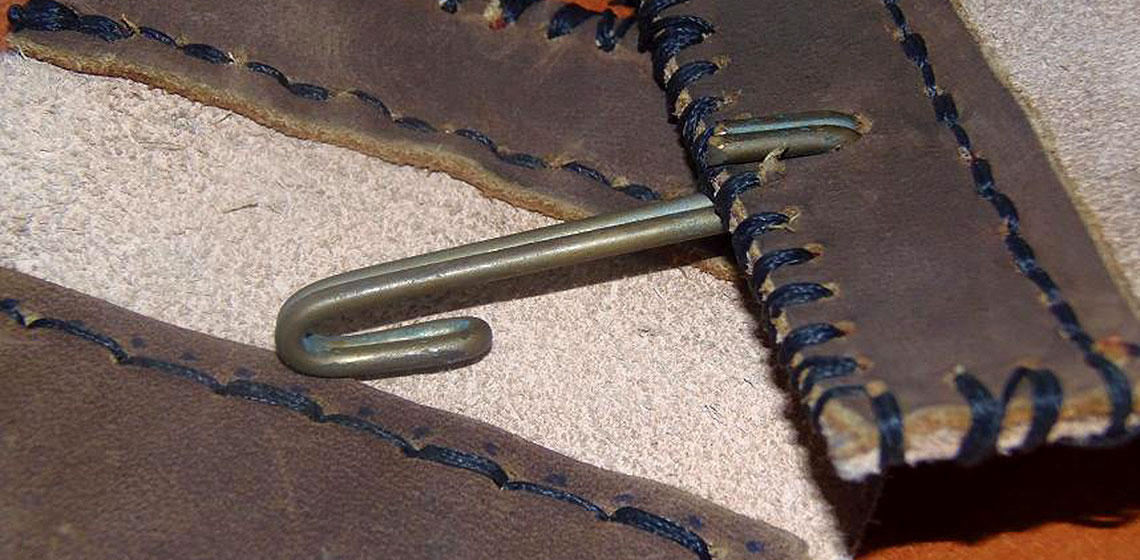
Various populations inhabited this territory from the tenth to the early third century BC, when the Roman army took control of it: the Laziali and Sabini in Lazio, the Etruscans and, from the fifth century, Celts in Toscana and Emilia Romagna, Umbri in Umbria and Picenians in Marche and Abruzzo. At the beginning of the Iron Age, and until the eighth century, we have evidence of other populations as well. The most ancient group being the Sub-Apenninical culture, which were Villanova and Proto-Villanovan populations that seem to have had towns in the Region Marche.
Drying Meat Today as During the Late Glacial Period
Publication Date
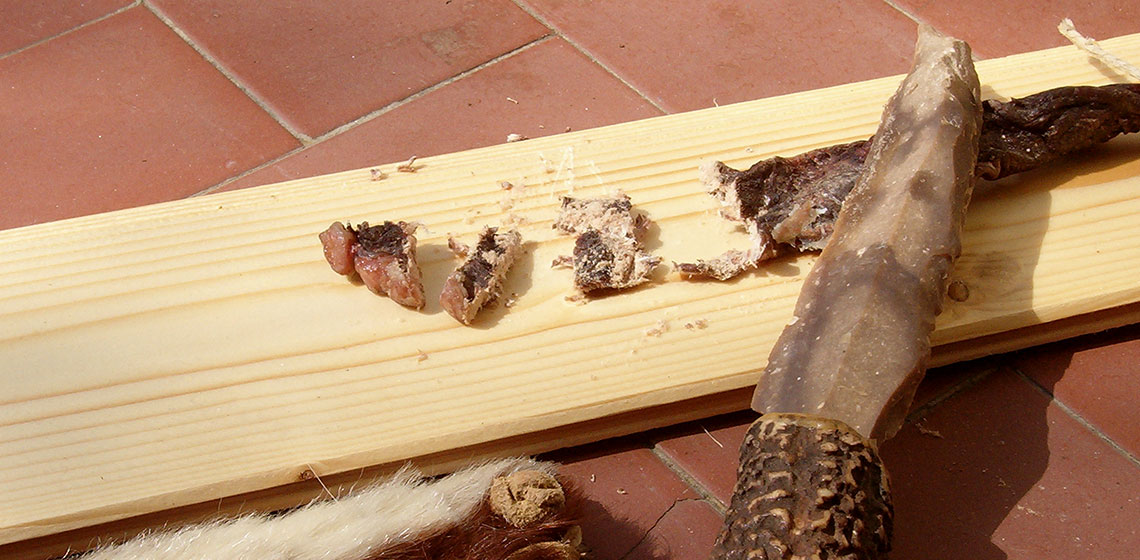
Western Europe during the Upper Palaeolithic, between 42,000 years ago and 12,000 years ago, was sparsely wooded, but later there was an increase in the percentage of specimens of birch, abies, fagus and tilia hosting wildlife similar to that already present during the Middle Palaeolithic. With the recent phase, starting from 24,000 years ago, humans in this territory become specialized...