
Italy

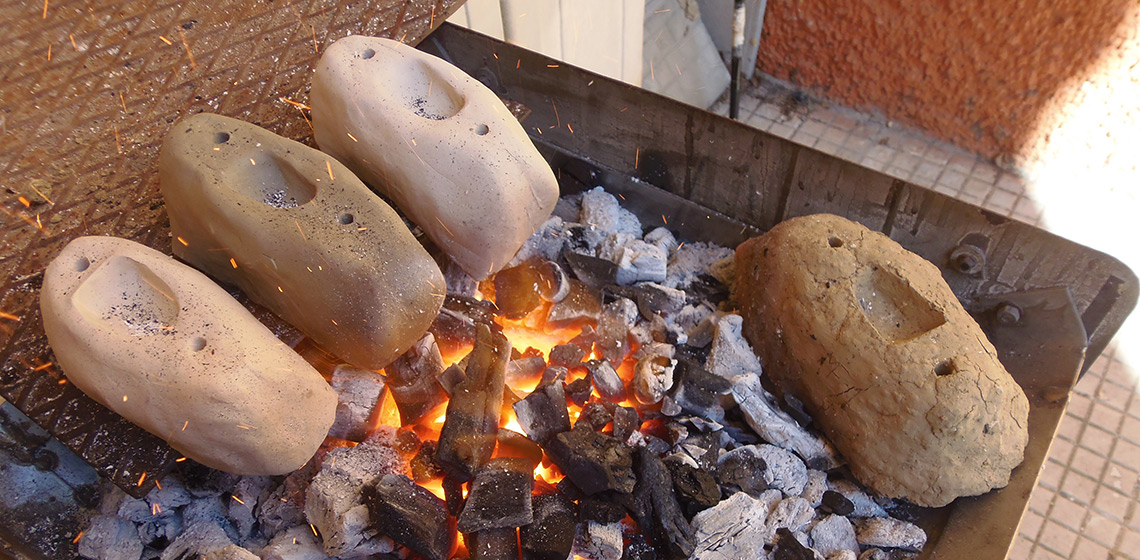
Casting a Copper Age Axe Using a Replica of the Marl Mould Found in Baffoni Cave (AN)
Author(s)
Mauro Fiorentini 1 ✉
Publication Date

These three artefacts suggested that some kind of metal working had most probably been carried out in the cave: Radmilli first described the mould as “a clay mould for casting… containing a piece of copper” (Radmilli, 1956, pp.

Reconstructing Ötzi’s shoes

Author(s)
Eva IJsveld 1 ✉
Publication Date
Ötzi the Gletshermummie, Ötzi the Iceman and Tisenjoch are the names we gave the man that walked in the Alps 5,300 years ago. Thanks to the Ötzi museum in Bozen/Bolzano, Italy, I had the opportunity to reconstruct Ötzi’s shoes. For making the shoes I used a flint knife, for both shoes I mostly used one knife...

The Production of Roman Metal Screw Threads
Author(s)
David Sim 1 ✉,
Chris Legg 2
Publication Date
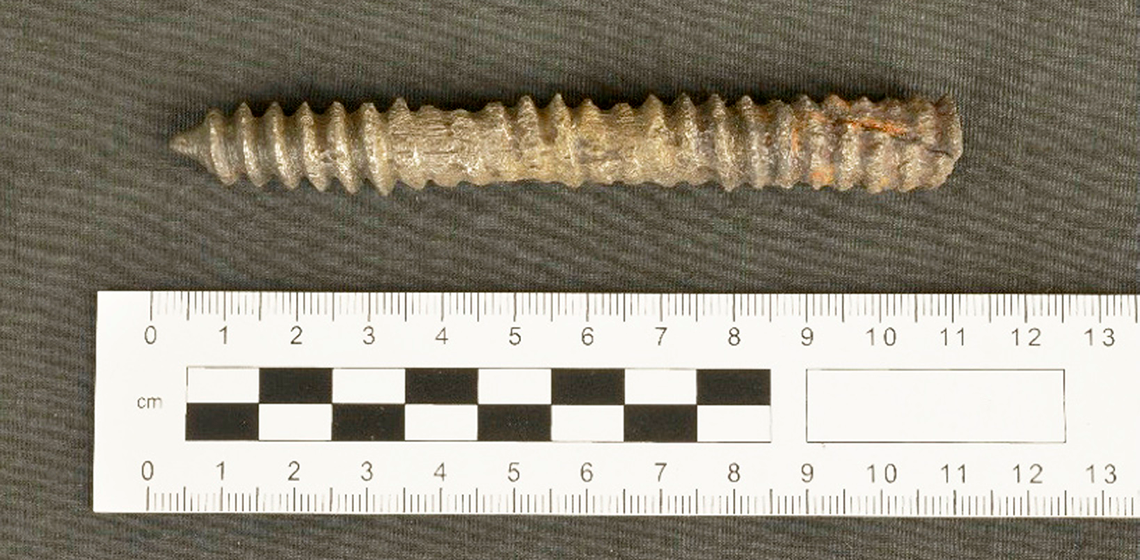
The production of Roman screws and screw threads is a topic that is largely absent in the archaeological literature. During the Roman period, small metal screw threads were used both as fastenings and to impart motion. This paper will show that it is possible to produce small metal screw threads using very simple technology that was well within the skill set of any competent metal worker...

The Rearrangement of the Archaeological Museum of Arcevia: Aiming to Improve Accessibility
Author(s)
Mauro Fiorentini 1 ✉
Publication Date
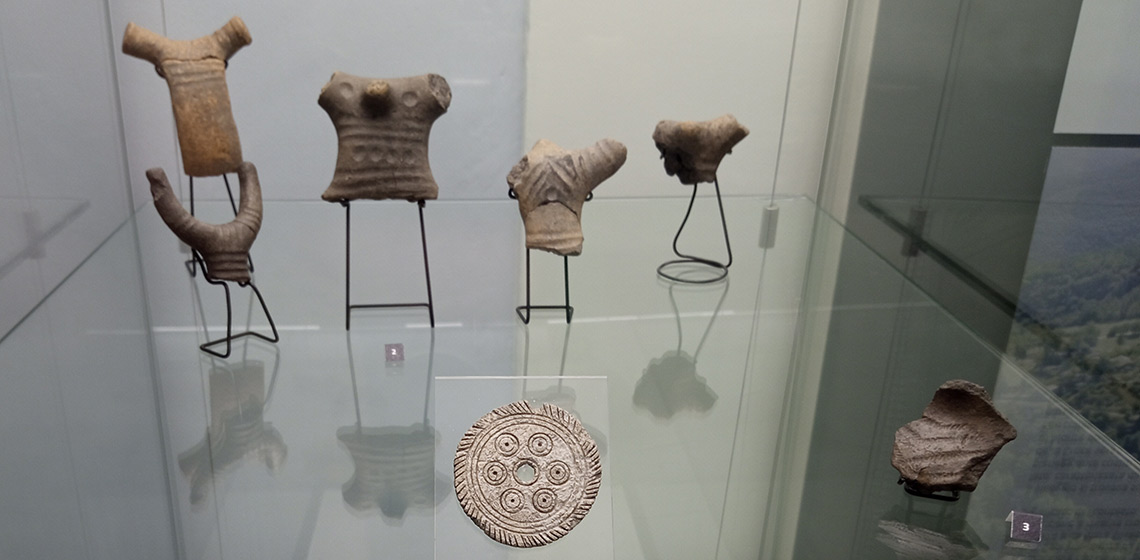
The Marche region in central Italy hosts quite a number of archaeological museums, containing a wide range of specimens and collections that cover a time span from the Palaeolithic onwards. From Stone Age votive statues to Iron Age weaponry, from Greek and Celtic luxurious jewellery and pottery to unmatched Roman finds; local museums preserve a huge variety of specimens that are of great ...

Book Review: Investigations into the Dyeing Industry in Pompeii by H. Hopkins Pepper
Author(s)
Mante van den Heuvel 1 ✉
Publication Date
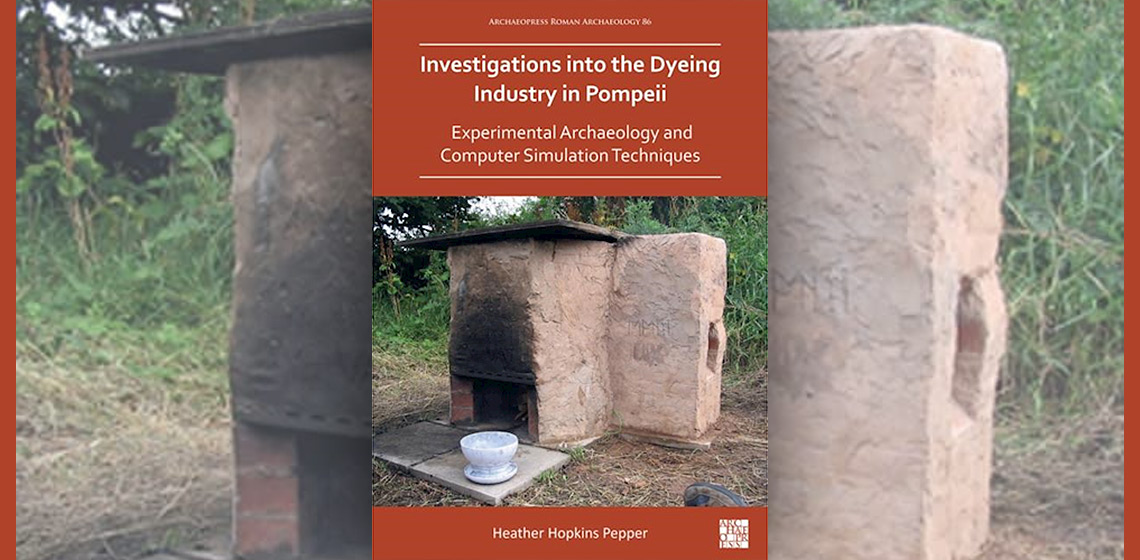
I was honoured to be asked to write a review on H. Hopkins Pepper´s “Investigations into the Dyeing Industry in Pompeii” as well as a bit nervous… Who am I, a non-scholar to write a review on a PhD. Then I realised that there might not be that many people who read this kind of literature for fun and on a regular basis. I still feel a bit like an imposter, but here is my view on the Hopkins´ book.

The Arrow Quiver of the Iceman Reconstruction Attempts and the Special Significance of the Fur Material
Author(s)
Markus Klek 1 ✉
Publication Date
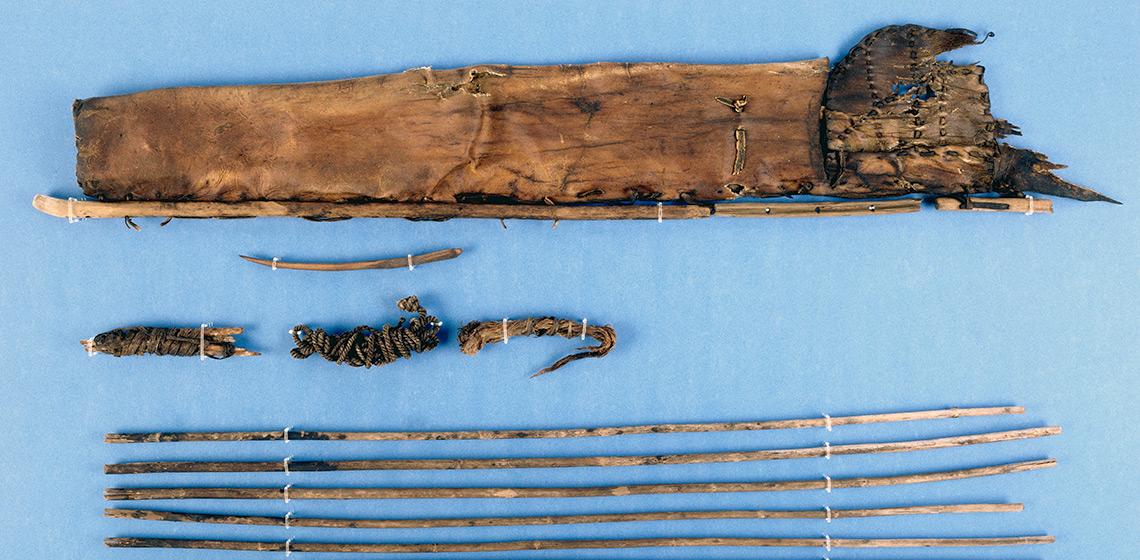
In 1991, the sensational discovery of a male mummy, thawing from the ice, was made on the Tisenjoch in the Ă–tztal Alps, near the Austrian-Italian border. The deceased man lived about 5300 years ago at the end of the Neolithic Age and is commonly known as Ă–tzi in German-speaking countries. The site also contained many well-preserved accompanying items and equipment...

Experiments and Thoughts on Amber Working during the Iron Age
Author(s)
Mauro Fiorentini 1 ✉
Publication Date
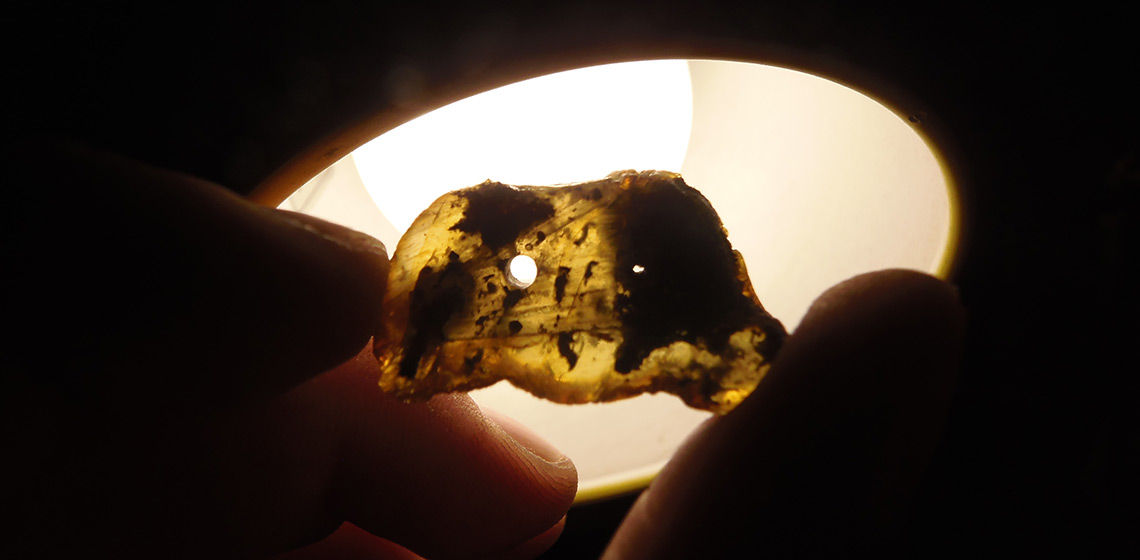
Amber is a fossilized plant resin found in many areas of the world, such as the Baltic Sea coastline, in Central-and South America and, more rarely, in southern Italy. The following work aims to introduce the reader to some experiments carried out on raw Baltic amber cores, using different techniques and tools with the purpose of verifying how effective these tools can be, and any reaction of the amber...

Event Review: “NOVILARA DEI PICENI” Walk like a Picenian…
Author(s)
Mauro Fiorentini 1 ✉
Publication Date

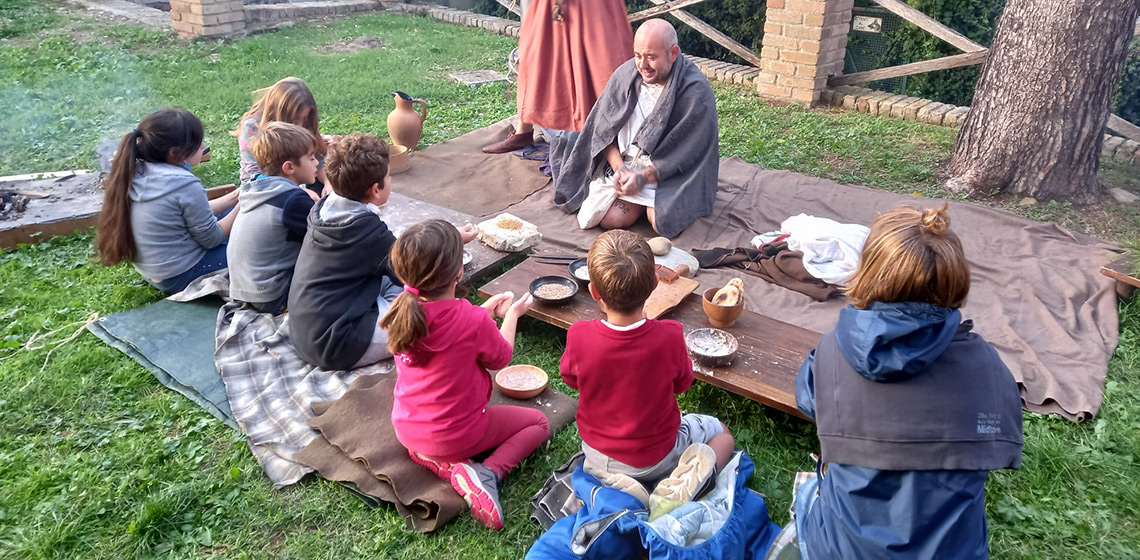
The Modern regions of Marche and Abruzzo were inhabited by various people during the Iron Age, but among those one particular population was more prevalent and gave a name to a whole culture: the Picenians. The Picenians, a mixture of Indigenous people and settlers from the East and the West, were fierce warriors who were able to give life to aristocracies and who relied on wars, agriculture, fishing and cattle breeding to prosper. During the 5th century B.C. Celtic tribes settled in the northern part of region and they soon adapted local customs and habits.

Hoes or Adzes? Experimental Reproduction and Uses of Deer Antler Tools from the Bronze Age Terramara of Pragatto (Italy)
Author(s)
Arianna Durante 1, 2 ✉,
Sara Maria Stellacci 3,
Alessio Pellegrini 1, 2,
Antonella de Angelis 1, 2,
Federico Scacchetti 3
Publication Date
#EAC12 World Tour 2021
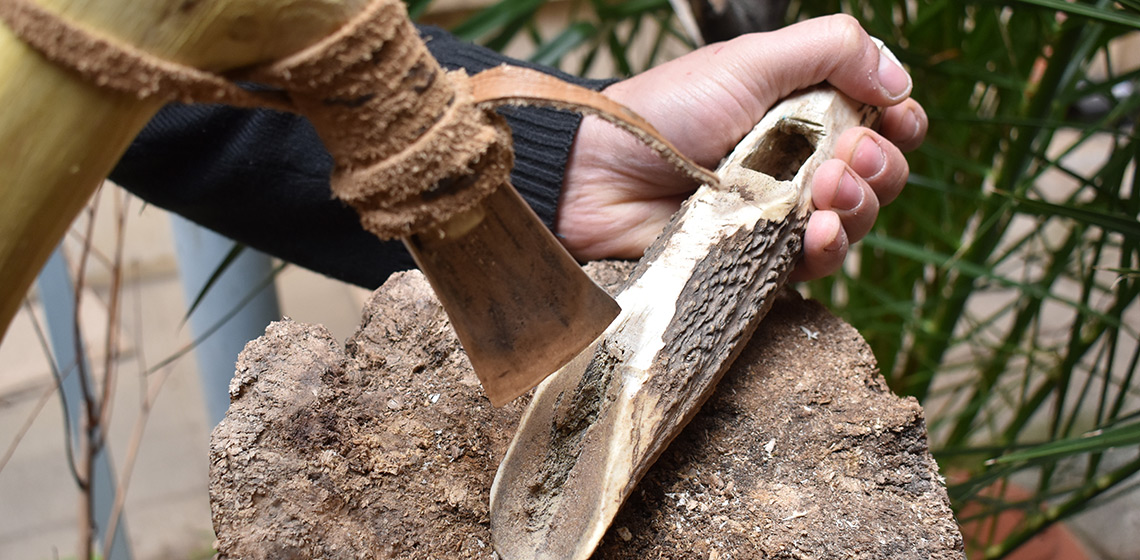
***This research aimed to evaluate the hypotheses related to the production and possible uses of a class of deer antler tools from the Bronze Age Terramara of Pragatto (Italy). These bevel-ended instruments are traditionally considered handled hoes, related to agricultural purposes such as tillage...

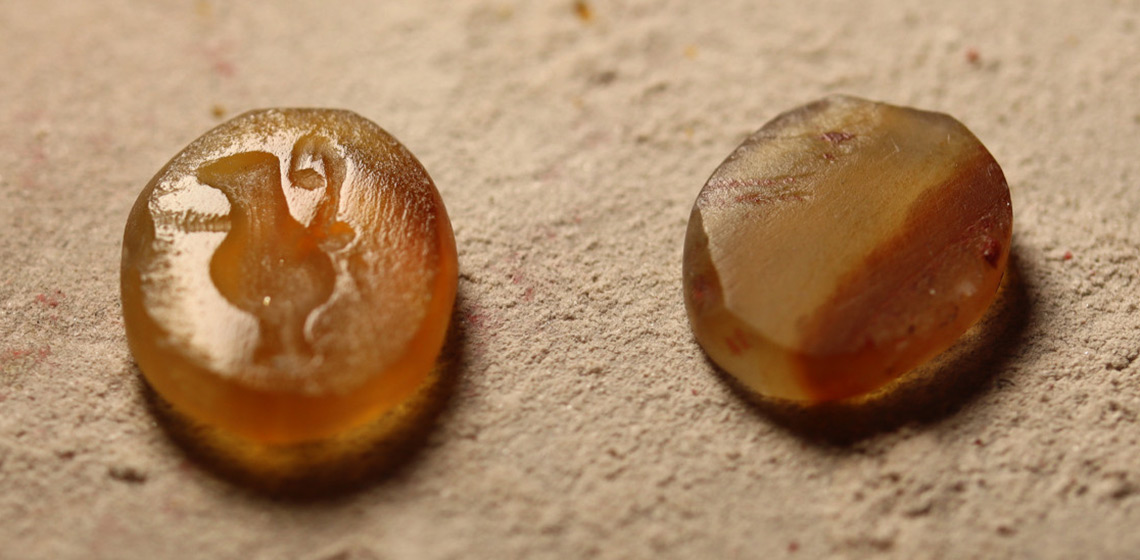
The Career of an Orange Stone
Author(s)
Irena Podolska 1,
Wojciech Rutkowski 1,2 ✉
Publication Date
The analysis of archaeological works of art involves their formal, thematic and interpretative description. The importance of these stages rests in their potential to reveal the biography of an artefact. Research methods investigating the production technology behind an object are a valuable factor extending the field of interpretation of a given object. Each finished work is the result of a creative process...